Last updated 2026-07-25
TL;DR
There's no single 'NEMT license.' You typically need a state business entity, a business/operating license (some states require a specific NEMT or livery permit), vehicle permits, driver background checks, commercial insurance, then Medicaid provider enrollment and broker credentialing (Modivcare, MTM, etc.) to bill for rides. Requirements vary a lot by state; confirm specifics with your state Medicaid agency before you buy a van.
What is non-emergency medical transportation (NEMT)?
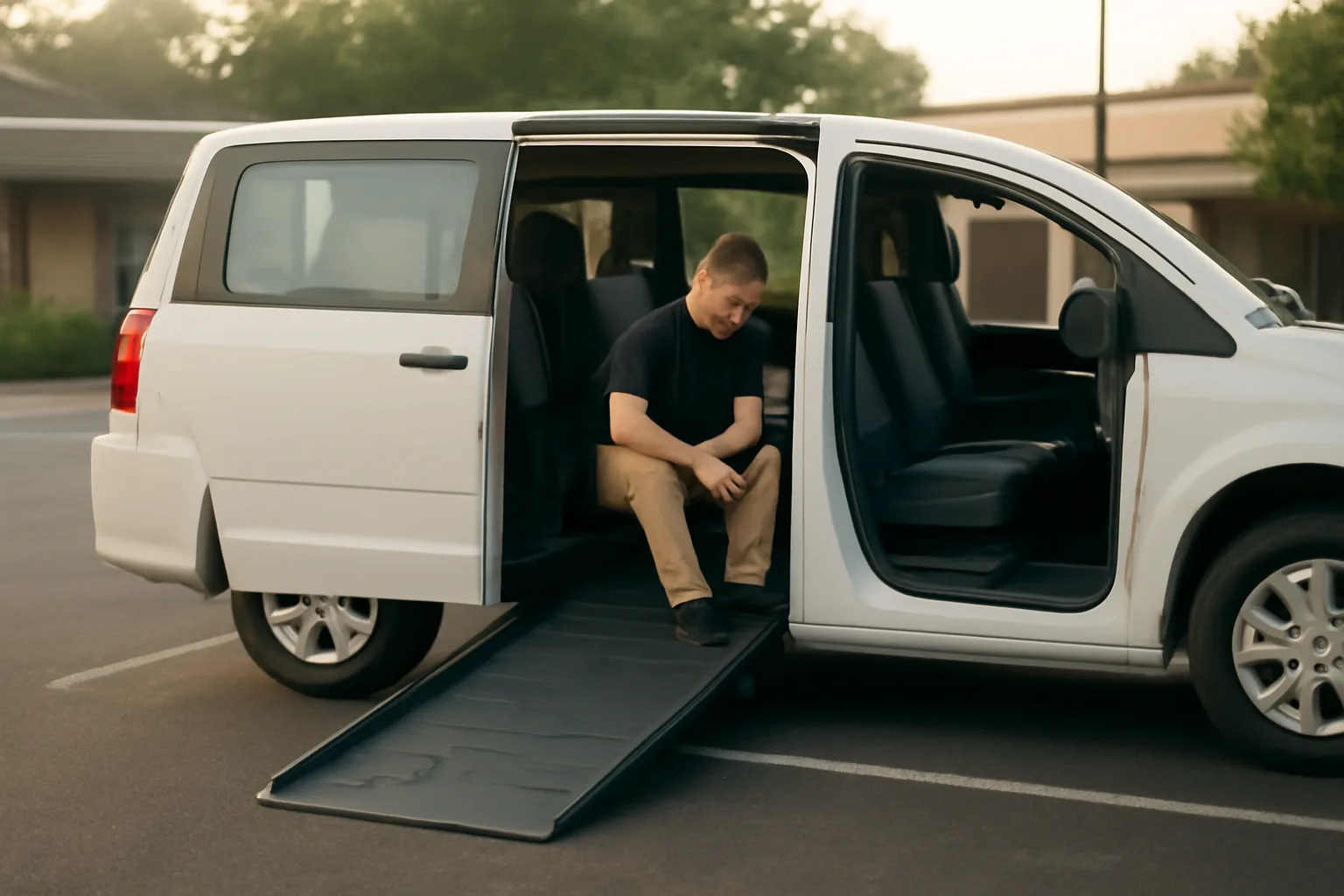
Non-emergency medical transportation is scheduled transport to and from medical appointments for people who don't need an ambulance but can't drive themselves or use regular transit. Think dialysis three times a week, chemo, physical therapy, or a wheelchair user going to a primary care visit. It's not 911 response and it's not a stretcher-and-siren situation. Federal Medicaid rules require states to make sure eligible people can get to and from covered medical services, and NEMT is the mechanism most states use to meet that obligation. The regulation lives at 42 CFR 431.53, which says states must "ensure necessary transportation for beneficiaries to and from providers" [1]. Most states don't run this in-house anymore. They contract with a transportation broker (Modivcare, MTM, Access2Care, SafeRide Health, and others depending on the state) who then subcontracts rides out to local transportation providers, which is where an owner-operator with a wheelchair van fits in. NEMT vehicles range from sedans for ambulatory riders to wheelchair vans with lifts or ramps to stretcher vans for people who must travel lying down. If you're buying your first van, non emergency medical transportation covers the vehicle and service-model basics before you get into licensing paperwork.
How to start a medical transportation business (the full sequence)
There's no shortcut here. The realistic order is: form your business entity, get your general business license, secure vehicle permits and commercial auto insurance, hire and background-check drivers, apply for state Medicaid NEMT provider enrollment, then get credentialed with whichever broker manages NEMT in your service area. Skipping ahead (like buying three vans before you know your state's vehicle age limit) is the single most common expensive mistake. Step by step, most owner-operators go through something like this: 1. Form an LLC or corporation and get an EIN from the IRS. 2. Get your local/county business license and any required NEMT-specific state permit. 3. Title, register, and permit each vehicle (some states require a separate for-hire or livery vehicle permit beyond normal registration). 4. Carry commercial auto liability insurance at whatever minimum your state and broker require, which is often well above personal auto minimums. 5. Run driver background checks, drug testing, and required training (many states mandate passenger assistance and wheelchair securement training, plus a check against state and federal excluded-provider lists). 6. Enroll as a Medicaid transportation provider with your state Medicaid agency (this is separate from broker credentialing). 7. Apply for broker network credentialing with the broker(s) operating in your state or region. 8. Get your vehicle(s) inspected to the broker's or state's safety standard, which usually happens annually. This whole process commonly takes two to four months from a standing start, longer if your state requires a Certificate of Need or a separate NEMT operating permit that has its own review timeline. Confirm actual timelines with your state Medicaid agency, because they vary widely and some states have hard caps on new provider enrollment in certain regions.
Do you need a special 'NEMT license,' or just a regular business license?
It depends entirely on your state, and this is the part people get wrong most often. Some states treat NEMT like any other for-hire ground transportation business: you need a standard business license, a livery or for-hire vehicle permit through the DMV or state transportation department, and that's the state-level piece. Other states have a distinct NEMT provider license or certificate issued by the Medicaid agency or a state health department, separate from your basic business license. A few states also regulate NEMT under ambulance/EMS statutes if the vehicle type crosses into stretcher-van territory, which can trigger a different licensing body entirely (often the state EMS office rather than Medicaid). California, for example, regulates "medical transportation services" and non-emergency medical transportation vehicles through provisions tied to its Health and Safety Code and Vehicle Code, administered at the state and sometimes county EMS agency level [2]. Because there's no federal NEMT operator license, and each state's Medicaid transportation unit sets its own enrollment rules, the only reliable move is to call your state Medicaid agency's transportation unit directly and ask what license or permit categories apply to a wheelchair van business in your state, before you sign a vehicle purchase agreement. The nemt overview page walks through how state programs generally structure this.
How do you start a NEMT business with one van?
One van is a completely normal and reasonable way to start; you don't need a fleet to enroll as a Medicaid provider or get broker-credentialed. The process is identical to a larger fleet, just smaller in scale and paperwork volume. With one wheelchair van, focus your energy on getting these things airtight rather than trying to expand fast: the vehicle inspection and lift/ramp certification, one or two well-vetted and background-checked drivers (you may be one of them), your commercial auto and general liability insurance limits, and your Medicaid provider enrollment application. Brokers routinely credential single-vehicle owner-operators; it's a normal part of their network, especially in rural or underserved ZIP codes where broker networks often have gaps. The honest tradeoff: with one van you have zero redundancy. If your vehicle is in the shop or your one driver is sick, you can't run trips, and broker no-show/late-trip penalties can hurt a one-van operation more than a ten-van one. Ask your broker directly what their on-time performance and no-show penalty policy is before you sign, and read it against your realistic maintenance downtime.
What licenses, permits, and registrations does an NEMT business actually need?
| Business entity (LLC/corp) + EIN | Secretary of State + IRS | Every operator, no exceptions | |
|---|---|---|---|
| General business license | City/county | Almost always | |
| NEMT-specific state permit or Certificate of Need | State Medicaid agency or transportation dept | Many states, not all | |
| For-hire/livery vehicle permit | State DMV or transportation department | Most states | |
| Vehicle safety inspection (lift/ramp/securement) | State DOT or broker-designated inspector | Required by nearly all brokers annually | |
| Commercial auto insurance | Private insurer, state-set minimums | Required for registration and broker contract | |
| Driver background check / exclusion list screening | State Medicaid agency, OIG | Required for Medicaid billing eligibility | |
| Medicaid provider enrollment | State Medicaid agency | Required to bill Medicaid at all | |
| Broker network credentialing | Modivcare, MTM, Access2Care, SafeRide, or state-specific broker | Required to receive dispatched trips | One detail people miss: Medicaid provider enrollment and broker credentialing are two separate processes with two separate applications, run by two separate organizations. You can be an enrolled Medicaid transportation provider and still not be in a broker's active network, and vice versa in states that let brokers self-certify smaller providers. Ask both the state Medicaid transportation unit and the broker which one gates the other in your state. |
Here's a practical checklist. Not every item applies in every state, which is exactly why you confirm with your state Medicaid agency and broker before spending money. | Requirement | Who issues it | Typically needed for |
Does Medicaid cover ambulance rides?
Yes, Medicaid covers medically necessary ambulance transportation, but that's a separate benefit category from NEMT. Ambulance transport (emergency and some non-emergency stretcher-level ambulance transport) is billed under Medicaid's ambulance services benefit, governed by its own coverage and reimbursement rules, while NEMT wheelchair van and sedan rides fall under the transportation assurance requirement in 42 CFR 431.53 [1]. Medicaid.gov describes ambulance services as covered when "transportation by ground or air ambulance is necessary to obtain diagnosis or treatment" for enrollees whose condition requires it [3]. If a wheelchair van or stretcher van isn't medically appropriate (say, the person needs cardiac monitoring en route), that trip typically has to go through an ambulance provider instead, not an NEMT operator. This is why intake staff at brokers ask detailed medical necessity questions before dispatching a ride: getting the vehicle type wrong is a compliance problem, more than a scheduling one. If you're planning to eventually add a stretcher van or ambulance-level service, know that's regulated separately from your NEMT wheelchair-van business, usually through your state's EMS office rather than the Medicaid transportation unit, and often requires EMT-level staffing.
Does Medicare cover medical transportation?
Original Medicare's NEMT coverage is much thinner than Medicaid's. Medicare Part B covers ambulance transportation when it's medically necessary and other transportation would endanger the person's health, per CMS's ambulance services coverage rules. It does not have a general non-emergency wheelchair van benefit the way state Medicaid programs do. Some Medicare Advantage plans voluntarily offer limited NEMT as a supplemental benefit (a certain number of one-way trips per year to plan-approved providers), but that's plan-specific, not a standard Medicare entitlement. If you want Medicare Advantage trip volume, you'd contract directly with individual MA plans or their transportation vendors, which is a completely separate credentialing process from state Medicaid enrollment and typically has its own application, insurance minimums, and vehicle standards. Don't assume your Medicaid broker credentialing automatically gets you Medicare Advantage trips. Ask each MA plan operating in your area directly whether they run their own transportation network or use the same broker your state Medicaid program uses.
How does Medicaid NEMT provider enrollment actually work?
Medicaid provider enrollment is the state-level process that makes you an approved billing entity, separate from whether any broker sends you trips. Every state runs its own enrollment through its Medicaid agency (sometimes called the Medicaid Management Information System or MMIS enrollment portal), and CMS requires states to screen providers according to a risk level; transportation providers are commonly categorized at the "moderate" screening level under 42 CFR 455.450, which can require a site visit [4]. A typical state enrollment packet asks for your business license, EIN, vehicle registrations and inspection certificates, proof of commercial insurance, driver rosters with background check results, and sometimes a surety bond. Processing time varies by state; some publish target timelines of 30 to 60 days, others don't publish a number at all, so ask your state Medicaid transportation unit for their current processing estimate before you plan around it. Once enrolled, you're on the state's approved provider list, but in most states you still need to separately apply to and get accepted by the broker managing NEMT dispatch in your region. Some states run NEMT without a broker middleman at all (fee-for-service, direct state administration), which changes this sequence, so this is exactly the kind of detail to confirm with your specific state Medicaid agency rather than assume from a general guide. The non emergency medical transportation services page has more on how state-run versus brokered models differ.
How does broker credentialing work (Modivcare, MTM, Access2Care, SafeRide)?
Broker credentialing is a separate application process run by the private transportation broker your state contracts with, and it's usually where owner-operators spend the most waiting time. Each broker has its own portal, its own document checklist, and its own vehicle inspection standard, even though several brokers operate in multiple states. Expect to submit: proof of Medicaid provider enrollment (or an in-process application number), certificate of insurance naming the broker as certificate holder, vehicle photos and lift/ramp inspection results, driver rosters with background check and exclusion-list screening results, and sometimes a signed network provider agreement with rate schedules attached. Rates are usually confidential per-trip or per-mile figures set in that agreement; brokers don't publish them, so don't rely on any number you see quoted online without your own signed agreement in hand. Brokers periodically re-open or close their networks to new providers depending on capacity in a given county, so a broker can legally decline to onboard you even if you're a fully enrolled Medicaid provider with a compliant vehicle, simply because they don't need more capacity in your ZIP code right now. Ask directly whether the broker's network is open in your specific service area before you invest in a vehicle. Non emergency medical transportation and nemt transportation both go deeper on how multi-broker states typically structure this.
What does the vehicle need to meet NEMT standards?
Wheelchair vans need a working, inspected lift or ramp, functioning wheelchair securement (four-point tie-down systems are standard), first aid supplies, and usually a fire extinguisher, all of which get checked at inspection. Requirements come from a mix of your state's vehicle code, the broker's own safety standard, and sometimes Americans with Disabilities Act accessibility expectations if you're carrying wheelchair passengers. Most brokers require annual vehicle inspections plus documentation of any lift or ramp manufacturer maintenance schedule. Vehicle age limits are common too; some brokers won't credential a van older than 7 to 10 years, though the exact cutoff is broker-specific and changes, so confirm the current limit with the broker before buying a used van. Drivers typically need passenger assistance and wheelchair securement training, a clean motor vehicle record, and clearance on state and federal exclusion lists (the OIG List of Excluded Individuals/Entities is a standard check nationally). Some states also require specific CPR/first aid certification for NEMT drivers. None of this is emergency medical training; it's closer to safe passenger handling than clinical care, which is the core distinction between NEMT and emergency medical transport.
How much does it cost and how long does it take to get licensed?
Costs vary enormously by state and by how much you're doing yourself versus paying a consultant or compliance service, so treat any number here as a range, not a quote. Business entity formation typically runs $50 to $500 depending on state filing fees. General business licenses are often under $200. Commercial auto insurance for a single wheelchair van is a much bigger line item, commonly running into several thousand dollars a year depending on your state, driving history, and coverage limits, and this is the cost owner-operators most consistently underestimate. Surety bonds, if your state requires one for Medicaid provider enrollment, often run in the low thousands of dollars for the bond premium, not the full bond face value. Vehicle inspection and lift certification fees are usually modest, often under $200, but budget for lift maintenance separately since brokers can require documented service records. On timeline: business licensing can be done in days to a few weeks. Medicaid provider enrollment realistically takes four to eight weeks in many states once your paperwork is complete, sometimes longer if a site visit is required. Broker credentialing on top of that often adds another two to six weeks. All together, three to four months from a cold start to your first dispatched trip is a reasonable planning assumption, though it can run faster or slower depending on your state and whether the broker's network is even open. If you want a structured way to organize every document these two processes ask for, that's the gap the $199 Launch Kit Builder is built to close: it doesn't file anything for you or guarantee approval, it just organizes the state and broker paperwork trail so you're not assembling it from scratch state by state.
What are the most common reasons NEMT applications get delayed or denied?
Insurance certificates that don't name the broker or state as required certificate holder are a frequent, avoidable delay. So is submitting vehicle inspection paperwork that's missing the lift manufacturer's certification or is older than the broker's accepted window. Driver-side problems are common too: a background check that's expired (many states and brokers require checks within the last 12 months), a driver who shows up on the OIG exclusion list, or missing passenger assistance training documentation. On the state Medicaid side, incomplete ownership disclosure is a classic issue, since 42 CFR 455.104 requires disclosure of ownership and control interests for enrolled providers, and states will bounce an application back for missing disclosure forms [5]. The fix for nearly all of these is boring: build a checklist against your specific state's published enrollment requirements and your specific broker's credentialing packet before you submit anything, and resubmit corrections fast, since some states restart the review clock on incomplete applications rather than pausing it.
Frequently asked questions
How do I start a non-emergency medical transportation business?
Form a business entity, get your general business license and any state-specific NEMT or for-hire vehicle permit, insure and inspect your vehicle, background-check your drivers, then enroll as a Medicaid provider with your state and get credentialed with the broker (Modivcare, MTM, Access2Care, SafeRide, or your state's specific broker) operating in your area. Confirm exact requirements with your state Medicaid agency first.
What is non-emergency medical transportation?
NEMT is scheduled transport to medical appointments for people who don't need an ambulance but can't drive or use public transit, such as dialysis, therapy, or specialist visits. It's a required part of most state Medicaid programs under 42 CFR 431.53, and states usually run it through contracted transportation brokers rather than in-house staff.
Do I need a special license to run an NEMT business, or just a general business license?
It depends on your state. Some states only require a general business license plus a standard for-hire vehicle permit. Others have a distinct NEMT provider license or Medicaid transportation certificate. A few regulate stretcher-level NEMT under EMS statutes. Call your state Medicaid transportation unit before assuming either way.
Can I start an NEMT business with just one wheelchair van?
Yes, one van is a normal starting point and brokers routinely credential single-vehicle owner-operators. The process is the same as for larger fleets, just smaller in scale. The tradeoff is zero redundancy: if that van or its one driver is out, you can't run trips, and broker no-show penalties can hit hard.
Does Medicaid cover ambulance rides?
Yes. Medicaid covers medically necessary ambulance transportation as its own benefit category, separate from NEMT wheelchair van or sedan rides. Ambulance coverage applies when ground or air ambulance transport is necessary to get diagnosis or treatment, per Medicaid.gov's ambulance services coverage description.
Does Medicare cover non-emergency medical transportation?
Original Medicare Part B covers ambulance transportation when medically necessary, but it doesn't have a standard non-emergency wheelchair van benefit. Some Medicare Advantage plans offer limited NEMT as a supplemental benefit with their own trip caps and vendor networks, separate from Medicaid NEMT and separate from CMS's core ambulance rules.
What's the difference between Medicaid provider enrollment and broker credentialing?
Medicaid provider enrollment is a state-run process that makes you an approved billing entity under 42 CFR 455.450 screening rules. Broker credentialing is a separate private-company process (run by Modivcare, MTM, Access2Care, SafeRide, etc.) that decides whether you actually receive dispatched trips. You often need both, and they don't share one application.
How long does it take to get NEMT-licensed and credentialed?
Business licensing can take days to a few weeks. Medicaid provider enrollment commonly takes four to eight weeks once paperwork is complete, longer if a site visit is required. Broker credentialing often adds another two to six weeks on top. Three to four months total is a reasonable planning estimate, but ask your state for its current timeline.
How much does it cost to start an NEMT business?
Business formation and licensing fees are usually under a few hundred dollars combined. Commercial auto insurance is the bigger recurring cost, often several thousand dollars a year for one wheelchair van depending on state and coverage limits. Some states also require a surety bond with a premium in the low thousands. Get quotes specific to your state before budgeting.
What vehicle requirements does an NEMT wheelchair van need to meet?
A working, inspected lift or ramp, functioning four-point wheelchair securement, basic first aid supplies, and usually a fire extinguisher. Brokers typically require annual inspections and documented lift maintenance, and many won't credential vans older than roughly 7 to 10 years, though the cutoff is broker-specific.
Do NEMT drivers need special training or certification?
Most states and brokers require passenger assistance and wheelchair securement training, a clean driving record, and screening against state and federal exclusion lists including the OIG's List of Excluded Individuals/Entities. Some states also require CPR or first aid certification. It's not emergency medical training, it's safe passenger handling.
Why do NEMT applications get delayed or denied most often?
Common culprits are insurance certificates missing the required certificate holder name, expired driver background checks, drivers appearing on exclusion lists, missing lift certification paperwork, and incomplete ownership disclosure forms required under 42 CFR 455.104. Building a checklist against your specific state and broker requirements before submitting cuts most of these delays.
Sources
- eCFR, 42 CFR 431.53: States must assure necessary transportation for Medicaid beneficiaries to and from providers
- California Health and Safety Code, Division 2.5 (EMS): California regulates medical transportation services and vehicles under its EMS statutory division
- Medicaid.gov, Medicaid Benefits: Ambulance Services: Medicaid covers ambulance transportation when necessary for diagnosis or treatment
- eCFR, 42 CFR 455.450: Transportation providers are commonly screened at the moderate categorical risk level, which can require a site visit
- eCFR, 42 CFR 455.104: Enrolled Medicaid providers must disclose ownership and control interest information