Last updated 2026-07-25
TL;DR
A non-emergency medical transport business plan covers vehicle and insurance costs, state Medicaid enrollment steps, broker credentialing (Modivcare, MTM, and similar), driver requirements, and startup budget. It's different from a general small-business plan because most of your revenue depends on passing Medicaid and broker credentialing, more than finding customers.
What is non-emergency medical transportation, and why does it need its own business plan?
Non-emergency medical transportation, usually shortened to NEMT, is transportation for Medicaid (and sometimes Medicare Advantage or private-pay) members who need a ride to a medical appointment but don't need an ambulance. That covers dialysis, chemotherapy, physical therapy, wheelchair van trips, and ambulatory sedan rides to a primary care visit. Federal Medicaid rules require states to make sure eligible people can actually get to covered care, which is why NEMT exists as a distinct, funded service rather than just a nice-to-have. The Code of Federal Regulations at 42 CFR 431.53 requires state Medicaid plans to "specify that the Medicaid agency will ensure necessary transportation for beneficiaries to and from providers" [1]. A generic small-business plan template (the kind the SBA hands out for a bakery or a landscaping company) doesn't fit NEMT well. Your biggest early hurdle isn't marketing, it's credentialing. You need a state Medicaid provider enrollment approval, and in most states, a separate credentialing process with one or more transportation brokers (Modivcare, MTM, Access2Care, SafeRide, or a state-run alternative) before a single Medicaid trip pays out. A real NEMT business plan has to treat that credentialing pipeline as its own phase, with its own timeline and its own paperwork checklist, not a footnote. If you're brand new to the industry, it helps to read a general overview of medical transportation and how NEMT fits inside it before you start writing numbers into a plan.
How do you start a medical transportation business, step by step?
Starting a medical transportation business runs through five stages that mostly have to happen in order: entity setup, vehicle and insurance, state Medicaid enrollment, broker credentialing, and operations setup. Skipping ahead (buying a van before you know your state's wheelchair-lift specs, for example) is the single most common expensive mistake new owner-operators make. Stage one is legal setup: form an LLC or corporation, get an EIN from the IRS, and get any local business license your city or county requires. Stage two is the vehicle: you need a wheelchair-accessible van or an ambulatory sedan that meets your state's vehicle inspection standards, plus commercial auto insurance (not personal auto) with limits your state or broker specifies, often $1 million combined single limit for wheelchair-accessible vehicles. Stage three is Medicaid provider enrollment through your state's Medicaid agency or its fiscal agent, which usually means an online application, a provider agreement, background checks, and sometimes a site visit. Stage four is broker credentialing: even after Medicaid approves you as a provider, you typically can't get dispatched for trips until a broker like Modivcare or MTM separately credentials your company and your drivers. Stage five is operations: dispatch software or a phone-and-log system, driver scheduling, vehicle maintenance logs, and a way to track trip documentation for billing and audits. Most states publish a provider enrollment portal or PDF checklist through their Medicaid transportation unit; CMS keeps a directory of state Medicaid agency contacts you can start from if you're not sure who to call [2]. Confirm the exact sequence and paperwork with your specific state Medicaid agency and broker before you spend money, because a handful of states run NEMT as fully state-managed (no broker at all) and the order of operations shifts.
How to start a non-emergency medical transportation business with one van
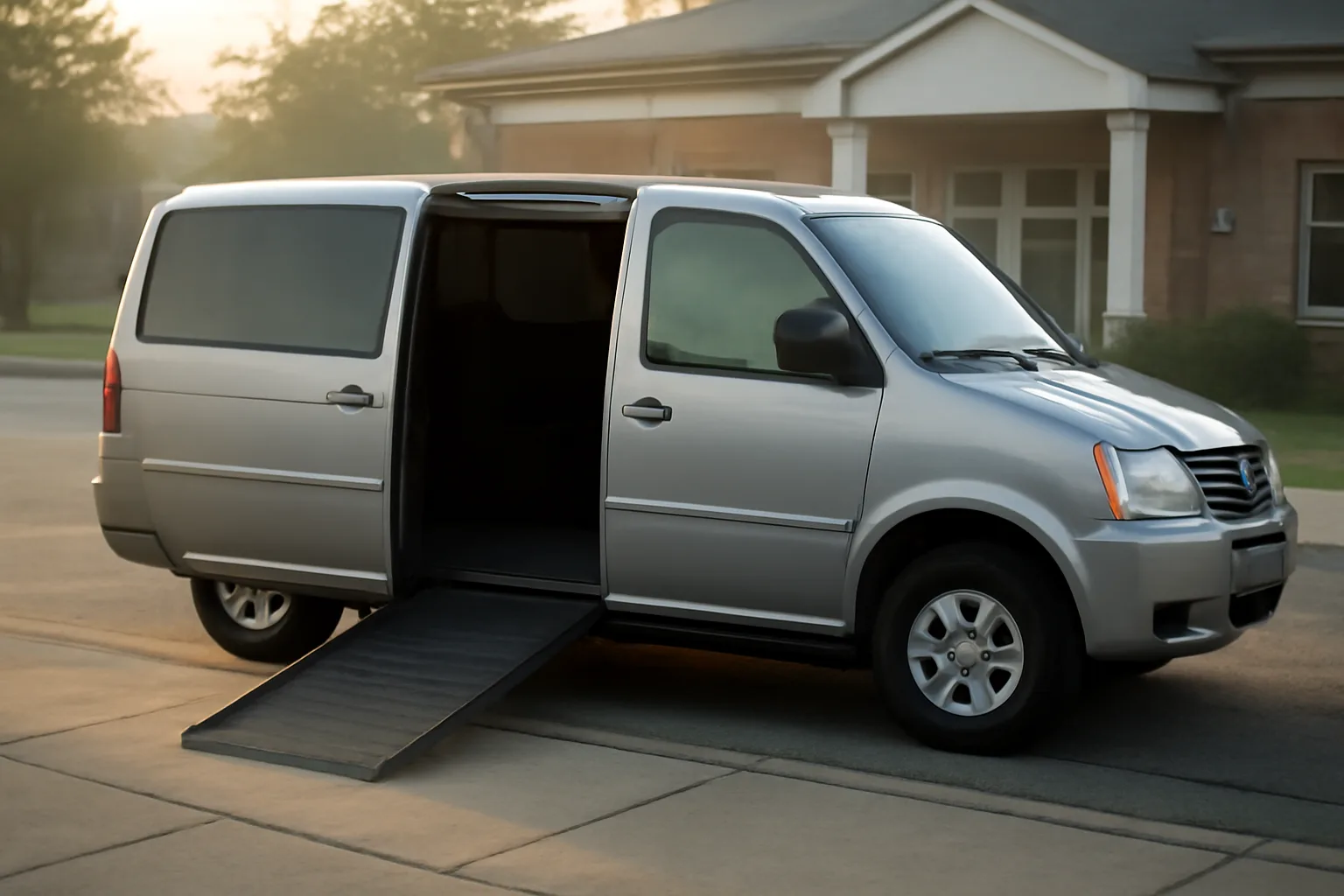
You can absolutely start with one wheelchair van, and a lot of owner-operators do exactly that, but your business plan needs to be honest about what one vehicle can and can't support. A single van means a single point of failure: if it's in the shop, you have zero revenue days, not reduced revenue days. Plan for a maintenance reserve and a plan B (a rental agreement or a subcontracting arrangement with another operator) before you lean on broker trip assignments as your only income. With one van, your plan should be explicit about which population you're serving first. Ambulatory-only trips need less vehicle modification but more liability discipline (you're the one helping someone into a sedan). Wheelchair van trips need a lift or ramp that meets Americans with Disabilities Act-adjacent state inspection standards and usually a securement system rated for the wheelchair loads you'll carry. Most states specify these standards in their Medicaid transportation provider manual, not in a general DMV rule, so check your state Medicaid transportation unit's provider manual directly rather than assuming ADA vehicle rules alone cover it. A one-van operation also has a scheduling ceiling: you cannot double-book yourself, and broker dispatch systems generally assume you'll accept or decline trips within a tight response window (often 30 to 60 minutes, confirm with your broker). Build that into your plan as an operating constraint, not an afterthought. Many one-van owner-operators plan a second vehicle purchase specifically around the point where they're regularly declining trips they could otherwise take.
What does state Medicaid enrollment actually require?
State Medicaid enrollment for an NEMT provider generally requires a completed provider application, an EIN and business license, proof of commercial auto insurance, vehicle registration and inspection records, driver background checks (often including a state and FBI fingerprint check), and a signed Medicaid provider agreement. Many states also require CPR and first aid certification for drivers and some require a defensive driving course completion. Enrollment timelines vary widely by state and by how complete your first submission is. Missing documents are the number one cause of delay, not the review itself. Some states enroll NEMT providers directly through the same Medicaid Management Information System used for all provider types; others route it entirely through the broker and never touch it themselves. CMS explains that state Medicaid agencies may arrange non-emergency transportation "directly, through contracts with transportation brokers, or through arrangements with other transportation providers" [3], which is exactly why the process differs so much state to state. Because the requirements and forms change and differ by state, treat any list you read (including this one) as a starting checklist, then confirm the current, exact requirements with your state Medicaid agency's transportation unit before you submit anything.
How does broker credentialing work, and how is it different from Medicaid enrollment?
| State Medicaid provider enrollment | State Medicaid agency | Legal right to bill Medicaid for NEMT services |
|---|---|---|
| Broker credentialing | Modivcare, MTM, Access2Care, SafeRide, or state-run broker | Whether you get dispatched trips in that broker's network |
| Vehicle inspection | State Medicaid transportation unit or broker (varies) | Whether a specific vehicle can be used for Medicaid trips |
| Driver background check | State agency and/or broker | Whether a specific driver can transport Medicaid members |
Broker credentialing is a separate approval process run by the private companies states contract with to manage trip dispatch, and it happens in addition to, not instead of, state Medicaid enrollment. Modivcare, MTM, Access2Care, and SafeRide each run their own credentialing portal, application, and document checklist, and passing one broker's credentialing does not automatically get you approved with another broker in the same state or a different state. A typical broker credentialing packet asks for your certificate of insurance naming the broker as certificate holder, vehicle photos and inspection records, driver license and background check results, W-9 and banking information for payment, and sometimes a signed network provider agreement with rate terms. Brokers also periodically re-credential providers, often annually, so this isn't a one-time task you finish and forget. Here's the part that trips people up: your state Medicaid agency decides who's allowed to bill Medicaid for NEMT, but the broker decides who actually gets dispatched trips inside that broker's network. You can be a fully enrolled Medicaid provider and still get zero trips if a broker's network is closed in your area or your credentialing application is sitting incomplete. Build both timelines into your plan side by side, and don't assume one approval speeds up the other. | Step | Who approves | What it controls |
What should the executive summary and company description sections cover?
The executive summary of an NEMT business plan should state, in plain language, what population you'll serve (ambulatory, wheelchair, or both), what geographic service area you'll cover, which state Medicaid program and which broker(s) you intend to credential with, and what makes your operation reliable (driver experience, vehicle age and condition, response time commitment). The company description section should include your legal structure (LLC, S-corp, sole proprietorship), ownership, and a realistic statement of your current credentialing status: "currently completing state Medicaid enrollment application" or "credentialed with [broker], pursuing enrollment in [state]" is honest and normal for a startup plan. Avoid vague claims about capacity or coverage you can't yet support with a single van. If you're using this plan to seek a small business loan or equipment financing, lenders reviewing NEMT plans specifically look for evidence you understand the credentialing gap between "legally allowed to operate" and "actually getting dispatched trips." A plan that skips this distinction reads as inexperienced to anyone who's underwritten one of these loans before.
What goes in the vehicle and equipment section?
This section should list the specific vehicle (or vehicles) you're buying or already own, including make, model, year, wheelchair capacity, ramp or lift type, and current mileage if used. Note the purchase or lease cost range you're working with; used wheelchair-accessible vans commonly range from roughly $20,000 to $45,000 depending on age, mileage, and lift condition, while new conversions can run well over $60,000, though these figures move with the used-vehicle market and you should verify current pricing against listings and dealer quotes rather than treat any number as fixed. Include your maintenance plan: oil changes, lift and ramp servicing intervals, tire replacement schedule, and a rough annual maintenance budget. Wheelchair securement systems need periodic inspection too, and some state Medicaid transportation manuals specify inspection frequency directly. Commercial auto insurance is usually the biggest recurring line item after the vehicle payment itself. Livery and NEMT-specific commercial policies often run several thousand dollars a year per vehicle and climb with wheelchair-lift coverage and higher liability limits; get quotes from at least two NEMT-specialty insurers before finalizing this number in your plan, because personal auto or generic commercial policies frequently exclude for-hire medical transport entirely.
What goes in the operations and staffing section?
Describe how dispatch will actually work day to day: will you take trips directly from a broker's app or portal, run your own scheduling for private-pay and facility contracts, or both? List your driver requirements (valid license class, clean driving record standards, CPR/first aid certification, background check clearance) and note whether you'll drive yourself initially or hire from day one. Cover your documentation workflow, because this is where new operators lose money without realizing it. Every trip typically needs a signed trip log, mileage record, and sometimes a rider signature, and brokers audit these records before paying claims. A dispute over missing trip documentation is one of the most common reasons a claim gets denied or delayed, so your plan should name the specific software or paper system you'll use and who's responsible for filing it same-day. Also address vehicle backup: what happens when your one van needs a repair, and how fast can you get back on the road. A one-line answer ("no backup, we absorb downtime") is honest but should trigger you to build a maintenance reserve into your financial plan rather than pretend the risk doesn't exist.
What should the financial plan include, without inventing numbers?
Your financial plan should show real cost categories with sourced ranges, and honestly, this article won't hand you trip-volume or earnings estimates, because broker trip assignment volume varies enormously by region, contract, and season, and nobody selling you a template actually has good data on what you specifically will earn. Anyone promising you a specific monthly income number before you've been credentialed and operating for a few months is guessing. What you can and should put real numbers on: startup costs (vehicle, insurance down payment, licensing fees, background check fees, any state application fees), fixed monthly costs (insurance, loan payment, phone/dispatch software subscription), and variable costs (fuel, maintenance, driver wages if you hire). List these as a simple table and be conservative on the insurance and maintenance lines especially, since those are the two costs new operators most often underestimate. If you need financing, note that SBA-backed loans and equipment financing lenders exist for vehicle purchases, and the U.S. Small Business Administration's loan program pages outline general eligibility and loan-type criteria that apply to any small business, NEMT included [4]. A lender will want your credentialing timeline in the plan precisely because it affects when income can realistically start.
Does Medicaid cover ambulance rides, and how is that different from NEMT?
Yes, Medicaid covers ambulance transportation, but it's billed and regulated differently from NEMT. Ambulance services (emergency and some non-emergency ambulance trips requiring medical monitoring en route) are billed as a distinct Medicaid service category, generally requiring a state-licensed ambulance provider, EMT or paramedic staffing, and medical necessity documentation. Medicaid.gov's benefits page confirms transportation is a required Medicaid benefit for getting enrollees to covered services, covering both emergency ambulance and non-emergency transportation [5]. NEMT, by contrast, covers members who don't need medical monitoring during the ride, just a safe, accessible ride to and from a covered appointment. If a rider needs oxygen monitoring, IV lines, or a gurney, that's typically an ambulance or stretcher-van service with its own separate credentialing and, often, separate state licensure (EMT-level or above), not standard wheelchair-van NEMT. If you're planning to eventually add stretcher or ambulance-level service, note in your business plan that this requires additional state licensing beyond a standard NEMT provider enrollment; don't blend the two service types in your plan as if one credential covers both. For a closer look at how ambulance-level transport differs operationally and regulatorily, see emergency medical transport.
Does Medicare cover medical transportation?
Medicare's coverage of NEMT is much narrower than Medicaid's. Original Medicare (Part B) covers ambulance transportation when it's medically necessary and other transportation would endanger the patient's health, per Medicare's coverage rules [6], but Original Medicare generally does not cover routine non-emergency rides like wheelchair van trips to a dialysis appointment. Where NEMT-style benefits show up under Medicare is mostly through Medicare Advantage (Part C) plans, many of which offer a supplemental non-emergency transportation benefit as an extra, plan-specific perk, not a guaranteed federal benefit. Coverage, trip limits, and the credentialing process to become a Medicare Advantage transportation network provider vary by plan and by state, so if you want Medicare Advantage business alongside Medicaid, you'll need to check each plan's provider network requirements separately; there's no single federal Medicare NEMT enrollment path the way there is for Medicaid. Your business plan should be clear about which payer sources you're actually pursuing in year one. Most new owner-operators start Medicaid-only through a broker, then add Medicare Advantage plan contracts and private-pay or facility contracts later, once the core Medicaid credentialing and operations are stable.
What licenses, permits, and insurance does a NEMT plan need to list?
Beyond Medicaid enrollment and broker credentialing, your plan should name every layer of local and state authorization your specific location requires, because these differ by state and sometimes by county or city. Common items include a state or local business license, a for-hire or livery vehicle permit (some cities require this separately from Medicaid rules), a vehicle inspection certificate, and driver background check clearances. Insurance is its own checklist item, not a single line. Most operators need commercial auto liability (often $1 million combined single limit for wheelchair-accessible vehicles, confirm your state and broker's specific minimum), general liability, and workers' compensation once you hire any employee driver. Some states or brokers also require a specific NEMT or livery endorsement that a standard commercial auto policy doesn't automatically include. List each of these as a named line item in your plan with its issuing authority (state DMV, state Medicaid agency, city clerk, insurance carrier) so a reader, or a lender, can see exactly which box is checked and which is pending. If you want a structured starting checklist that maps state enrollment forms alongside broker credentialing document lists side by side, that's exactly the gap our $199 State + Broker NEMT Launch Kit is built to close, though you can absolutely assemble the same checklist yourself directly from your state Medicaid transportation unit's published provider manual.
What are the most common mistakes in a first NEMT business plan?
The most common mistake is writing income guesses before any credentialing is confirmed, which reads as guesswork to lenders and gives the owner-operator false confidence about cash flow timing. The second most common mistake is buying a vehicle before checking the state's specific wheelchair-lift and securement inspection standards, which can mean an expensive retrofit or a vehicle that simply won't pass. A third mistake is treating broker credentialing as a formality that happens automatically after Medicaid enrollment. It doesn't. Plenty of enrolled Medicaid NEMT providers sit on a broker's waitlist for weeks because their network is closed in that county, or their credentialing packet is missing one document. Your plan should name the specific broker(s) operating in your service area (this is public information most state Medicaid transportation units publish) and note their credentialing contact and process explicitly, rather than referring to "the broker" generically. A fourth mistake is under-budgeting insurance and maintenance, the two costs that consistently surprise new owner-operators. Get real quotes before you finalize your numbers, not estimates from a general online calculator built for personal auto insurance.
Frequently asked questions
How do I start a NEMT business from scratch?
Form your business entity, buy or lease a compliant vehicle with commercial insurance, apply for state Medicaid provider enrollment through your state Medicaid agency, then complete separate credentialing with the broker(s) operating in your area (Modivcare, MTM, Access2Care, SafeRide, or a state-run alternative). Set up dispatch, driver, and trip documentation systems before you take your first ride, since brokers audit trip records for payment.
How much does it cost to start a NEMT business with one van?
Costs vary by state and vehicle condition, but expect a used wheelchair-accessible van in roughly the $20,000 to $45,000 range, commercial auto insurance running several thousand dollars a year, plus state licensing and background check fees. There's no single fixed startup number; get vehicle quotes and NEMT-specific insurance quotes for your state before budgeting, since generic commercial auto policies often exclude for-hire medical transport.
What is non-emergency medical transportation (NEMT)?
NEMT is transportation for Medicaid (and some Medicare Advantage) members to and from covered medical appointments, when they don't need ambulance-level medical monitoring during the ride. It covers ambulatory rides in a sedan and wheelchair-accessible van rides, and is a required part of state Medicaid programs under federal regulation 42 CFR 431.53.
Does Medicaid cover ambulance rides?
Yes. Medicaid covers ambulance transportation as a required benefit, billed and regulated separately from NEMT because ambulance trips involve medical monitoring or emergency response. Medicaid.gov confirms transportation, including emergency ambulance service, is required so enrollees can get to covered care; check your state Medicaid agency for its specific ambulance billing and licensure rules.
Does Medicare cover medical transportation?
Original Medicare Part B covers ambulance transportation when medically necessary, but generally does not cover routine non-emergency rides like wheelchair van trips. Some Medicare Advantage plans offer supplemental non-emergency transportation as an extra benefit, with coverage and network credentialing rules that vary plan by plan, not a single federal NEMT benefit.
How do I get credentialed with Modivcare, MTM, Access2Care, or SafeRide?
Each broker runs its own credentialing portal and application, separate from state Medicaid enrollment. You'll typically submit a certificate of insurance naming the broker, vehicle inspection records, driver background checks, and a signed network provider agreement. Confirm the current application and document list directly with each broker operating in your state, since requirements and portals change.
Do I need to be Medicaid-enrolled before applying with a broker, or can I do both at once?
This depends on your state. In many states you can start broker credentialing while your Medicaid enrollment application is pending, since the two processes run in parallel through different organizations. In fully state-run NEMT programs without a broker, Medicaid enrollment itself may be the only approval you need. Confirm the required order with your specific state Medicaid transportation unit.
What vehicle do I need to start a wheelchair van NEMT business?
You need a wheelchair-accessible van with a ramp or lift and a securement system meeting your state Medicaid transportation manual's inspection standards, plus commercial auto insurance covering for-hire medical transport. Used conversion vans commonly run $20,000 to $45,000; verify your specific state's lift, ramp, and securement inspection requirements before purchasing, since standards differ by state.
Can I start a NEMT business with just one van?
Yes, many owner-operators start with one wheelchair van. Your business plan should account for the risk of downtime (no backup vehicle means no revenue during repairs), a maintenance reserve fund, and the scheduling ceiling one vehicle creates, since brokers expect fast accept-or-decline responses to trip offers, often within 30 to 60 minutes.
How long does NEMT Medicaid enrollment and broker credentialing take?
Timelines vary significantly by state and broker, and by how complete your first submission is. Missing documents are the most common cause of delay. There's no universal number to quote here; ask your state Medicaid agency's transportation unit and your target broker(s) directly for their current processing time estimates.
What insurance does a NEMT business need?
Most NEMT operators need commercial auto liability (often a $1 million combined single limit for wheelchair-accessible vehicles, confirm with your state and broker), general liability, and workers' compensation once you hire drivers. Standard personal or generic commercial auto policies frequently exclude for-hire medical transport, so get quotes from insurers with NEMT or livery experience specifically.
Do I need a special license to drive for a NEMT company?
Requirements vary by state, but most require a valid driver's license (sometimes a specific class for larger vehicles), a clean driving record meeting the state or broker's standard, a background check (often state and FBI fingerprint-based), and CPR/first aid certification. Some states or brokers also require a defensive driving course. Confirm exact requirements with your state Medicaid transportation unit.
Sources
- Code of Federal Regulations, 42 CFR 431.53: State Medicaid plans must ensure necessary transportation for beneficiaries to and from providers
- Medicaid.gov, State Medicaid Agency Contacts: Directory for locating a specific state's Medicaid agency contact information
- Medicaid.gov, Non-Emergency Medical Transportation guidance: States may arrange NEMT directly, through brokers, or through other transportation provider arrangements
- U.S. Small Business Administration, Loans: SBA-backed loan programs and general eligibility criteria for small business financing
- Medicaid.gov, Medicaid Benefits: Transportation, including emergency ambulance and non-emergency transportation, is a required Medicaid benefit
- Medicare.gov, Ambulance Services coverage: Medicare Part B covers ambulance transportation when medically necessary and other transportation would endanger health