Last updated 2026-07-25
TL;DR
A non-medical transportation business plan needs six parts: your vehicle and service scope, state Medicaid NEMT enrollment steps, broker credentialing (Modivcare, MTM, etc.), insurance and driver requirements, a realistic cost breakdown, and how you'll bill and get paid. Skipping the Medicaid enrollment step is the most common reason new owner-operators stall for months.
What is non-emergency medical transportation (NEMT)?
Non-emergency medical transportation, or NEMT, is scheduled transport for people who need to get to medical appointments but don't need an ambulance. Think dialysis three times a week, chemotherapy, physical therapy, or a routine checkup for someone who can't drive or take a bus because of a wheelchair, a walker, or a cognitive condition. Federal Medicaid rules actually require states to make sure eligible people can get to and from covered medical care. The regulation at 42 CFR 431.53 says states must "ensure necessary transportation for beneficiaries to and from providers" and may do this directly, by contract, or through a broker [1]. That single rule is the reason your state has a NEMT program and a broker network at all. It's not charity. It's a federal condition of the state's Medicaid plan. NEMT is different from ambulance transport (which is emergency medical transportation, billed separately, and requires EMT-level staffing) and different from public paratransit, which usually isn't tied to Medicaid billing at all. If you're planning a wheelchair-van business, you're almost certainly in the NEMT lane, not the ambulance lane. For background on how the broader field breaks down, see medical transportation and nemt transportation.
Does Medicaid cover ambulance rides, and how is that different from NEMT?
Yes, Medicaid covers ambulance transport, but only when it meets the medical necessity standard for emergency or urgent transport, and it's billed under a completely different code set and provider type than NEMT. Medicaid.gov's transportation guidance separates "emergency transportation" (ambulance) from "non-emergency transportation" (everything else, including wheelchair van, ambulatory sedan, and stretcher van) [2]. If you're buying a wheelchair van, you are not in the ambulance business, full stop. You don't need EMT certification, you don't need a Certificate of Need in most states, and you're not competing with the ambulance companies for that Medicaid dollar. You're competing for the NEMT contract, which is usually run through a transportation broker under contract to the state, not billed fee-for-service directly to Medicaid in most states anymore. A few states still run "gross receipts" or fee-for-service NEMT without a broker middleman, so confirm with your state Medicaid agency which model your state uses before you build your whole plan around broker credentialing. It matters because the enrollment paperwork, rate structure, and even the vehicle inspection standards differ.
Does Medicare cover medical transportation?
Rarely, and almost never the recurring rides an NEMT company depends on. Medicare Part B covers ambulance services when other transportation would endanger the person's health, under the ambulance benefit rules at 42 CFR Part 410, Subpart B [3]. Medicare does not generally pay for routine non-emergency wheelchair van or sedan trips to a doctor's office the way Medicaid does. There is a narrow exception: some Medicare Advantage plans now offer NEMT as a supplemental benefit, and some Medicare Advantage members get transportation trips through the same brokers (Modivcare, MTM) that manage state Medicaid contracts. That's a real and growing channel worth exploring, but it's plan-specific, not a guaranteed Medicare benefit, and you'd credential with the broker for that plan's network separately from your state Medicaid credential. Bottom line for your business plan: write "Medicaid NEMT" as your primary payer, note Medicare Advantage broker contracts as a secondary opportunity to explore later, and don't count on traditional Medicare fee-for-service as a line item at all.
How do you start a medical transportation business? (the real sequence)
Most people ask this backwards. They buy the van first, then try to figure out enrollment. Do it in this order instead: 1. Confirm your state's NEMT model. Call or check your state Medicaid transportation unit's website to find out whether NEMT is broker-managed (Modivcare, MTM, Access2Care, SafeRide, or a state-specific broker) or fee-for-service. 2. Form your business entity and get your EIN, general liability and commercial auto insurance, and any required state passenger transportation permit. 3. Enroll as a Medicaid provider with your state (this is separate from broker credentialing; you generally need a state Medicaid provider number before, or sometimes concurrent with, broker onboarding). 4. Buy or lease your vehicle to the broker's and state's ADA and inspection specs, not to a generic van spec. 5. Apply for broker credentialing (background checks, driver files, vehicle inspection, insurance certificates, W-9, direct deposit setup). 6. Get trained on the broker's dispatch and billing platform before you take your first trip. A lot of owner-operators lose two or three months because they buy a van, then discover the state requires a passenger endorsement or a specific tie-down certification they didn't know about. Reversing the order costs real money in loan payments on an idle vehicle.
How to start a NEMT business step by step
| Business formation | LLC or corp, EIN, business bank account | Your state Secretary of State site | |
|---|---|---|---|
| Insurance | Commercial auto, general liability, sometimes workers' comp | Your insurer + state DOT/DMV | |
| State Medicaid provider enrollment | Provider application, NPI (in some states), background checks | Your state Medicaid transportation unit | |
| Vehicle compliance | ADA lift/ramp specs, tie-downs, annual inspection | State Medicaid transportation unit + broker vehicle standards | |
| Broker credentialing | Modivcare, MTM, Access2Care, SafeRide (varies by state and region) | Broker's provider portal for your state | |
| Driver requirements | Background check, MVR pull, drug screen, defensive driving or passenger assistance training | State + broker driver policy | |
| Dispatch/billing setup | Broker's app or platform, trip verification method (GPS, signature, phone) | Broker onboarding packet | Every one of those rows is confirm with your broker and state Medicaid agency, because requirements genuinely differ by state and even by broker region within a state. There's no national NEMT license. For a deeper walk-through of the credentialing side specifically, see non emergency medical transportation services. |
Here's the condensed version as a checklist you can actually work through, state agency by state agency: | Step | What it involves | Where to confirm |
How do you start a medical transportation business with one van?
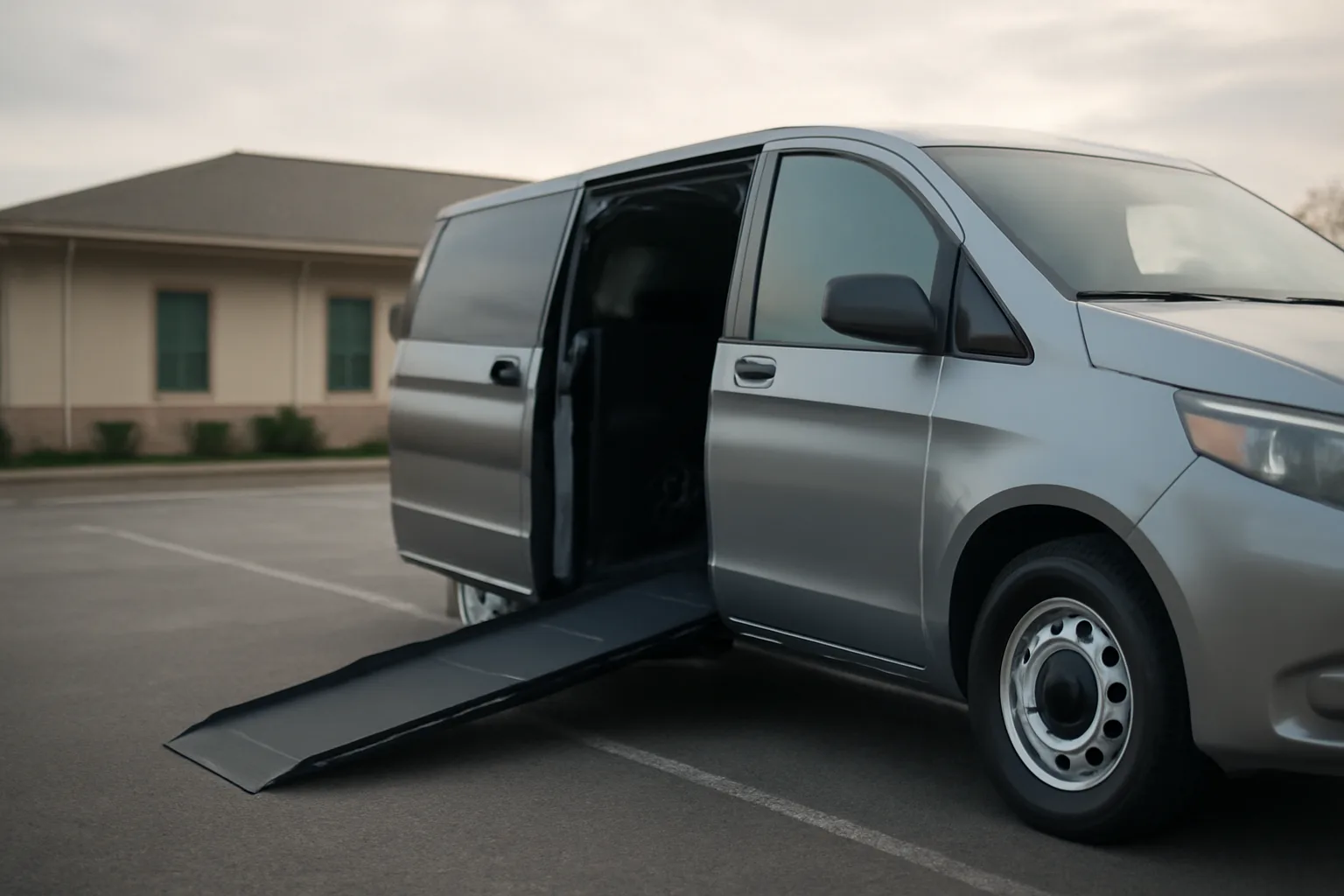
One van is completely normal to start with, and plenty of successful owner-operators never grow past two or three vehicles. The business plan question isn't really "can I do this with one van," it's "can one van cover my fixed costs while I wait for broker trip volume to ramp up." A wheelchair-accessible van (new or converted) typically runs somewhere in the $45,000 to $80,000+ range depending on whether you buy new, buy a used conversion, or convert an existing van yourself; a rear-entry or side-entry conversion alone can add $20,000 to $30,000 to a base van's price, per typical mobility dealer pricing (get current quotes locally, since this shifts with used-vehicle markets). Add commercial insurance, which for a single wheelchair van commonly runs a few thousand dollars a year depending on your state and driving record, and your fixed costs before your first paid trip are real money. With one van, your plan should include: a backup driver plan (illness, vehicle breakdown day), a maintenance reserve (wheelchair lifts are mechanical and they do fail), and a clear-eyed decision about whether you're driving it yourself or hiring a driver from day one. One-van owner-operators who drive themselves have the tightest margins but the least payroll risk. One van with a hired driver adds payroll tax, workers' comp exposure in most states, and scheduling complexity you don't have when you're the only driver.
What does broker credentialing actually require?
Broker credentialing is the process where companies like Modivcare, MTM, Access2Care, or SafeRide vet you as an approved transportation provider in their network for a specific state's Medicaid contract. It's separate from, and happens after (or alongside) your state Medicaid provider enrollment. Expect to submit: proof of business formation and EIN, commercial auto insurance certificates naming the broker as an additional insured (broker-specific minimum limits vary, so confirm the exact number), vehicle registration and inspection records showing ADA lift/ramp compliance, a roster of drivers with background checks and motor vehicle record pulls, and sometimes drug testing documentation. Brokers also typically require you to complete their own driver and dispatcher training modules before activation, on top of any state-mandated defensive driving course. One thing new owner-operators don't expect: brokers often cap or manage how many trips they route to a new, small provider until you've built a track record, and payment terms (net 15, net 30, direct deposit vs. check) vary broker to broker. Ask about payment cycle length before you sign anything, because cash flow timing matters more than the headline trip rate when you're running on one or two vans. See nemt and non emergency medical transportation for more on how brokers structure these networks state by state.
What insurance and driver requirements should the business plan cover?
Your written plan needs a real insurance section, not a placeholder. At minimum, plan for commercial auto liability meeting your state's minimum for passenger-for-hire vehicles (often higher than private passenger minimums), general liability, and, if you hire any driver as an employee, workers' compensation coverage as required by your state. Some brokers require higher liability limits than your state's bare legal minimum, commonly in the $1,000,000 combined single limit range for passenger vehicles, though this is broker- and state-specific, so confirm the exact figure with the broker's provider manual before budgeting. For drivers, plan for: a clean or acceptable motor vehicle record (brokers typically define disqualifying violations, like DUIs within a lookback period), a criminal background check (many states and brokers exclude certain offenses, especially involving vulnerable populations, permanently or for a set number of years), and passenger assistance or wheelchair securement training. The Americans with Disabilities Act's transportation regulations at 49 CFR Part 37 set the accessibility framework brokers and states build their vehicle and securement standards on [4]. Even though it's a federal civil rights regulation and not a state licensing rule, it shows up in almost every state's vehicle inspection checklist indirectly.
How much does it cost to start, and what should the budget section include?
Your plan's budget section should separate one-time startup costs from recurring monthly costs, because owner-operators who blend the two tend to underfund month two. One-time costs typically include: vehicle purchase or conversion (the single biggest line item), business formation fees (often under $500 depending on state), state Medicaid provider enrollment fees (many states charge no fee for transportation provider enrollment, but some require a background check fee in the $25 to $100 range; confirm with your state Medicaid agency), and initial insurance down payment. Recurring monthly costs include: loan or lease payment, insurance premium, fuel, maintenance (lift servicing especially), driver payroll if applicable, and dispatch/broker platform fees if the broker charges one (not all do). A realistic plan also budgets a cash reserve for the gap between your first completed trips and your first broker payment, since most brokers pay on a delay of one to four weeks after trip verification, not same-day. This is the section where a lot of new owner-operators run out of money, not because the business model is bad, but because they didn't plan the cash flow lag.
What should go in the actual business plan document?
A lender, a broker, or even just your own sanity check benefits from a written plan with these sections, in this order: 1. Executive summary (one page: what you do, one van or a fleet, which state, which broker networks you're targeting) 2. Service description (wheelchair van, ambulatory sedan, stretcher, or a mix; which populations you serve) 3. Market and payer analysis (your state's NEMT model, broker-managed or fee-for-service, which brokers operate in your region) 4. Licensing and compliance plan (state Medicaid enrollment steps, broker credentialing checklist, driver and vehicle compliance) 5. Operations plan (dispatch method, scheduling, backup vehicle/driver plan, maintenance schedule) 6. Insurance and risk management 7. Startup and operating budget (one-time vs. recurring, cash reserve target) 8. Growth plan (when and how you'd add a second vehicle, if at all) Notice what's not on that list: a trip-volume revenue guess dressed up as a forecast. Be honest in your own plan that trip volume from a broker is not guaranteed and ramps unevenly, especially in your first few months. If you're building this for a bank loan, the loan officer will want a budget and a repayment plan far more than a rosy forecast anyway.
Where do people get stuck, and how do you avoid it?
The most common stall point, by a wide margin, is treating state Medicaid enrollment and broker credentialing as one step. They're not. In most states you need a state Medicaid provider number (or equivalent enrollment) before a broker will even open your credentialing file, but the broker's own requirements (insurance limits, vehicle inspection format, driver training modules) are entirely separate and often more detailed than the state's. The second stall point is vehicle spec mismatches. Buying a van before confirming the exact ADA lift, tie-down, and interior clearance requirements your state and broker require means you might need costly retrofits, or you might fail the vehicle inspection and have to wait for a re-inspection slot. The third is underestimating the paperwork cycle time. Background checks, insurance binder processing, and broker application review each commonly take one to a few weeks on their own, and they don't all run in parallel if one depends on the outcome of another (you generally can't get final broker sign-off until insurance is confirmed and issued, for example). Build a 60 to 90 day runway into your plan between finishing your vehicle purchase and taking your first trip, and treat anything faster as a pleasant surprise, not the baseline. If you want a structured way to move through both the state enrollment paperwork and broker credentialing checklist without missing a form, RideCredential's $199 one-time State + Broker NEMT Launch Kit walks through both tracks side by side for your specific state and broker. It doesn't replace your state Medicaid agency's own requirements or guarantee approval, but it organizes the sequence so you're not discovering a missing form in week seven.
How is NEMT different from emergency medical transport, in plan terms?
For your business plan, the distinction matters because it changes your entire licensing path. Emergency medical transport, meaning ambulance services, requires EMT or paramedic staffing certification, state EMS agency licensing, and often a Certificate of Need depending on your state. It's a different regulatory world entirely, run through state EMS offices, not the state Medicaid transportation unit. NEMT, by contrast, is what nearly every wheelchair-van owner-operator is actually building. No EMT certification is required for a standard wheelchair van driver in most states, though passenger assistance and securement training is standard and often broker-mandated. If your plan somehow drifts toward ambulance-level service (say, a broker or facility asks about stretcher transport with medical monitoring), stop and check whether that pushes you into EMS licensing territory in your state, because that's a materially bigger compliance and staffing commitment than standard wheelchair or ambulatory NEMT. For more on where that line sits, see emergency medical transport.
Frequently asked questions
What is non-emergency medical transportation (NEMT)?
NEMT is scheduled transportation to and from medical appointments for people who don't need an ambulance but can't get there on their own, often because of a wheelchair, a walker, or a health condition. Federal Medicaid rule 42 CFR 431.53 requires states to ensure this transportation exists for eligible beneficiaries, usually through a state-contracted broker.
How do I start a medical transportation business?
Confirm your state's NEMT model (broker-managed vs. fee-for-service), form your business entity, get commercial insurance, enroll as a state Medicaid provider, buy a vehicle meeting ADA and broker specs, complete broker credentialing, and get trained on the broker's dispatch platform before your first trip. Doing these out of order is the top cause of delay.
Does Medicaid cover ambulance rides?
Yes. Medicaid covers ambulance (emergency) transport when it meets medical necessity standards, billed separately from non-emergency transportation under different provider rules. Medicaid.gov's transportation guidance treats emergency (ambulance) and non-emergency transportation as distinct benefit categories with different provider requirements.
Does Medicare cover medical transportation?
Traditional Medicare Part B covers ambulance transport when other transport would endanger the patient's health, but it generally does not cover routine non-emergency wheelchair van or sedan trips. Some Medicare Advantage plans offer NEMT as a supplemental benefit through the same brokers used for Medicaid, which is a separate credentialing track.
How do you start a NEMT business from scratch with no experience?
Start by calling your state Medicaid transportation unit to learn your state's model and enrollment steps, then work through business formation, insurance, vehicle compliance, and broker credentialing in that order. No prior healthcare experience is required, but you do need to pass background checks, insurance requirements, and vehicle inspection standards.
Can I start a non-emergency medical transportation business with one van?
Yes, most owner-operators start with one wheelchair van. Your plan needs a backup driver arrangement, a maintenance reserve for the lift and vehicle, and a clear decision about whether you drive it yourself or hire a driver, since hiring adds payroll and workers' comp obligations most single-van owners don't initially budget for.
What's the difference between NEMT and emergency medical transport?
Emergency medical transport (ambulance) requires EMT/paramedic certification and state EMS agency licensing. NEMT, which covers wheelchair vans, ambulatory sedans, and stretcher vans for non-emergency trips, doesn't require EMT certification in most states, though driver background checks and passenger securement training are standard.
How much does it cost to start a wheelchair van NEMT business?
The biggest cost is the vehicle: a wheelchair-accessible van, new or converted, commonly runs $45,000 to $80,000 or more depending on age and conversion type. Add commercial insurance, business formation fees, and a cash reserve to cover the delay between completing trips and receiving broker payment, which often runs one to four weeks.
Do I need a Medicaid provider number before broker credentialing?
In most states, yes, you need to enroll as a state Medicaid transportation provider before or alongside broker credentialing, since brokers operate under state Medicaid contracts. Requirements differ by state, so confirm the exact sequence and any fees with your state Medicaid transportation unit directly.
Which brokers manage state Medicaid NEMT contracts?
Common national and regional brokers include Modivcare, MTM, Access2Care, and SafeRide, though which broker holds the contract varies by state and sometimes by region within a state. Confirm with your state Medicaid agency which broker (if any) manages NEMT in your service area before applying.
How long does it take to get credentialed as an NEMT provider?
There's no fixed national timeline, but background checks, insurance issuance, and broker application review each commonly take one to a few weeks and often can't run fully in parallel. Building 60 to 90 days into your plan between finishing vehicle purchase and your first trip is a realistic, non-guaranteed estimate.
Do NEMT drivers need special training or certification?
Standard wheelchair van drivers don't need EMT certification, but most states and brokers require a background check, an acceptable motor vehicle record, and passenger assistance or wheelchair securement training. Some brokers also require completion of their own driver training modules before activating you in their dispatch system.
What insurance does an NEMT business need?
At minimum, commercial auto liability meeting your state's passenger-for-hire minimums, general liability, and workers' compensation if you employ any drivers. Brokers often require higher liability limits than the state minimum and require certificates naming the broker as an additional insured, so confirm exact figures with the broker's provider manual.
Sources
- eCFR, 42 CFR 431.53 Assurance of transportation: States must ensure necessary transportation for Medicaid beneficiaries to and from providers, directly, by contract, or through a broker
- Medicaid.gov, Non-Emergency Medical Transportation: Medicaid distinguishes emergency (ambulance) transportation from non-emergency medical transportation as separate benefit categories
- eCFR, 42 CFR Part 410, Subpart B (Ambulance services): Medicare Part B covers ambulance services only when other transportation would endanger the beneficiary's health
- eCFR, 49 CFR Part 37 Transportation Services for Individuals with Disabilities: Federal ADA transportation regulations set the accessibility framework for vehicle and securement standards used in NEMT vehicle inspections
- eCFR, 42 CFR 440.170 Transportation: Federal Medicaid regulations define transportation as a covered service states may provide to enable access to medical care
- U.S. Small Business Administration, Choose a business structure: Business formation steps like choosing an LLC or corporation structure and obtaining an EIN are standard startup requirements before licensing