Last updated 2026-07-25
TL;DR
Reddit threads on starting an NEMT business get the broad strokes right (get a vehicle, get insured, enroll with Medicaid, credential with brokers) but are inconsistent on costs, timelines, and state rules because those vary by state and change often. Use forum posts for moral support and vendor names, not for compliance facts. Confirm every requirement with your state Medicaid agency and broker.
What is NEMT and why does it show up so much on Reddit?
NEMT stands for non-emergency medical transportation. It's transportation for Medicaid (and sometimes Medicare Advantage) members to get to medical appointments, dialysis, therapy, and pharmacy visits when they don't need an ambulance. Medicaid.gov describes it as a required benefit: states must "assure that eligible individuals have necessary transportation to and from providers" under federal Medicaid rules [1]. It shows up constantly on r/NEMT, r/smallbusiness, and local Facebook groups because the barrier to entry looks deceptively low. You don't need a CDL for most wheelchair van work, the vehicles aren't as expensive as an ambulance, and every state runs Medicaid, so there's a market almost everywhere. That draws a steady stream of first-time posters asking some version of "how to start a medical transportation business" with one van and no industry background. The honest answer is that NEMT is a heavily regulated, broker-mediated business dressed up as a driving job. Reddit threads capture the driving part well and gloss over the regulatory part, which is where most new operators actually get stuck. For a plain-language rundown of the service category itself, see NEMT and non emergency medical transportation.
How do you start a medical transportation business, step by step?
Strip away the state-by-state variation and the sequence is consistent: get the entity and insurance in place, get a compliant vehicle, get state Medicaid enrolled, then get credentialed with the brokers that manage rides in your area. 1. Form your business entity (LLC is common) and get an EIN from the IRS. 2. Get commercial auto insurance with the liability limits your state and brokers require; wheelchair vans usually need higher limits than a standard commercial policy because you're transporting a vulnerable passenger. 3. Buy or convert a vehicle that meets state accessibility and inspection standards (tie-downs, ramp or lift, wheelchair securement points). 4. Enroll as a Medicaid transportation provider with your state Medicaid agency, or with the state's NEMT broker if the state has outsourced enrollment (most have). 5. Credential with the broker(s) operating in your service area, commonly Modivcare, MTM, Access2Care, or SafeRide depending on the state and region. 6. Get driver-level requirements sorted: background checks, drug screening, defensive driving certification, CPR/first aid in many states. 7. Pass any vehicle inspection the broker or state requires before you're activated to receive trip assignments. Reddit threads usually nail steps 1 through 3 and steps 6 and 7 (drivers post real experiences with inspections and background checks), but they're weakest on step 4 and step 5, the actual credentialing paperwork, because it varies so much by state and broker that no single post can cover it. Confirm your state's specific process with your state Medicaid agency's transportation unit before you spend money on a vehicle.
How do you start a NEMT business with just one van?
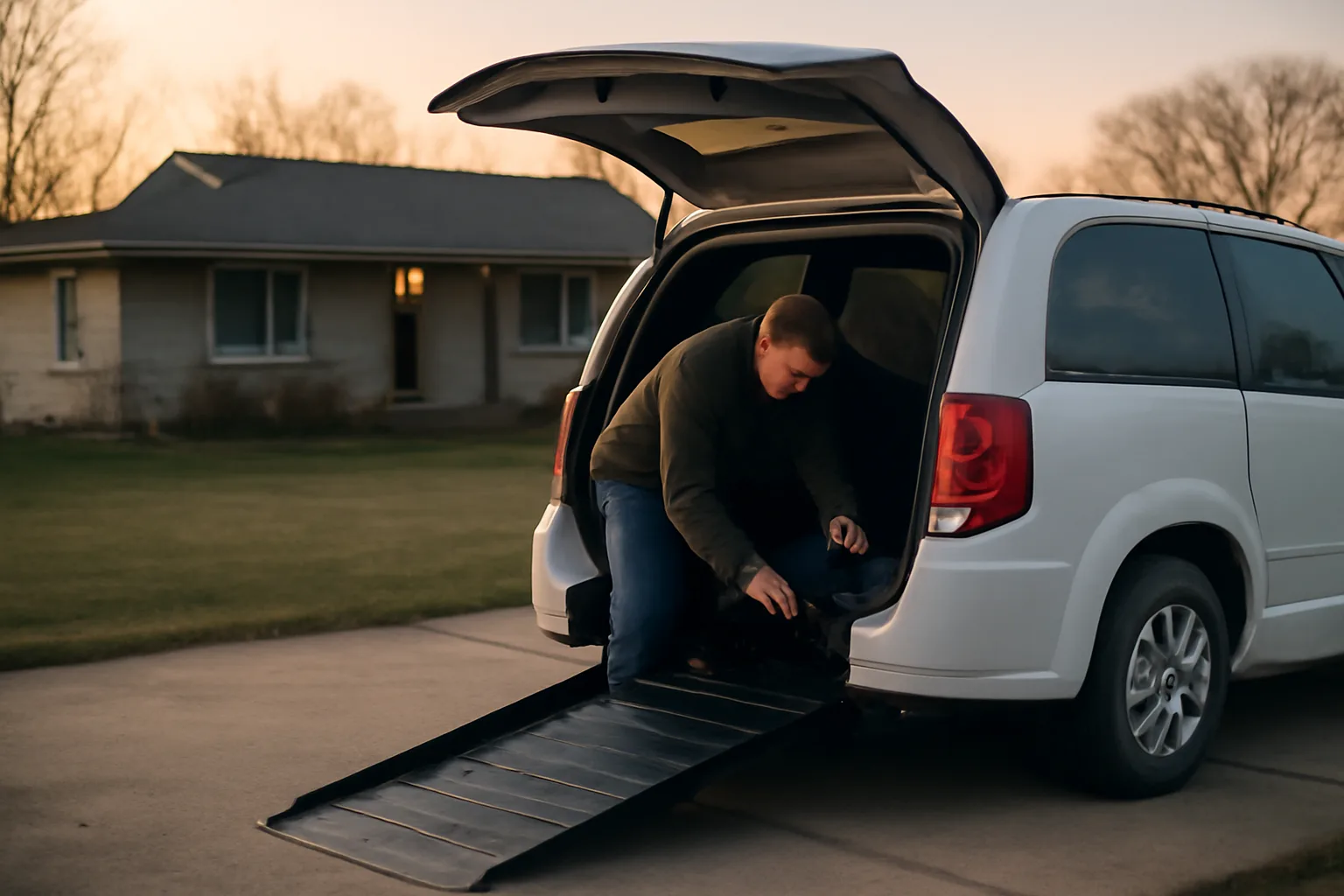
Yes, you can start with one van, and a lot of successful owner-operators did exactly that. The one-van path is realistic but it means you personally are the driver, the dispatcher, and the biller, at least at first. What one-van operators actually need, based on how states structure enrollment: a wheelchair-accessible vehicle (or ambulatory sedan/minivan if you're not doing wheelchair transport) that passes your state's inspection standard, a business entity, commercial insurance naming the entity, and enrollment with the state Medicaid program or its enrollment broker. Some states let an owner-operator enroll as an individual provider without employees; others require a minimum fleet size or a certain liability coverage tier that effectively rules out true solo operations. This is exactly the kind of detail that varies enough that a Reddit answer from someone in Texas won't apply to someone in Ohio. One thing forum posters get right: don't buy the van before you've confirmed your state's specific vehicle requirements (ramp angle, tie-down count, signage rules, age limits on the vehicle itself). Some states won't allow vehicles older than a certain model year for Medicaid NEMT use. Buying first and asking questions later is the single most common expensive mistake described in these threads.
What is non-emergency medical transportation, exactly?
NEMT is transportation to medical care for people who don't need ambulance-level medical monitoring during the ride but can't safely get there on their own, whether because of a mobility limitation, a vision impairment, a cognitive condition, or lack of another transportation option. It covers everything from an ambulatory sedan ride to dialysis three times a week, to a wheelchair van ride to a specialist appointment, to a stretcher van transfer between facilities. Federal Medicaid regulation requires states to provide NEMT to Medicaid enrollees when they have no other means of transportation to a covered service; the rule sits at 42 CFR 431.53, which requires state plans to "specify that the Medicaid agency will ensure necessary transportation for recipients to and from providers" [2]. States implement this differently: some run it in-house, most contract with a managed transportation broker, and a handful use hybrid models. That's why the practical experience of "starting an NEMT business" in Florida looks different from doing it in California, even though the federal requirement behind it is the same. For background on the difference between NEMT and other transport categories, see emergency medical transport and NEMT transportation.
Does Medicaid cover ambulance rides?
Yes, Medicaid covers medically necessary ambulance transportation as part of its emergency and non-emergency transportation benefits, but ambulance service is a separate category from NEMT and requires separate state ambulance licensure, more than NEMT enrollment. Medicaid.gov's transportation guidance groups "emergency transportation, most often by ambulance" alongside NEMT as benefits states must cover under the assurance of transportation requirement [1]. The distinction matters for new owner-operators because ambulance-level service (Basic Life Support or Advanced Life Support) requires state EMS licensure, certified EMTs or paramedics on board, and medical equipment well beyond what a wheelchair van needs. If you're buying a wheelchair van and don't have EMT staff, you are not going into the ambulance business, you're going into NEMT, and that's a much lower regulatory bar to clear. Reddit threads sometimes blur this line, with posters asking about "medical transportation" without specifying which category, which produces confusing and contradictory answers in the same thread.
Does Medicare cover medical transportation?
Medicare's coverage of transportation is narrower than Medicaid's. Original Medicare (Part B) covers ambulance services when other transportation would endanger your health, and Medicare.gov states that Medicare covers ground ambulance transportation to the nearest appropriate medical facility when other transportation "could endanger your health" [3]. Medicare does not have a broad NEMT benefit the way Medicaid does. Some Medicare Advantage (Part C) plans have added NEMT-style benefits as a supplemental benefit in recent years. CMS's final Contract Year 2019 Medicare Advantage rule expanded the definition of allowable supplemental benefits to let plans cover items and services that address enrollees' health-related social needs, including transportation, for chronically ill members [4]. But that's plan-specific and optional, not a guaranteed benefit like Medicaid NEMT. If you want to work with Medicare Advantage plans, you'd credential directly with the plan or its transportation vendor, and coverage terms differ by plan and by year, so confirm current benefit details with the specific plan before you count on that revenue stream.
How does state Medicaid enrollment actually work for NEMT providers?
Every state Medicaid agency has a transportation unit or a designated NEMT broker that handles enrollment, and the process usually includes a provider application, proof of insurance, vehicle documentation, driver credentialing documents, and in most states a signed provider agreement. Medicaid.gov's NEMT overview describes it as a state option delivered either directly or through "transportation brokers who coordinate transportation services" under contract with the state [1]. Because each state runs its own program, timelines and paperwork differ meaningfully. Some states process new provider applications in a few weeks; others take several months, especially if the state also requires a Certificate of Need or a separate transportation network company registration. Confirm your state's specific timeline and document list with your state Medicaid agency's transportation unit, and don't assume a number you read in a forum post from a different state applies to you. Medical transportation and non emergency medical transportation services cover more on how states structure this.
What do Modivcare, MTM, Access2Care, and SafeRide actually require from owner-operators?
These are the major national NEMT brokers that states and managed care plans contract with to manage trip assignment, scheduling, and provider networks. Each one runs its own credentialing process on top of, or sometimes replacing, direct state enrollment, and each has its own vehicle inspection standard, insurance minimums, and background check requirements. The general pattern across brokers: submit a provider application, show proof of your business entity and insurance, pass a vehicle inspection (often broker-specific, even if you already passed a state inspection), submit driver files including background checks and driving record, and sign a broker service agreement that sets your per-trip or per-mile reimbursement rate. Rates, minimum fleet requirements, and specific paperwork differ by broker and by state contract, and brokers periodically change their requirements when their state contracts renew. This is the part of the process Reddit is least reliable on. A post from 2021 describing MTM's onboarding in one state may not reflect that broker's current requirements in a different state, or even the same state after a contract renewal. Brokers rebid state contracts on a cycle (often three to five years), and a broker that ran a state's NEMT program last year may not run it this year. Always confirm with the specific broker's current provider enrollment page and your state Medicaid transportation unit rather than relying on old forum threads.
What do NEMT owner-operators on Reddit get right?
A few things forum posters consistently describe accurately, because they're reporting their own lived experience rather than trying to summarize regulation: Vehicle wear and maintenance costs are real and underestimated by newcomers. Wheelchair vans carry heavier loads, run more idle time waiting for passengers, and need ramp/lift maintenance that a standard van doesn't. Drivers who've done this for a while consistently warn that maintenance reserves matter more than new owners expect. Dispatch and scheduling friction with brokers is a common and consistent complaint: trip assignments arriving late, mileage disputes, and slow reimbursement cycles. This tracks with the practical reality of broker-managed models, where the broker controls trip volume and payment timing, not the owner-operator. Background check and drug screening requirements for drivers are described accurately and consistently across states, because these tend to follow similar patterns (state criminal background check, sometimes fingerprinting, DOT-style drug and alcohol testing in many states) even though the specific agency running the check differs.
What do NEMT business Reddit threads get wrong or oversimplify?
The biggest recurring problem is treating one state's rules as universal. A poster in Georgia describing their broker credentialing timeline gets read by someone in Michigan as if it applies there too. It usually doesn't. Vehicle age limits, minimum insurance limits, whether you need a Certificate of Need, and which broker even operates in a region are all state-specific and change on their own schedules. The second problem is stale information. Broker contracts get rebid, state Medicaid rules get updated, and a thread from three years ago describing a broker's onboarding fee or vehicle standard may simply be wrong today. NEMT brokers and state Medicaid transportation units are the only sources that reflect current rules; treat forum posts as anecdotes, not current requirements. The third problem is income talk. Reddit is full of speculative revenue and trip-volume numbers with no sourcing behind them. Nobody publishes reliable, generalizable data on what an individual owner-operator earns, because it depends entirely on broker rates in that specific state and contract, trip volume assigned, deadhead mileage, and vehicle costs, none of which are public or standardized. Treat any specific income number you read in a forum thread as unverifiable.
What paperwork and setup steps get missed most often by new owner-operators?
| Insurance | Broker-required liability limits often exceed the state's minimum for standard commercial auto | |
|---|---|---|
| Vehicle | Some states set a maximum vehicle age (model year) for Medicaid NEMT use, separate from safety inspection | |
| Entity setup | Broker contracts are typically signed by the business entity, not the individual, so EIN and entity paperwork need to be done first | |
| Driver files | Fingerprint-based background checks can take weeks longer than a standard background check, and many states require them specifically | |
| Broker credentialing | Passing a state inspection does not automatically satisfy a broker's separate vehicle inspection standard | |
| Reimbursement setup | Broker payment cycles and per-trip vs. per-mile rate structures differ by contract and need to be understood before you count on cash flow | Getting organized around this checklist before buying a vehicle or signing anything saves real money. A one-time reference tool like the $199 State + Broker NEMT Launch Kit exists specifically because this paperwork sequence is where new owner-operators lose the most time, though you can also build this checklist yourself directly from your state Medicaid transportation unit's provider enrollment page and each broker's provider portal. |
Based on where the state enrollment and broker credentialing process typically trips people up: | Step | Commonly missed detail |
Is NEMT a good business to start based on what people actually report?
There's no reliable public data on typical owner-operator profitability, so be skeptical of anyone, on Reddit or elsewhere, giving you a confident income number. What is verifiable is the regulatory structure: NEMT is a required Medicaid benefit in every state [1] [2], it's usually delivered through a small number of contracted brokers rather than an open market [1], and entry requires passing both state enrollment and broker credentialing, more than buying a van and driving. That structure cuts both ways. It means demand is durable, because Medicaid isn't going away and the transportation requirement is federal. It also means you're dependent on a small number of gatekeepers (your state Medicaid transportation unit and the brokers that hold the contracts in your area) for the trips that pay your bills. Reddit threads capture the day-to-day driving experience well and the credentialing bottleneck poorly, mostly because the credentialing process is genuinely tedious to describe and changes too often for a single post to stay accurate. If you're serious about this, spend your research time on primary sources: your state Medicaid agency's transportation unit page, the specific broker's provider enrollment page for your state, and federal guidance on the requirement, rather than trying to reconstruct the rules from forum threads written by people in other states.
Frequently asked questions
How do I start a medical transportation business from scratch?
Form a business entity, get commercial auto insurance meeting your state and broker minimums, buy or convert a vehicle that meets your state's NEMT vehicle standards, enroll with your state Medicaid agency or its enrollment broker, and credential with the transportation brokers operating in your area (Modivcare, MTM, Access2Care, SafeRide, or others depending on your state). Confirm specifics with your state Medicaid transportation unit before buying a vehicle.
Does Medicaid cover ambulance rides?
Yes. Federal Medicaid rules require states to ensure necessary transportation, including emergency transportation "most often by ambulance," for enrollees to reach covered services, per Medicaid.gov's transportation guidance. Ambulance service requires separate state EMS licensure and certified EMT/paramedic staff, which is different from NEMT wheelchair van or ambulatory transport enrollment.
What is NEMT?
NEMT (non-emergency medical transportation) is transportation to medical appointments, dialysis, therapy, and similar covered services for people who don't need ambulance-level care but can't get there on their own. It's a required Medicaid benefit under 42 CFR 431.53, delivered by states directly or, more commonly, through contracted transportation brokers.
Does Medicare cover medical transportation?
Medicare Part B covers ambulance transportation when other means would endanger your health, and limited non-emergency ambulance transport when a doctor certifies medical necessity. Medicare does not have a broad NEMT benefit like Medicaid's; some Medicare Advantage plans offer NEMT-style rides as an optional supplemental benefit, which varies by plan and year.
How do I start a NEMT business with just one van?
You can start with a single wheelchair van, functioning as owner-operator, dispatcher, and biller yourself. You'll still need a business entity, compliant insurance, a vehicle meeting your state's specific accessibility and age standards, state Medicaid enrollment, and broker credentialing. Some states allow solo individual-provider enrollment; others set minimum fleet or coverage thresholds, so confirm before buying.
What is non-emergency medical transportation exactly?
It's transportation for people who need help reaching medical care due to mobility, vision, or cognitive limitations but don't need in-transit medical monitoring like an ambulance provides. It ranges from ambulatory sedan rides to wheelchair van trips to stretcher van transfers, and is a required Medicaid state plan benefit under federal regulation.
Is NEMT credentialing the same in every state?
No. Each state runs its own Medicaid transportation program, either directly or through a contracted broker, with its own enrollment paperwork, vehicle standards, and timelines. A process described in a Reddit post from one state may not apply in another. Always confirm current requirements with your specific state Medicaid transportation unit.
What's the difference between state Medicaid enrollment and broker credentialing?
State Medicaid enrollment authorizes you as a Medicaid transportation provider under the state plan. Broker credentialing is a separate process with the specific broker (Modivcare, MTM, Access2Care, SafeRide, etc.) contracted to manage trips in your area, often requiring its own vehicle inspection and paperwork on top of state enrollment.
How much does NEMT startup cost, and can I trust Reddit's numbers?
Costs vary too much by state, vehicle condition, and insurance market to trust a single forum figure. Major cost drivers are the wheelchair van itself, commercial insurance at broker-required limits, and driver background check/screening fees. Treat any specific total-cost number from a forum post as one person's anecdote, not a benchmark for your state.
Do NEMT brokers rebid their state contracts, and why does that matter?
Yes. States periodically rebid NEMT broker contracts, often on a multi-year cycle, and the broker managing a state's program can change. This means older forum posts describing a broker's onboarding process may be describing a broker that no longer holds that state's contract. Confirm which broker currently operates in your state before applying.
Can I run NEMT without joining a broker network?
In most states, no, not for Medicaid trips, since states largely deliver NEMT through contracted brokers who control trip assignment. Some private-pay or Medicare Advantage plan direct contracts may bypass a state Medicaid broker, but those arrangements are separate and plan-specific, not a substitute for state Medicaid enrollment if that's your target market.
What vehicle requirements should I check before buying a wheelchair van?
Check your state's maximum vehicle age for Medicaid NEMT use, required tie-down and securement points, ramp or lift specifications, and any state or broker-specific inspection standard. Passing a general state safety inspection doesn't guarantee it meets a broker's separate NEMT vehicle credentialing standard, so confirm both before purchasing.
Sources
- Medicaid.gov, Non-Emergency Medical Transportation: States must assure necessary transportation for Medicaid enrollees to and from providers, covering both emergency (ambulance) and non-emergency transportation
- 42 CFR 431.53, Assurance of transportation: Federal regulation requiring state Medicaid plans to ensure necessary transportation to and from providers
- Medicare.gov, Ambulance Services coverage: Medicare Part B covers emergency ambulance transportation and limited non-emergency ambulance transport when medically necessary
- Federal Register, Medicare Program; Contract Year 2019 Policy and Technical Changes to the Medicare Advantage, Medicare Cost Plan, Medicare Fee-for-Service, and Medicare Prescription Drug Benefit Programs (83 FR 16440): CMS expanded allowable supplemental benefits for chronically ill Medicare Advantage enrollees starting in plan year 2019, enabling some plans to add NEMT-style benefits
- 42 CFR 440.170, Transportation: Federal Medicaid regulation defining transportation as an optional or covered service states may include, distinct from ambulance-level emergency transport