Last updated 2026-07-25
TL;DR
NEMT can be profitable, but margin comes from broker mix, low deadhead miles, and controlling cost per van (fuel, maintenance, insurance), not trip volume alone. Profitability depends more on your state's Medicaid rate and broker contract terms than on hustle. There's no public per-owner-operator profit data; treat any specific income promise you see online as unverified.
What is NEMT and why does it exist as a Medicaid benefit?
NEMT stands for non-emergency medical transportation. It's the ride a Medicaid enrollee gets to a scheduled dialysis appointment, a prenatal visit, or physical therapy, when they have no other way to get there and the trip doesn't need an ambulance. Federal Medicaid rules require states to make sure eligible people can get to and from covered services. The requirement lives in the Medicaid regulations at 42 CFR 431.53, which says states must "assure necessary transportation for the recipient to and from providers." [1] States can run this directly, contract with regional brokers, or mix both approaches county by county. That's the whole reason your local Medicaid transportation unit and companies like Modivcare, MTM, Access2Care, or SafeRide exist. They're not extra red tape for fun. They're the mechanism states use to satisfy a federal assurance requirement while trying to control costs and prevent fraud. If you're new to the space, the NEMT overview and non emergency medical transportation explainer are good starting points before you spend money on a van.
How to start a medical transportation business (the real sequence)
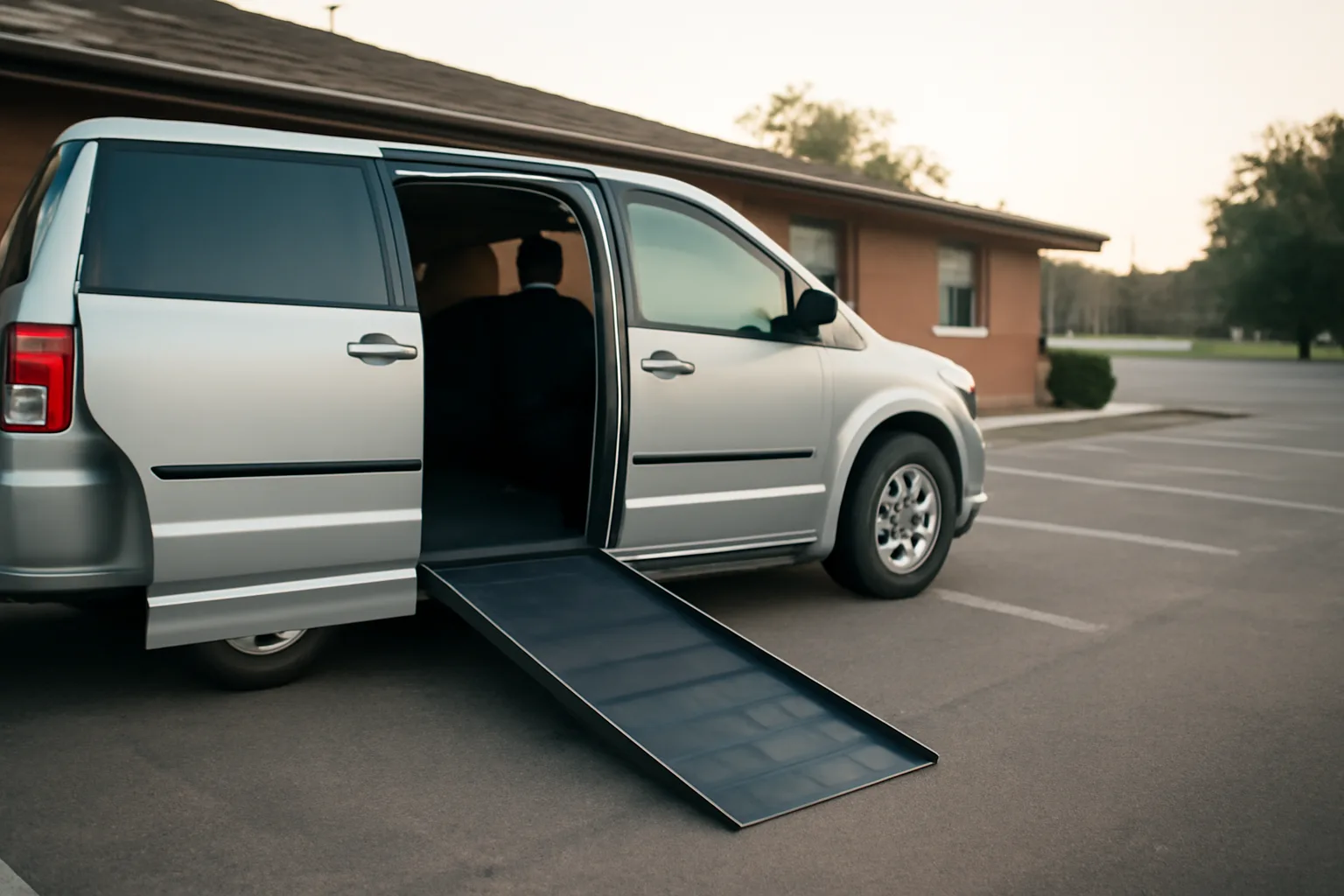
Most people get the order backwards. They buy the van first, then try to figure out enrollment. Do it the other way. 1. Decide your service type: ambulatory sedan, wheelchair van, or stretcher van. Each has different vehicle specs, insurance requirements, and driver credentialing rules. 2. Form your business entity (LLC is common) and get a federal EIN before you touch state paperwork. Most state Medicaid enrollment portals and broker credentialing forms want your EIN, more than a Social Security number. 3. Check your state's NEMT-specific licensing. Some states require a separate transportation provider permit or ambulance/non-emergency vehicle permit through the state DOT or health department, on top of Medicaid enrollment. This varies enough state to state that you need to confirm with your state Medicaid agency directly, not a national how-to guide. 4. Enroll as a Medicaid provider (or get your NPI and enroll through your state's Medicaid Management Information System) before or alongside applying to be a broker network provider. 5. Apply for broker credentialing with whichever broker manages NEMT in your service area (Modivcare, MTM, Access2Care, SafeRide, or a state-run program). This is usually separate from Medicaid enrollment and has its own vehicle inspection, background check, and insurance minimums. 6. Buy or lease the vehicle only after you know the exact spec requirements (wheelchair lift certification, tie-down systems, vehicle age limits) your broker enforces. Buying first risks buying wrong. Skipping steps 3 through 5 to get to "buy a van and start driving" is the single most common reason new owner-operators burn months waiting on paperwork after they've already got a loan payment due.
How do you start a medical transportation business with one van?
One van is a real business model, not a lesser version of a fleet. Plenty of owner-operators run solo for years before adding a second vehicle. With one van, your bottleneck is trip scheduling, not driving capacity. You can typically only run one broker's dispatch app at a time in practice, because trips overlap and double-booking yourself burns your reliability score fast. Pick the broker with the largest volume in your county first, get credentialed there, and prove yourself before you try to add a second broker contract. Insurance is usually your biggest fixed cost with a single van. Commercial auto policies for wheelchair-accessible vehicles carrying Medicaid passengers run higher than personal auto coverage, and brokers set minimum liability limits you must carry (commonly $1,000,000 combined single limit, though this varies by broker and state, so confirm with your broker and state Medicaid agency). Get quotes before you finalize the vehicle purchase, because premiums vary a lot by vehicle type and driving record. A single-van operation also means zero redundancy. If your van is in the shop, you have zero trips that day, and depending on your broker contract, repeated no-shows or cancellations can hurt your standing in the network. Budget for a maintenance reserve, more than the loan payment, from day one.
How to start a NEMT business specifically (vs. general medical transport)
NEMT is a subset of medical transportation, and it has its own separate rules from ambulance (emergency) transport, which matters because people often search the two terms interchangeably and then apply for the wrong license. NEMT providers move people who don't need medical monitoring en route. You're not running lights and sirens, you're not staffed with EMTs (unless your state requires an attendant for certain trip types), and you're not billing under ambulance fee schedules. Your vehicle is a wheelchair van, an accessible minivan, or a sedan, not an ambulance. Because NEMT isn't emergency care, CMS treats it differently in terms of who pays and how. States have flexibility in how they deliver the NEMT benefit, and many use a "broker model" where a private company manages scheduling, credentialing, and payment on the state's behalf under a capitated or fee-based contract. The Medicaid NEMT toolkit published by CMS notes that states "may enter into contracts, on a competitive bid basis, with a broker to manage transportation services for Medicaid beneficiaries" [2]. That means your actual customer relationship, day to day, is with the broker, not directly with the state Medicaid agency, even though the state sets the overall program rules and reimbursement pool. Get comfortable with that distinction early, it explains why broker credentialing (background check, vehicle inspection, driver training records) often takes longer and asks more of you than the state Medicaid provider enrollment itself.
Does Medicaid cover ambulance rides, and how is that different from NEMT?
Yes, Medicaid covers ambulance rides when they're medically necessary, but that's a completely different benefit category from NEMT, with different billing codes, different vehicle requirements, and usually a different state agency approval path. Ambulance transport is for emergencies or situations where the patient needs medical monitoring during the ride: cardiac events, trauma, a patient who can't be safely transported any other way. Medicaid's own regulatory text on transportation, 42 CFR 431.53, requires states to ensure both emergency and non-emergency transportation to covered services, but the two are billed and regulated under separate rules [1]. If you're picturing an ambulance company, you need EMT or paramedic-level staff, ambulance-specific state licensure (often through the state EMS office, more than Medicaid enrollment), and a very different startup cost than a wheelchair van business. Most new owner-operators reading this are looking at the NEMT side (wheelchair vans, ambulatory sedans), which has a much lower barrier to entry than standing up an ambulance service. Don't confuse the two paths when you're researching licensing, because searching "ambulance license" when you actually need NEMT broker credentialing will send you down the wrong regulatory road for months.
Does Medicare cover medical transportation, and should that affect your business plan?
Medicare's coverage of non-emergency transportation is much narrower than Medicaid's, and this matters for your business plan because it affects who your paying customers actually are. Original Medicare (Part B) covers ambulance transportation when other transportation would endanger the patient's health, and under limited circumstances covers non-emergency ambulance transport if a doctor certifies it's medically necessary. The Medicare Benefit Policy Manual, Chapter 10, sets out these ambulance coverage conditions in detail, including the requirement that non-emergency transport be supported by a physician certification statement [3]. Original Medicare generally does not cover routine non-emergency transportation like a ride to a dialysis appointment in a wheelchair van, the way Medicaid does. Some Medicare Advantage (Part C) plans do offer NEMT-type transportation as a supplemental benefit, and that market has grown, but it's plan-specific and not guaranteed. If you're building a business plan around Medicare Advantage transportation contracts instead of Medicaid NEMT, you need to confirm coverage terms with each specific plan, because there's no uniform federal NEMT benefit under Medicare the way there is under Medicaid's 42 CFR 431.53 requirement. For most new owner-operators, Medicaid NEMT (through your state agency and its broker) is the larger and more stable revenue base to build around, with Medicare Advantage plan contracts as a possible add-on once you're established, not a starting point.
What does it actually cost to start, and where does profit come from?
There's no single national number for startup cost because state licensing fees, insurance premiums, and vehicle prices vary too much, but you can build a real range from the pieces. A new wheelchair-accessible van (factory conversion) typically runs somewhere in the $45,000 to $65,000 range, while a good used conversion van can run $20,000 to $40,000 depending on mileage, lift condition, and age. Commercial auto insurance for a single wheelchair van carrying Medicaid passengers commonly runs several thousand dollars a year more than a personal policy, and brokers often require specific minimum liability coverage you'll need to quote out directly with an insurer. Add state business licensing fees (often a few hundred dollars), a DOT medical exam and background check for the driver, and broker application/credentialing costs, which are sometimes free and sometimes carry a fee depending on the broker. Profit in this business comes down to three levers, and none of them is "drive more hours": 1. Deadhead miles: the miles you drive with no paying passenger, going to pick up a rider or returning after drop-off. High deadhead ratio quietly eats margin that looks fine on a per-trip basis. 2. Reimbursement rate structure: some brokers pay per mile, some pay a flat rate per trip regardless of distance, some blend both. A flat per-trip rate on a short trip pays a lot better per mile than the same rate on a long rural trip. 3. Vehicle downtime and maintenance cost: a wheelchair lift breaking down doesn't just cost the repair, it costs every trip you can't run until it's fixed. Build a maintenance reserve, more than a loan payment, into your monthly math. There is no reliable public data on typical owner-operator profit margins in NEMT, and you should be skeptical of any site (including ours) that gives you a specific income number without a named source. What is documented is the structural stuff above: the federal transportation assurance requirement, the broker model, and the separate ambulance-vs-NEMT coverage rules.
Medicaid enrollment vs. broker credentialing: what's the difference and why does it matter for profitability?
| Medicaid provider enrollment | State Medicaid agency | Your eligibility to bill Medicaid in that state | |
|---|---|---|---|
| NPI registration | CMS / NPPES | Your unique provider identifier | |
| Broker credentialing | Modivcare, MTM, Access2Care, SafeRide, or state broker | Your access to actual dispatched trips | |
| Vehicle inspection | Broker (sometimes state DOT too) | Vehicle meets safety/lift standards | |
| Driver background check | Broker and/or state | Driver eligibility to transport Medicaid riders | You need both approvals before you're generating revenue, and they run on different timelines with different offices, which is why builders selling checklists (including our own $199 Launch Kit Builder, built specifically to organize state Medicaid enrollment and broker credentialing paperwork side by side) exist. That said, you can absolutely assemble this yourself for free by working directly through your state Medicaid transportation unit's website and each broker's provider portal; a paid checklist just saves you the hours of hunting down which forms apply in your state. |
These are two separate approval processes, and conflating them is the most common paperwork mistake new owner-operators make. Medicaid provider enrollment is your registration with the state's Medicaid program itself, usually through the state Medicaid Management Information System, and it's what makes you eligible to bill Medicaid at all for covered services in that state. Broker credentialing is a private company's (Modivcare, MTM, Access2Care, SafeRide, or your state's chosen NEMT broker) separate vetting process to let you into their driver/vehicle network so you actually get dispatched trips. It typically includes a vehicle inspection, driver background check, defensive driving or passenger assistance training records, and proof of insurance meeting the broker's specific minimums. | Step | Who runs it | What it establishes |
How do you pick a broker if more than one operates in your area?
In many states, more than one broker or region exists, and which one you should credential with first depends on trip volume in your specific county, not brand reputation. Call the broker's provider recruitment line (not the rider line) and ask directly how many active NEMT providers they already have in your zip code and what their current need looks like for wheelchair-accessible vehicles specifically. Some counties are oversaturated with sedans but short on wheelchair vans, and that gap is exactly where a new owner-operator has an advantage. Ask about payment terms in the same call: how often they pay (weekly, biweekly), whether it's per-mile or per-trip, and whether there are penalties for late cancellations or no-shows on your end. These terms directly determine your monthly cash flow, and they differ from broker to broker even within the same state. If your state runs NEMT without a private broker (some states manage it in-house or through regional transit authorities), your enrollment path skips broker credentialing entirely and goes straight through the state Medicaid transportation unit. Confirm which model your state uses before you assume you need to deal with a broker at all.
What vehicle and driver requirements should you expect before you buy?
Every broker and state sets its own specs, but a few requirements show up consistently enough to plan around before you sign a vehicle loan. Wheelchair vans generally need a certified lift or ramp system, secured tie-down anchor points meeting a recognized standard, and an age or mileage cap (some brokers won't credential vehicles past a certain model year). Ask for the exact spec sheet from the broker before you buy, not after. Drivers typically need a clean driving record check, a state or federal background check (often including a sex offender registry check given the vulnerable population served), a DOT medical certification if the vehicle qualifies as commercial, and sometimes passenger assistance or CPR/first aid training depending on the broker and state. None of this is standardized nationally, and there's no shortcut around confirming the exact list with your specific broker and state Medicaid agency before you spend money on training or vehicle upgrades. For a broader look at vehicle classes and specs across service types, see non emergency medical transportation services and nemt transportation.
Is this actually a profitable business, honestly?
It can be, but "profitable" here means something narrower than most people assume when they start searching for NEMT startup guides. The federal requirement behind this whole industry (42 CFR 431.53) isn't going away, so the demand side is structurally stable: states have to keep providing NEMT as long as Medicaid exists in its current form. That's different from, say, rideshare, where demand and pricing can shift overnight based on a platform's algorithm changes. What isn't stable is your per-trip margin, and that depends entirely on your specific broker's rate structure, your state's reimbursement level, your deadhead ratio, and your vehicle uptime. Two owner-operators in neighboring counties, same broker, same van, can have meaningfully different margins because one county has denser trip clustering and the other has long rural routes. If you're deciding whether to do this, the honest answer is: the regulatory and demand structure is solid, but nobody, including us, has good public data on typical owner-operator profit margins, because brokers and states don't publish that and most operators don't share it. Build your own numbers from real quotes (insurance, fuel, financing) against your actual broker's rate sheet before you commit to a vehicle purchase, and start with one van before scaling.
Frequently asked questions
How to start a medical transportation business?
Pick your service type (ambulatory, wheelchair van, or stretcher), form an LLC and get an EIN, check your state's transportation licensing rules, enroll as a Medicaid provider, get credentialed with your local broker (Modivcare, MTM, Access2Care, SafeRide, or your state's program), then buy the vehicle to spec, in that order. Buying the van first is the most common costly mistake.
Does Medicaid cover ambulance rides?
Yes. Medicaid covers medically necessary ambulance transportation, but it's billed and regulated separately from non-emergency medical transportation (NEMT). States must assure both emergency and non-emergency transportation to covered services under 42 CFR 431.53, but ambulance requires EMS-level staffing and licensing that NEMT wheelchair vans don't.
What is NEMT?
NEMT (non-emergency medical transportation) is Medicaid-funded transportation for enrollees who need a ride to a covered medical service, like dialysis or physical therapy, but don't need medical monitoring en route. States must provide it under federal Medicaid transportation assurance rules, often through a contracted broker like Modivcare or MTM.
Does Medicare cover medical transportation?
Original Medicare covers ambulance transportation when medically necessary, and limited non-emergency ambulance transport with a doctor's certification, but it generally does not cover routine non-emergency rides like wheelchair van transport to a scheduled appointment. Some Medicare Advantage plans offer NEMT as a supplemental benefit, but coverage varies by plan.
Does Medicaid cover ambulance rides for non-emergencies?
Sometimes, if a doctor certifies medical necessity and no lower level of transport would be safe, but this is handled under ambulance coverage rules, not the standard NEMT benefit. Most non-emergency Medicaid rides go through NEMT wheelchair vans or ambulatory vehicles instead of ambulances.
How to start a NEMT business specifically?
Confirm your state's NEMT vehicle and licensing requirements, enroll as a Medicaid provider, apply for broker credentialing (vehicle inspection, driver background check, insurance minimums), and only then buy or lease your vehicle to the exact spec the broker requires. NEMT rules differ from ambulance licensing, so don't apply through your state's EMS office by mistake.
How do you start a medical transportation business as one person with one van?
Get credentialed with the single highest-volume broker in your county first, since you can realistically only serve one dispatch app well as a solo operator. Budget for a maintenance reserve on top of your loan payment, since one van in the shop means zero trips that day.
What is non-emergency medical transportation?
Non-emergency medical transportation (NEMT) is transportation to and from covered Medicaid services for people who need a ride but not medical monitoring during transit. It typically uses wheelchair vans, ambulatory sedans, or stretcher vans, and is usually managed through a state-contracted broker rather than billed like an ambulance trip.
How to start a medical transportation business with one van?
Confirm state licensing and broker vehicle specs before buying, since wrong specs mean re-buying. Get Medicaid enrollment and broker credentialing done before you finance the vehicle, get commercial auto insurance quotes early since premiums vary widely, and build a maintenance reserve fund since one van means zero redundancy if it breaks down.
How do you start a non-emergency medical transportation business step by step?
Form your LLC and get an EIN, check state transportation licensing, enroll with your state Medicaid program, apply for NPI registration through CMS/NPPES, get credentialed with your regional broker, buy the vehicle to the broker's exact spec, and complete any required driver background checks and training before your first dispatched trip.
How much does it cost to start a wheelchair van NEMT business?
Costs vary widely by state and broker, but a new wheelchair-accessible van typically runs $45,000 to $65,000, while a used conversion can run $20,000 to $40,000. Add commercial auto insurance, state licensing fees, and possible broker credentialing costs on top. There's no single reliable national total figure because requirements differ this much by state.
Is a medical transportation business a good investment?
The demand side is structurally stable because federal Medicaid rules require states to provide NEMT to eligible enrollees under 42 CFR 431.53. Per-trip margin depends heavily on your specific broker's rate structure, your deadhead mileage, and vehicle uptime, and there's no reliable public data on typical owner-operator profit margins, so build your own numbers from real local quotes before committing.
Sources
- eCFR, 42 CFR 431.53 (Assurance of transportation): States must assure necessary transportation for Medicaid recipients to and from providers
- Medicaid.gov, Non-Emergency Medical Transportation toolkit: States may contract with a broker on a competitive bid basis to manage NEMT for Medicaid beneficiaries
- CMS, Medicare Benefit Policy Manual, Chapter 10 (Ambulance Services): Medicare Part B covers ambulance transportation when medically necessary and covers limited non-emergency ambulance transport with physician certification
- CMS, National Provider Identifier Standard overview: NPI registration through CMS/NPPES establishes a unique provider identifier used in Medicaid enrollment
- Medicaid.gov, Medicaid Managed Care Manual and broker contracting guidance: States use managed care and broker contracting arrangements to administer NEMT and other Medicaid benefits