Last updated 2026-07-25
TL;DR
Starting a medical transportation business means forming a legal entity, insuring and permitting your vehicle, getting business and driver licenses, then applying separately to your state Medicaid agency and to any brokers (Modivcare, MTM, Access2Care) that manage rides in your area. NEMT (non-emergency medical transportation) covers rides to appointments, not 911 calls. Budget weeks to months for enrollment, since state Medicaid and broker credentialing run on different timelines with different paperwork.
What is non-emergency medical transportation (NEMT)?
Non-emergency medical transportation, usually shortened to NEMT, is transportation to and from medical appointments for people who don't need an ambulance but can't drive themselves or use regular transit. Think dialysis three times a week, a wheelchair user going to physical therapy, or someone recovering from surgery who needs a ride to a follow-up visit. Federal Medicaid rules require states to make sure eligible people can get to and from providers. The regulation at 42 CFR 431.53 says states must "specify that the Medicaid agency will ensure necessary transportation for recipients to and from providers" [1]. That's the legal hook that created the entire NEMT industry: brokers, wheelchair van companies, ambulatory sedan services, and stretcher vans all exist because states have to guarantee this access. NEMT is not an ambulance. No lights, no sirens, no paramedics. It's closer to a specialized taxi or shuttle service, except the vehicles are often wheelchair-accessible vans, and the drivers usually need background checks, defensive driving certification, and sometimes CPR/First Aid training depending on the state. If you're trying to figure out where NEMT fits next to ambulance transport, our emergency medical transport overview breaks down the line between emergency and non-emergency rides in plain terms.
How do you start a medical transportation business?
Starting a medical transportation business has two tracks that run at the same time: the general small-business track (entity, insurance, licensing) and the healthcare-specific track (Medicaid enrollment, broker credentialing). Skip either one and you can't bill for rides. Here's the rough order most owner-operators follow: 1. Form a legal business entity (LLC or corporation) with your state's Secretary of State office. 2. Get a federal Employer Identification Number (EIN) from the IRS, even if you're a one-person operation, since Medicaid and brokers require it for payment setup. The IRS explains that an EIN is required for most business entities and is obtained free through its online application [2]. 3. Buy or lease your vehicle and get it inspected and permitted per your state's rules for wheelchair-accessible or medical transport vehicles. 4. Get commercial auto insurance with limits that meet your state Medicaid and broker minimums (these vary widely; confirm with your broker and state Medicaid agency). 5. Apply for a state business license and any local permits (some counties require a separate for-hire or livery permit). 6. Enroll as a Medicaid transportation provider with your state Medicaid agency. 7. Apply for credentialing with the broker(s) operating in your region, since most states outsource NEMT dispatch to a managed transportation broker rather than paying providers directly. The order matters less than making sure you don't buy a vehicle before checking your state's specific vehicle-age and equipment rules, and don't skip liability insurance shopping until the last minute, since NEMT-specific commercial policies can take a couple of weeks to bind. For a broader walkthrough of what "NEMT" means across states, see our nemt hub page.
How to start a NEMT business with one van
You don't need a fleet to get started. Plenty of owner-operators begin with a single wheelchair-accessible van, and most state Medicaid programs and brokers do enroll single-vehicle providers, though some brokers set a minimum vehicle count or require you to demonstrate coverage capacity in your service area. With one van, focus on these specifics: - Confirm your state doesn't require a minimum fleet size for Medicaid enrollment (most don't, but a few impose it at the broker level, not the state level).
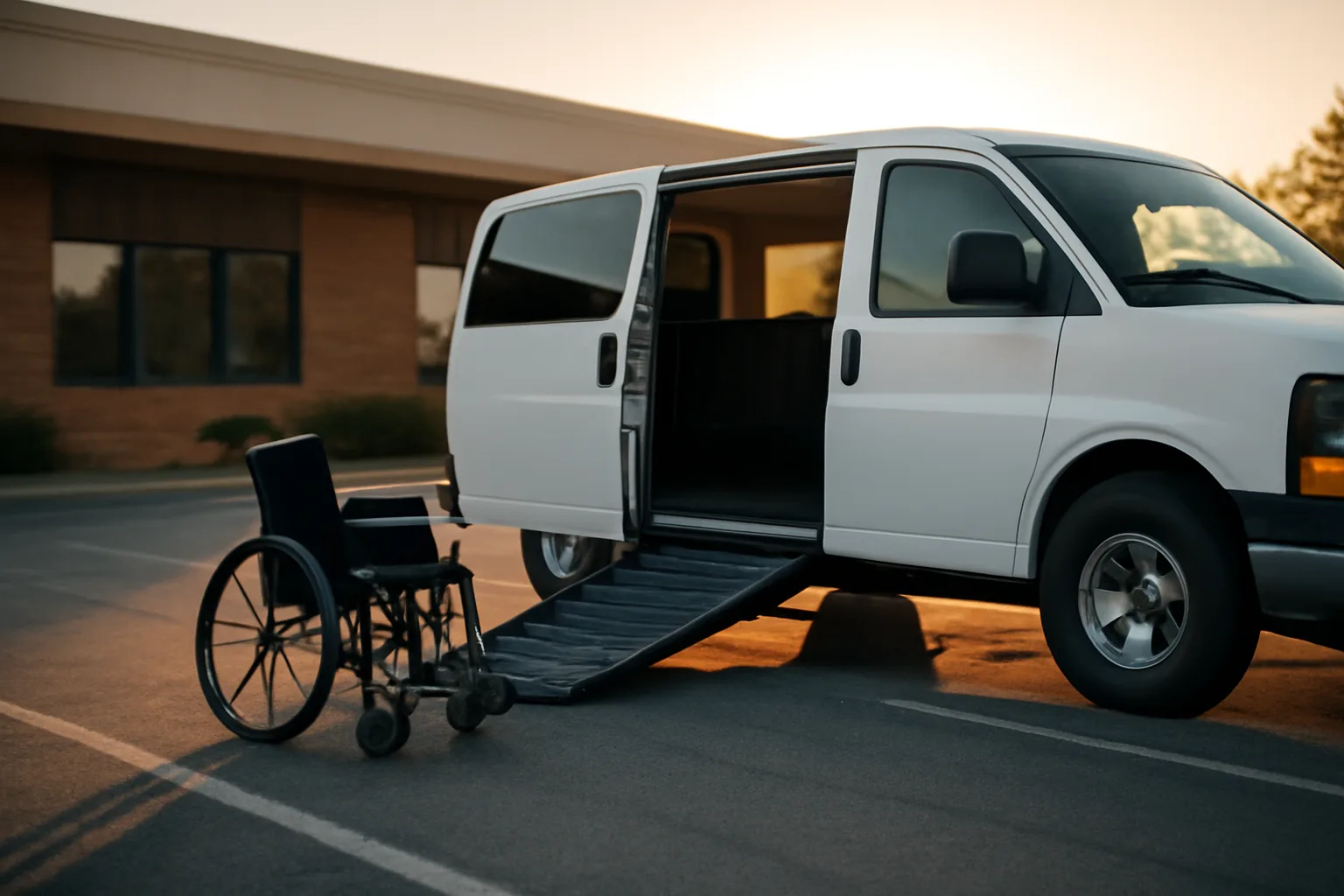
- Make sure your van meets Americans with Disabilities Act accessibility standards if you're marketing it as wheelchair-accessible, including a working lift or ramp, secure tie-down points, and enough interior clearance. The Department of Justice's ADA regulations at 28 CFR Part 36 set accessibility standards that inform how transportation vehicles and facilities are expected to accommodate wheelchair users [3].
- Get the vehicle inspected under your state's NEMT or livery vehicle inspection program (frequency and requirements differ by state; some require inspections every six or twelve months).
- Line up a backup plan for when your one van is in the shop, since brokers track no-show and late-cancellation rates closely and repeated failures to cover trips can get you suspended from their network. A single-van operation is a completely normal way to enter this business. Just don't over-promise capacity to a broker during credentialing, since committing to volume you can't cover with one vehicle creates problems fast. Our vehicles-and-equipment guides cover wheelchair van specs and inspection standards in more depth if you're still shopping for your first vehicle.
How do you apply for Medicaid NEMT provider enrollment?
| Business identity | Articles of organization/incorporation, EIN letter | |
|---|---|---|
| Vehicle compliance | Registration, inspection certificate, accessibility equipment proof | |
| Insurance | Commercial auto liability certificate meeting state minimums | |
| Driver qualifications | Background check, driving record, drug screen results | |
| Financial | Voided check or bank letter for electronic payment setup | |
| Tax | W-9 and state tax registration | Because every state's specific portal, forms, and minimum insurance figures differ, confirm current requirements directly with your state Medicaid agency's transportation or provider enrollment unit before you submit anything. Our state-guides hub has state-by-state starting points. |
Every state runs its own Medicaid transportation program, so there's no single national application. You apply through your specific state Medicaid agency's provider enrollment portal, and the process typically asks for your business entity documents, EIN, vehicle registration and inspection records, driver background check results, proof of insurance, and sometimes a site visit. The federal government requires states to have a transportation assurance in their Medicaid state plan, but leaves the operational details, forms, and vendor relationships up to each state [1]. Some states run NEMT enrollment directly through their Medicaid agency; many others require you to also get credentialed with a private broker that manages trip assignment and payment on the state's behalf. Medicaid.gov's benefits page confirms that "NEMT is often overlooked, but it is a critical benefit" for people who otherwise couldn't reach covered Medicaid services [4]. That's the federal framing; the actual paperwork lives entirely at the state level. Expect these general categories of documents in almost every state's application, even though exact forms differ: | Requirement category | Typical documents needed |
What's the difference between state Medicaid enrollment and broker credentialing?
State Medicaid enrollment gets you registered as an approved Medicaid provider type in that state's system. Broker credentialing is a separate process with a private company (Modivcare, MTM, Access2Care, SafeRide, or others depending on your state) that actually assigns you trips and pays you. Many states have moved to a "brokerage model" where the state contracts with one or more transportation brokers to manage all NEMT scheduling, and providers never bill Medicaid directly. In those states, you generally need both: Medicaid enrollment as a baseline eligibility step, and broker credentialing to actually receive trip assignments and get paid. Other states still allow direct Medicaid billing for transportation providers without a broker in the middle, though this is increasingly rare for anything beyond ambulance-level emergency transport. The two processes ask for overlapping but not identical paperwork. A broker application often adds its own insurance minimums (sometimes higher than the state's), its own driver training modules, GPS/dispatch software requirements, and a vehicle inspection on their own schedule. Don't assume Medicaid approval means a broker will automatically approve you, and don't assume broker approval means you're square with the state. Our broker-guides hub covers Modivcare, MTM, Access2Care, and SafeRide credentialing specifics separately, since each broker's application, minimum insurance, and onboarding timeline differs.
Does Medicaid cover ambulance rides?
Yes, Medicaid covers ambulance transportation when it's medically necessary, but that's a different benefit category than NEMT. Ambulance transport is for emergencies or situations where a person's condition requires medical monitoring or equipment during the ride. NEMT is for people who need a ride but not emergency medical care during transit. CMS's Medicaid transportation guidance describes both benefits under the same broad transportation assurance requirement, but ambulance providers and NEMT providers go through different state licensing and enrollment paths, often overseen by different state agencies (emergency medical services boards for ambulances, versus Medicaid transportation units or contracted brokers for NEMT) [1][4]. If you're planning to run wheelchair vans or ambulatory sedans, you're in the NEMT lane, not the ambulance lane, and you don't need EMT certification or ambulance licensure. If a state or broker representative starts talking about EMT-Basic certification requirements for your drivers, that's usually a sign they're describing a stretcher-van or wheelchair-van-plus-medical-monitoring tier, not standard NEMT. Confirm which tier applies to your vehicle type with your state Medicaid agency before assuming you need paramedic-level credentials.
Does Medicare cover medical transportation?
Medicare covers ambulance transportation under Part B when it's medically necessary and other transportation would endanger the patient's health, but Medicare generally does not cover routine non-emergency medical transportation the way many state Medicaid programs do. Medicare.gov's ambulance services page states that Medicare Part B covers ground ambulance transportation when "you need to be transported to a hospital, critical access hospital (CAH), or skilled nursing facility (SNF)" and "transportation in any other vehicle could endanger your health" [5]. That's a narrower standard than Medicaid's NEMT assurance. Some Medicare Advantage plans have started adding limited non-emergency transportation as a supplemental benefit, but this varies enormously by plan and isn't a guaranteed feature of Medicare generally. If a client tells you "Medicare is paying for this ride," ask specifically whether it's traditional Medicare (unlikely to cover routine NEMT) or a Medicare Advantage plan with a transportation supplemental benefit (possible, but plan-specific). This distinction matters for your business model: if you're building around Medicaid NEMT enrollment, Medicare beneficiaries without Medicaid dual-eligibility generally aren't going to be a reliable funding source for the rides you're providing.
What insurance and licensing does a medical transportation business need?
At minimum, expect to need commercial auto liability insurance with limits that meet or exceed your state's requirement for for-hire or livery vehicles, plus whatever additional minimum your target broker sets (brokers frequently require higher limits than the state's baseline, so check both). Beyond auto insurance, most states and brokers also expect: - General liability insurance for non-driving incidents (a passenger fall during boarding, for example).
- Workers' compensation coverage once you have employees, required in nearly every state.
- A business license from your state or municipality.
- A for-hire or livery permit if your local jurisdiction regulates passenger transport separately from general business licensing.
- Driver-specific requirements: a valid driver's license (commercial license generally not required for van-sized vehicles, but confirm your state's threshold based on vehicle weight and passenger capacity), a clean driving record, a background check, and sometimes a drug and alcohol screening program if you cross into any Department of Transportation vehicle weight thresholds defined under 49 CFR 390.5 [6]. Insurance minimums and licensing categories differ by state and by broker, and they change. Confirm current minimums with your state Medicaid transportation unit and with each broker directly rather than relying on a number you saw somewhere else, since a stale figure here can get an application rejected outright. Our insurance hub goes deeper on how NEMT commercial auto policies are usually structured and priced.
How long does it take to get approved as a NEMT provider?
There's no universal timeline, and anyone who quotes you an exact number of days for every state is guessing. Realistically, plan for state Medicaid provider enrollment to take anywhere from a few weeks to a couple of months once your application is complete, and broker credentialing to add additional weeks on top of that, sometimes running in parallel and sometimes sequentially depending on the broker's process. The biggest variables that slow things down: - Incomplete insurance documentation (wrong limits, wrong effective dates, missing additional-insured language a broker requires).
- Vehicle inspection scheduling delays, especially in rural areas with few inspection stations.
- Background check processing time for drivers, which can stretch if fingerprint-based checks are required and local processing centers are backed up.
- Missing or mismatched business entity paperwork (a common one: your EIN name doesn't exactly match your Secretary of State filing name). Budget for delay rather than assuming a fast approval, and don't sign a vehicle lease or make payroll commitments assuming a specific enrollment date. Confirm current processing timelines directly with your state Medicaid agency's provider enrollment unit and with your target broker's credentialing department, since both change these timelines periodically without much public notice.
What documents should you gather before you apply?
Gathering everything before you start any application saves real time, since incomplete submissions usually go to the back of the queue rather than getting a quick follow-up request. Build a folder with these before you touch a single application form: - Articles of organization or incorporation, and your operating agreement if you're an LLC with more than one member.
- EIN confirmation letter (CP 575) from the IRS.
- Certificate of commercial auto insurance naming required additional insureds.
- General liability certificate.
- Vehicle registration, title, and current inspection certificate.
- Photos or documentation of wheelchair lift/ramp equipment if applicable.
- Driver's license, background check authorization, and driving record for every driver, including yourself if you're driving.
- Voided check or bank letter for direct deposit setup.
- W-9 form.
- Any state-specific NEMT provider application form (download directly from your state Medicaid transportation unit's page rather than a third-party copy, since forms get updated). Having this ready before you start, rather than scrambling mid-application, is genuinely the single biggest time-saver in this whole process. If you want a structured starting point instead of building this checklist from scratch, that's exactly the gap our $199 one-time State + Broker NEMT Launch Kit is built to close: a packaged set of state and broker application checklists so you're not reconstructing this list from a dozen browser tabs.
What mistakes slow down NEMT provider applications?
The most common mistake is applying to a broker before confirming state Medicaid enrollment status, then having to redo parts of the broker application once the state assigns a provider number. Sequence matters more than people expect. Other recurring problems, based on how state Medicaid transportation programs and brokers structure their processes: - Insurance certificates that don't list the exact additional-insured language a broker requires, which bounces the whole submission back.
- Vehicle inspections that expire between application submission and final approval, especially when the process stretches past a renewal date.
- Assuming one broker's requirements apply statewide, when a state actually contracts with different brokers in different regions.
- Not confirming whether your county or city has its own for-hire permit on top of state licensing (a surprisingly common gap).
- Underestimating driver background check turnaround, particularly for drivers with any out-of-state residence history, which can add processing weeks. None of these are exotic problems. They're paperwork sequencing and documentation-matching issues, and they're avoidable with a checklist and a little patience before you hit submit.
Do you need special vehicles or equipment to start?
It depends entirely on which level of NEMT service you're offering. Ambulatory transport (clients who can walk and transfer themselves) can often start with a standard sedan or minivan, provided it meets your state's age and condition requirements. Wheelchair-accessible transport requires a van with a compliant lift or ramp, secured tie-down anchor points, and enough interior height and width clearance for a standard wheelchair. Most states and brokers require periodic vehicle inspections separate from your standard state vehicle registration inspection, specifically checking the accessibility equipment, tie-downs, first aid kit presence, and sometimes fire extinguisher and reflective triangle requirements. Don't assume a used van marketed as "wheelchair accessible" automatically meets your state's or broker's specific standard. Get the actual inspection checklist from your state Medicaid transportation unit or target broker before buying, since retrofitting a van after purchase to meet a requirement you missed is far more expensive than buying the right vehicle the first time. See our nemt-transportation and non-emergency-medical-transportation-services pages for more on service tiers and vehicle categories.
Frequently asked questions
How do I start a medical transportation business?
Form a legal business entity, get an EIN, buy or lease a compliant vehicle, secure commercial insurance, get licensed at the state and local level, then enroll as a Medicaid NEMT provider with your state Medicaid agency and get credentialed with any brokers operating in your service area. The order matters: confirm state and broker requirements before buying vehicles or committing to insurance policies.
What is NEMT?
NEMT stands for non-emergency medical transportation: rides to and from medical appointments for people who can't drive themselves or use regular transit but don't need ambulance-level emergency care during the trip. Federal Medicaid rules require states to ensure this transportation is available under 42 CFR 431.53, though each state runs its own program and enrollment process.
Does Medicaid cover ambulance rides?
Yes, Medicaid covers medically necessary ambulance transportation, but that's a distinct benefit from NEMT, with separate licensing (EMS/ambulance licensure) rather than the driver and vehicle standards used for wheelchair vans or ambulatory sedans. If you're starting a wheelchair-van business, you're applying under the NEMT category, not the ambulance category.
Does Medicare cover medical transportation?
Traditional Medicare Part B covers ambulance transportation when medically necessary, but generally does not cover routine non-emergency rides to appointments. Some Medicare Advantage plans offer limited non-emergency transportation as a supplemental benefit, but this varies by plan and isn't a standard Medicare feature you can count on for a general NEMT business model.
How do I start a NEMT business with just one van?
Most states and brokers do accept single-vehicle NEMT providers, so one van is enough to start. Make sure the van meets ADA accessibility standards if marketed as wheelchair-accessible, passes your state's vehicle inspection requirement, and confirm neither your state nor target broker imposes a minimum fleet size before you apply.
What's the difference between state Medicaid enrollment and broker credentialing?
State Medicaid enrollment registers you as an approved provider type in that state's system. Broker credentialing is a separate process with a private company like Modivcare, MTM, Access2Care, or SafeRide that actually assigns trips and pays you. Many states require both, since they've outsourced trip management to contracted brokers.
How long does NEMT provider approval take?
There's no fixed national timeline. State Medicaid enrollment often takes several weeks to a couple of months once your application is complete, and broker credentialing adds more time on top, sometimes running in parallel. Incomplete insurance paperwork, expired vehicle inspections, and slow background checks are the most common delays.
What insurance do I need for a medical transportation business?
You need commercial auto liability insurance meeting your state's for-hire vehicle minimum, plus general liability coverage, and workers' compensation once you have employees. Brokers often set their own insurance minimums that exceed the state's baseline, so confirm requirements with both your state Medicaid agency and your target broker before binding a policy.
Do I need a commercial driver's license to drive a wheelchair van?
Usually not for a standard wheelchair van, since most fall under the vehicle weight and passenger capacity thresholds that trigger CDL requirements. But thresholds are set by vehicle gross weight and seating capacity and vary by state, so confirm your specific vehicle's classification with your state's motor vehicle department before assuming.
What is non-emergency medical transportation?
Non-emergency medical transportation (NEMT) is transportation to medical appointments, dialysis, therapy, or pharmacy visits for people who can't drive themselves and don't need ambulance-level care during the ride. It's a required Medicaid benefit under federal regulation, though the vehicles, drivers, and enrollment process are managed at the state level.
Can I bill Medicaid directly for NEMT rides, or do I need a broker?
It depends on your state. Many states have moved to a brokerage model where a contracted company (Modivcare, MTM, and others) manages trip assignment and payment, meaning you need broker credentialing in addition to Medicaid enrollment. A few states still allow more direct billing arrangements. Confirm your state's specific model with its Medicaid transportation unit.
What documents do brokers usually require during credentialing?
Expect to submit business entity documents, EIN confirmation, commercial auto and general liability insurance certificates with specific additional-insured language, vehicle registration and inspection records, driver background checks and driving records, and banking information for payment setup. Exact requirements vary by broker, so request their current checklist directly rather than assuming.
Sources
- eCFR, 42 CFR 431.53: Federal regulation requiring state Medicaid agencies to ensure necessary transportation for recipients to and from providers
- Medicaid.gov, Non-Emergency Medical Transportation: NEMT is a required Medicaid benefit that ensures access to covered medical services
- Medicare.gov, Ambulance Services: Medicare Part B covers ground ambulance transportation only when other transportation would endanger the patient's health
- IRS, Employer ID Numbers: An EIN is required for most business entities and can be obtained free through the IRS online application
- eCFR, 28 CFR Part 36 (ADA Title III regulations): Department of Justice ADA regulations set accessibility standards relevant to wheelchair-accessible vehicle equipment and transportation accommodations
- eCFR, 49 CFR 390.5 (definitions used in Federal Motor Carrier Safety Regulations): Department of Transportation vehicle weight and definition thresholds that can trigger commercial driver and drug/alcohol screening requirements