Last updated 2026-07-25
TL;DR
NEMT costs vary a lot by state and payer. Medicaid-arranged rides through a broker often run $15-$60 base plus $1-$3 per mile, more for wheelchair vans. Private-pay wheelchair van trips commonly run $50-$150+ one way. Medicare generally does not cover routine NEMT; Medicaid does, under 42 CFR 431.53. Ambulance transport is billed separately and covered only when medically necessary.
What is non-emergency medical transportation (NEMT)?
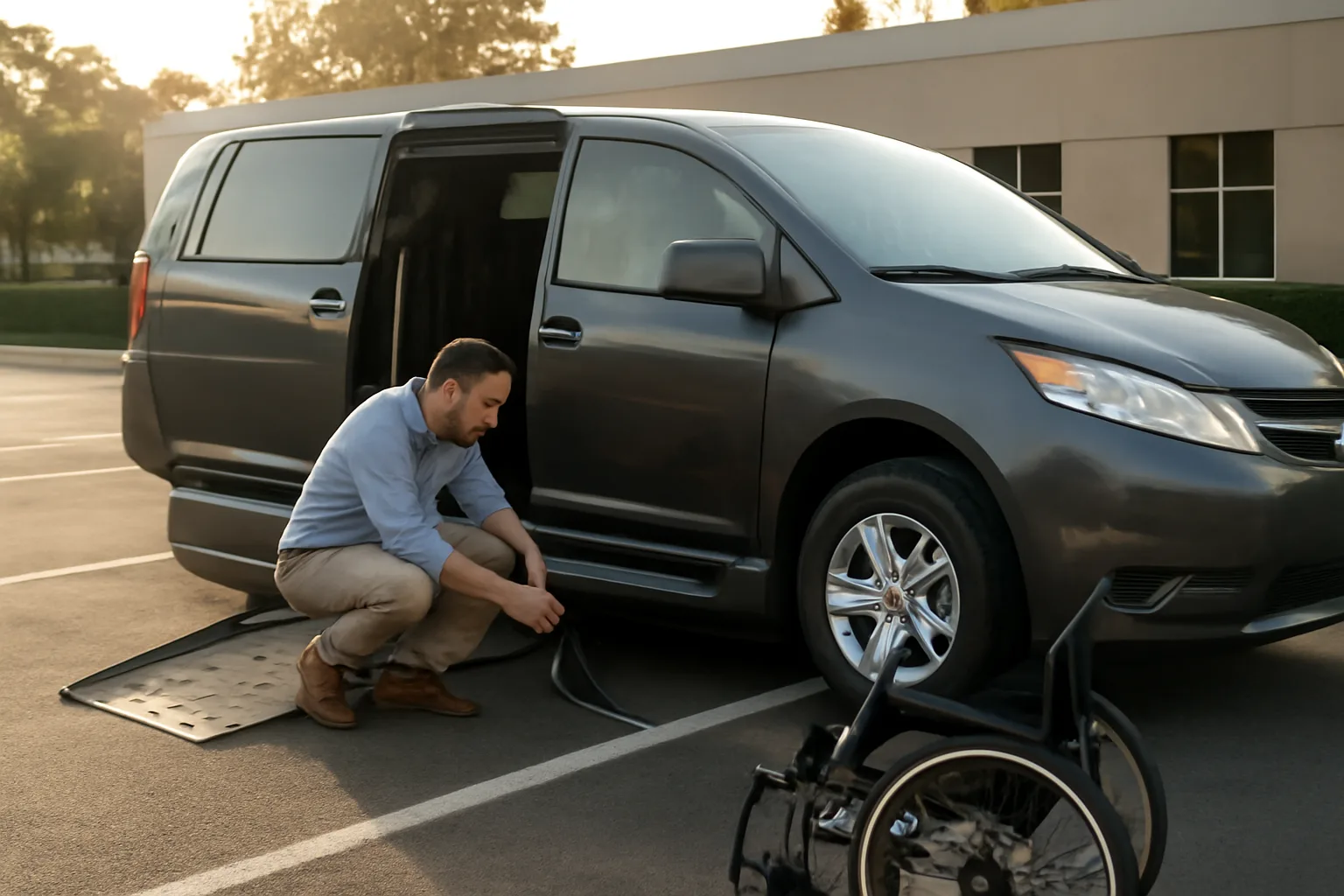
NEMT is transportation for people who need to get to medical appointments, dialysis, adult day programs, or pharmacy pickups but don't need an ambulance or emergency care. It covers everything from a sedan ride for someone who can walk short distances to a wheelchair van with a lift and tie-downs, to a stretcher van for someone who has to stay lying down but isn't in crisis. The federal rule that makes this a real, funded service is at 42 CFR 431.53, which requires state Medicaid programs to "ensure necessary transportation for beneficiaries to and from providers" [1]. States can run this themselves, contract with a regional broker, or mix both models. That's why the same wheelchair van ride can be billed completely differently in Ohio versus Texas versus California. NEMT is not an ambulance service. No lights, no siren, no paramedic-level care. It's closer to a very specialized taxi or paratransit service, one that has to follow Medicaid documentation rules, HIPAA, and usually a broker's credentialing process on top of state licensing. If you're trying to understand the landscape before you buy a vehicle, non emergency medical transportation and nemt are good starting points for the vocabulary and structure of the industry.
How much does an NEMT ride actually cost?
| Medicaid broker, ambulatory sedan | $10-$30 base + $0.50-$2/mile | Rate set in broker's state contract; varies widely | |
|---|---|---|---|
| Medicaid broker, wheelchair van | $20-$60 base + $1-$3/mile | Higher base rate for lift/securement time | |
| Private-pay wheelchair van (no insurance) | $50-$150+ one way | Set by the operator; long trips can run several hundred dollars | |
| Private-pay stretcher van | $100-$250+ one way | Requires more equipment and often a two-person crew | |
| Medicare Advantage supplemental NEMT benefit | Often $0 copay, capped trip count | Benefit design varies by plan year and insurer | These ranges reflect typical market and Medicaid broker pricing reported by state transportation programs and industry sources; actual rates in your service area should be confirmed with your state Medicaid transportation unit or broker contract, since published fee schedules change year to year. A few states publish their actual NEMT fee schedules. New York's Medicaid NEMT program, for example, sets specific base and mileage rates by mode and region, adjusted periodically by the Department of Health [2]. If you want real numbers instead of ranges, search "[your state] Medicaid NEMT fee schedule" or call the transportation unit directly. Don't trust a broker recruiter's verbal number until you've seen it in writing. |
There's no single number, and anyone who quotes you one flat rate for "NEMT" nationally is guessing. Cost depends on who's paying (Medicaid broker, Medicare Advantage plan, private pay, insurance), the vehicle type, mileage, and the state's rate schedule. Here's the honest range breakdown based on how the industry actually prices trips: | Ride type / payer | Typical price range | Notes |
Does Medicaid cover NEMT and ambulance rides?
Yes, Medicaid covers NEMT in every state, but the covered trip has to be to a Medicaid-covered service, and most states require prior scheduling through a broker or transportation unit. Federal regulation 42 CFR 431.53 obligates state Medicaid agencies to provide transportation "necessary to and from providers" and to describe the methods they use to do it in their state plan [1]. Ambulance coverage is separate and narrower. Medicaid covers ambulance transport when it's medically necessary, meaning other transportation would endanger the person's health, per the Medicare Benefit Policy Manual's ambulance coverage standard, which most state Medicaid programs mirror for their own medical necessity determinations [3]. If someone can safely ride in a wheelchair van, Medicaid generally will not pay ambulance rates for that trip, and an ambulance company billing Medicaid for a non-emergency transport that didn't meet medical necessity criteria risks a payment denial or audit finding. So yes, Medicaid does cover ambulance rides, but only under medical necessity standards, and NEMT (wheelchair van, stretcher van, ambulatory sedan) is the intended coverage for everything below that bar. Confirm your specific state's medical necessity documentation requirements with your state Medicaid transportation unit, because the paperwork threshold differs state to state.
Does Medicare cover medical transportation?
Original Medicare (Part A/B) covers ambulance transportation when medically necessary, but it does not generally cover routine non-emergency van or sedan rides to appointments. The Medicare Benefit Policy Manual, Chapter 10, sets out that ambulance services are covered only when other means of transportation would endanger the beneficiary's health, and that standard doesn't extend to routine NEMT [3]. Medicare Advantage (Part C) plans are a different story. CMS's final rule expanding supplemental benefits for the 2019 plan year allowed Medicare Advantage plans to offer a broader set of supplemental benefits, including non-emergency transportation, than had previously been permitted [4]. Whether a specific Medicare Advantage enrollee has an NEMT benefit, how many trips it covers per year, and what documentation is required all depends entirely on that plan's benefit design for that year. There is no universal Medicare NEMT benefit; you have to check the individual plan. This matters for owner-operators because a good chunk of NEMT contract work now comes through Medicare Advantage transportation vendors and brokers, more than Medicaid. If you're building a client base, ask brokers directly which payer types (Medicaid fee-for-service, Medicaid managed care, Medicare Advantage) their contracts cover, since the credentialing and billing rules differ.
How to start a non-emergency medical transportation business
Starting an NEMT business is mostly a sequencing problem: business formation, vehicle, insurance, state licensing, then broker credentialing, roughly in that order, though some steps run in parallel. 1. Form your business entity (LLC is common) and get an EIN from the IRS. 2. Decide on your vehicle. A used wheelchair-accessible minivan with a certified lift or ramp conversion is the typical entry point for a one-van operation. Buying from a reputable mobility dealer and getting a post-conversion inspection matters more than saving a few thousand dollars on a sketchy private sale. 3. Get commercial auto insurance appropriate for for-hire passenger transport, not a personal or standard commercial policy. This is one of the most commonly underestimated costs; premiums for wheelchair-accessible for-hire vehicles are typically higher than standard commercial auto because of the passenger vulnerability and lift liability. 4. Register with your state as a transportation provider. Many states require a specific NEMT provider license or permit, vehicle inspection, and driver background checks (including exclusion list screening) before you can bill Medicaid at all. 5. Enroll as a Medicaid provider with your state Medicaid agency, if you intend to bill Medicaid directly or through managed care. 6. Apply for credentialing with the regional broker(s) operating in your state, such as Modivcare, MTM, Access2Care, or SafeRide (rules and requirements vary by state and contract, confirm current requirements directly with each broker). 7. Set up dispatch, scheduling, and basic compliance recordkeeping before you take your first trip. For a fuller walkthrough of vehicle requirements and equipment specifics, see nemt transportation, and for state-by-state enrollment nuances, medical transportation is a useful reference hub. If you'd rather not build every state and broker application packet from scratch, the RideCredential $199 Launch Kit bundles the state Medicaid enrollment forms and broker credentialing checklists into one build so you're not hunting down twelve different PDFs across agencies. It doesn't replace confirming current rules with your state and broker; nothing does.
How to start an NEMT business with one van
One van is a completely legitimate way to start, and a lot of owner-operators run profitably this way for years before adding a second vehicle. The core requirements don't change just because your fleet is small: you still need the business entity, commercial insurance, state provider registration, and broker credentialing. What's different with one van is your capacity ceiling. You'll want to be upfront with brokers about your availability windows, because most broker contracts expect a certain on-time performance rate and no-show handling, and a single vehicle means zero redundancy if it's in the shop. Ask the broker directly what their expected trip volume and backup plan requirements are for small fleets, since some brokers won't credential a true one-van operation for certain contract tiers. Budget-wise, expect your biggest upfront costs to be the vehicle itself (a used wheelchair-accessible conversion van commonly runs from the high teens to $40,000+ depending on age, mileage, and conversion quality) and insurance. Licensing and credentialing fees are typically much smaller by comparison, often in the hundreds of dollars range per state application, though this varies and you should confirm current fees with your state Medicaid transportation unit. Don't skip a pre-purchase inspection by a mechanic familiar with wheelchair conversions specifically. Lift and ramp mechanisms, floor reinforcement, and tie-down anchor points are the parts that fail expensively and unsafely if the conversion was done cheaply.
How do you start a medical transportation business step by step?
If you strip it down to the sequence that actually determines whether you can bill anyone, it looks like this: 1. Research your state's NEMT program structure. Some states use a single statewide broker, some use regional brokers, some let counties manage it directly. This determines who you actually apply to. 2. Confirm vehicle and driver requirements with your state Medicaid transportation unit before buying a van, not after. Requirements around lift certification, driver CPR/First Aid, and background check standards differ by state. 3. Secure financing and purchase the vehicle, or convert an existing van through a certified mobility dealer. 4. Get commercial auto and general liability insurance in place; most brokers require proof of insurance meeting specific minimums before credentialing review even starts. 5. Complete state Medicaid provider enrollment. This usually includes an application, an NPI number if required, W-9, and often a site or vehicle inspection. 6. Apply to the broker(s) covering your region. Expect to submit vehicle registration, insurance certificates, driver rosters with background check results, and sometimes proof of a certain number of years in business or a surety bond, depending on the broker and state. 7. Once credentialed, set up your scheduling and trip documentation workflow, since brokers audit for accurate pickup/drop-off times and mileage logs. The non emergency medical transportation services page covers the day-to-day operational side once you're up and running, which is worth reading before you take your first broker trip, not after.
What does NEMT provider licensing and credentialing actually cost?
This is the part people underestimate, not because any single fee is huge, but because the costs are scattered across a dozen line items. State business registration (LLC formation, EIN) typically runs $50-$500 depending on the state's filing fee. Commercial auto insurance for a wheelchair-accessible for-hire vehicle is usually the largest recurring cost, often several thousand dollars per vehicle per year, though this varies enormously by state, driving record, and coverage limits. State Medicaid provider enrollment requirements and any associated fees are set out in each state's provider enrollment materials, and federal rules require state Medicaid agencies to screen enrolling providers under a risk-based framework described in 42 CFR 455.450 [5]. Broker credentialing itself (the actual application to Modivcare, MTM, Access2Care, SafeRide, or a regional broker) is typically free to apply, but you'll spend money getting the supporting documents in order: background checks per driver, DOT-style physicals if required, vehicle inspection fees, and sometimes a bond or letter of credit depending on the broker's contract terms for your state. None of these figures are fixed nationally. Confirm exact costs with your state Medicaid agency and with each broker directly, since fee structures change and vary by contract year.
NEMT vs. ambulance vs. rideshare medical transport: what's the difference?
People often lump these together, but they're regulated and priced completely differently. NEMT (wheelchair van, stretcher van, ambulatory sedan) is for people who need help getting to an appointment but aren't in a medical emergency. It's dispatched through brokers or scheduled directly, and Medicaid/Medicare Advantage coverage rules apply as described above. Ambulance transport (BLS or ALS level) requires emergency medical staff and equipment, is billed at ambulance rates, and Medicaid/Medicare only cover it when medical necessity criteria are met [3]. For a fuller look at how this differs operationally, see emergency medical transport. Rideshare medical transport (Uber Health, Lyft Healthcare, or similar) is a newer, non-Medicaid-regulated option some health plans use for ambulatory members who don't need a wheelchair van. It's typically not wheelchair-accessible in most vehicles on the platform and isn't a substitute for licensed NEMT, though some markets are adding accessible options. It generally isn't subject to the same state licensing and broker credentialing framework NEMT operators go through. If you're a new owner-operator, your business almost certainly falls into the NEMT category, and the ambulance and rideshare categories mostly matter for understanding why your rates and requirements look different from those other segments.
What should a new owner-operator budget for beyond the vehicle?
Beyond the van itself, plan for these recurring and one-time costs before you take your first paid trip: - Commercial auto insurance for for-hire, wheelchair-accessible transport (often the single biggest annual expense after the vehicle)
- General liability insurance, sometimes required separately by brokers
- State vehicle inspection and re-inspection fees, often annual
- Driver background checks and drug screening per new hire
- CPR/First Aid certification renewal for drivers, if required by your state or broker
- Dispatch/scheduling software subscription, if you're not managing trips manually
- Fuel and maintenance, which run higher for a heavier converted van than a standard vehicle
- Broker-required bonds or letters of credit, in states/contracts where these apply None of these guarantee you'll get credentialed or approved. Every broker and state has its own review process and can deny an application for reasons specific to your market, your documentation, or capacity needs in your service area at that time. Budget for the process taking longer than you expect, because credentialing timelines commonly run weeks to a few months, not days.
Frequently asked questions
What is non-emergency medical transportation (NEMT)?
NEMT is transportation to medical appointments, dialysis, or pharmacy visits for people who don't need an ambulance. It ranges from ambulatory sedan trips to wheelchair van and stretcher van service. Federal Medicaid rule 42 CFR 431.53 requires state Medicaid programs to ensure this transportation is available for beneficiaries who need it to reach covered care.
How much does NEMT typically cost per ride?
Medicaid-broker rides typically run $10-$30 base plus mileage for sedans, and $20-$60 base plus mileage for wheelchair vans, though exact rates are set by each state's fee schedule. Private-pay wheelchair van trips commonly run $50-$150 or more one way, depending on distance and region.
Does Medicaid cover ambulance rides?
Yes, but only when medically necessary, meaning other transportation would endanger the patient's health, per the Medicare Benefit Policy Manual's ambulance coverage standard that most state Medicaid programs mirror. If a wheelchair van or sedan can safely transport the person, Medicaid generally won't reimburse ambulance-level rates for that trip instead.
Does Medicare cover non-emergency medical transportation?
Original Medicare generally does not cover routine non-emergency transportation; it covers ambulance transport only under medical necessity rules. Some Medicare Advantage plans offer NEMT as a supplemental benefit, allowed under CMS's 2019 supplemental benefits expansion, but coverage details vary completely by plan.
How do I start a non-emergency medical transportation business?
Form a business entity, secure a wheelchair-accessible vehicle, get commercial auto insurance for for-hire transport, register as a state Medicaid provider, and get credentialed with regional brokers like Modivcare, MTM, Access2Care, or SafeRide. Requirements vary by state, so confirm specifics with your state Medicaid transportation unit before buying a vehicle.
Can I start an NEMT business with just one van?
Yes, many owner-operators start with a single wheelchair-accessible van. You still need full insurance, state registration, and broker credentialing regardless of fleet size. Ask brokers directly about volume expectations and backup requirements for single-vehicle operators, since some contract tiers expect fleet redundancy.
What's the difference between NEMT and an ambulance?
NEMT transports people who don't need emergency medical care or monitoring during the ride; ambulances provide medical staff and equipment for emergencies or medically necessary transport. They're billed and regulated separately, and Medicaid/Medicare pay ambulance claims only when medical necessity criteria are documented.
How much does it cost to get NEMT provider licensed and broker credentialed?
Costs vary widely: business registration often runs $50-$500, commercial insurance is usually the largest annual cost (often thousands per vehicle), and broker applications are typically free but require paid supporting documents like background checks and vehicle inspections. Confirm exact fees with your state Medicaid agency and each broker.
Do wheelchair van rides cost more than ambulatory sedan rides?
Yes, generally. Wheelchair van trips typically have a higher base rate ($20-$60 versus $10-$30 for sedans in many Medicaid broker fee schedules) because of the added time for securing the lift and tie-downs, plus the vehicle's higher operating cost.
What is a NEMT broker and why do I need to get credentialed with one?
A broker (Modivcare, MTM, Access2Care, SafeRide, or a state/regional broker) manages ride scheduling and dispatch for a state's Medicaid NEMT program under contract. Most states require providers to be credentialed with the broker operating their region before they can receive Medicaid-funded trip assignments.
How long does NEMT broker credentialing usually take?
There's no fixed national timeline, and it varies by broker and state workload, but weeks to a few months is common for a first-time applicant. Delays are often caused by incomplete insurance documentation or pending driver background checks, so submitting a complete, organized application matters more than speed.
Is starting an NEMT business profitable for a first-time owner-operator?
There's no reliable, universal figure, since profitability depends on your state's rate schedule, trip volume from brokers, vehicle costs, and insurance rates in your area. Anyone promising a specific income number without knowing your state and contract details is guessing, not giving you real data.
Sources
- eCFR, 42 CFR 431.53 - Assurance of transportation: Federal Medicaid regulation requiring states to ensure necessary transportation to and from providers
- New York State Department of Health, Medicaid Transportation: State-published NEMT program structure and rate-setting for Medicaid transportation in New York
- CMS, Medicare Benefit Policy Manual, Chapter 10 (Ambulance Services): Medicare covers ambulance transport only when medically necessary; basis for the medical necessity standard also used by state Medicaid ambulance coverage
- CMS, Medicare Program; Contract Year 2019 Policy and Technical Changes to the Medicare Advantage, Medicare Cost Plan, Medicare Fee-for-Service, and the Medicare Prescription Drug Benefit Programs (Federal Register, 83 FR 16440): CMS expanded allowable supplemental benefits, including non-emergency transportation, for Medicare Advantage plans starting with the 2019 plan year
- eCFR, 42 CFR 455.450 - Levels of screening based on risk of fraud, waste, or abuse: Federal rule requiring state Medicaid agencies to screen enrolling providers, including transportation providers, using a risk-based framework
- 42 U.S.C. 1396a(a)(70) - State plan requirements, non-emergency medical transportation brokers: Federal statute authorizing states to use NEMT brokers under a state plan amendment, the legal basis for the broker model used by Modivcare, MTM, Access2Care, and SafeRide