Last updated 2026-07-25
TL;DR
Medical transportation splits into two buckets: emergency (ambulances responding to 911 calls) and non-emergency, or NEMT (rides to dialysis, dialysis, therapy, and appointments for people who aren't in crisis but can't drive themselves). Medicaid covers both in every state; Medicare covers ambulances under strict rules and covers NEMT only in limited ways. Wheelchair vans, ambulettes, and stretcher vans sit inside the NEMT category.
What is non-emergency medical transportation (NEMT)?
Non-emergency medical transportation, almost always shortened to NEMT, is scheduled transport for people who need to get to a medical appointment but don't need an ambulance to get there safely. Think dialysis three times a week, chemo infusions, physical therapy, or a routine OB visit for someone who doesn't own a car or can't safely use one. Federal Medicaid rules actually require this. States have to "ensure necessary transportation for beneficiaries to and from providers" under 42 CFR 431.53, and CMS guidance describes this as covering "non-emergency transportation (NEMT)" specifically [1]. That single regulation is why NEMT exists as an industry at all: it's not a nice-to-have benefit some states chose to add, it's a baseline requirement tied to Medicaid's promise that eligibility isn't supposed to be blocked by lack of a ride. NEMT is not one vehicle type. It ranges from a sedan or minivan for an ambulatory rider, up to a wheelchair-accessible van with a lift or ramp, up to a stretcher van for someone who has to stay lying down but doesn't need medical monitoring. What NEMT is not: lights-and-siren response to a 911 call, or transport where the patient needs a paramedic or EMT actively managing their condition en route. That's ambulance territory, which we cover below. Most states run their NEMT benefit through a broker (Modivcare, MTM, Access2Care, ModivCare's regional competitors, SafeRide, and others depending on the state) rather than paying transportation companies directly. If you're building a business around this, the NEMT overview and the non-emergency medical transportation breakdown both walk through how that broker layer works state by state.
What are the main types of medical transportation, emergency vs non-emergency?
| Staffed by | EMT or paramedic | Trained driver, sometimes an attendant | |
|---|---|---|---|
| Trigger | 911 call, urgent transfer | Scheduled appointment | |
| Vehicle license | State EMS ambulance license | State NEMT/livery/for-hire permit (varies) | |
| Typical payer path | Medicare Part B, Medicaid, private insurance direct billing | Medicaid broker, some Medicare Advantage plans, private pay | |
| Clinical monitoring en route | Yes | No (attendant may help with mobility, not medical care) | Within NEMT itself, states and brokers usually recognize levels of service tied to what the rider needs: ambulatory (can walk to the vehicle and sit in a regular seat), wheelchair van (needs a lift or ramp and wheelchair securement), and stretcher/gurney van (needs to stay lying flat but isn't in crisis). Some states add a fourth tier for door-through-door assistance for riders who need help getting from their apartment to the vehicle, more than curb to curb. |
There are two top-level categories, and everything else is a subtype underneath them. Emergency medical transportation is ambulance response to a 911 call or urgent transfer where a patient's condition could deteriorate en route. It's staffed by EMTs or paramedics, licensed under state EMS rules, and billed as a medical service, more than a ride. CMS defines Medicare ambulance coverage around whether "transportation by other means could endanger the beneficiary's health" [2], which is the legal test for whether something counts as emergency-level transport at all. Non-emergency medical transportation, our NEMT category, is scheduled, non-urgent, and doesn't require clinical monitoring during the ride. It covers everything from a folding-chair pickup for a grandmother going to a podiatrist, to a stretcher van for a bed-bound patient being moved between facilities without needing an IV managed on the way. Here's a quick comparison: | Feature | Emergency (ambulance) | Non-emergency (NEMT) |
Does Medicaid cover ambulance rides?
Yes. Medicaid covers ambulance transportation when it's medically necessary, though every state sets its own specific coverage rules, prior authorization requirements, and payment rates within federal guardrails. CMS's Medicaid transportation guidance groups covered rides into emergency and non-emergency categories and confirms states must cover transportation "necessary to ensure that eligible individuals have transportation to and from providers" [1]. Ambulance rides for genuine emergencies fall under that emergency category and are covered essentially everywhere, since federal law also requires hospital emergency departments to screen and stabilize patients regardless of ability to pay, under EMTALA, codified at 42 U.S.C. 1395dd [3]. Where it gets state-specific is non-emergency ambulance use, like a stretcher transfer between hospitals for a patient who needs monitoring but isn't in an active emergency. Some state Medicaid programs require prior authorization for that kind of ambulance trip, and some route it through the same broker that handles other NEMT. You need to confirm with your state Medicaid agency's transportation unit exactly how they classify and authorize non-emergency ambulance runs, because this is one of the areas where states diverge most. If you're an owner-operator running wheelchair vans rather than ambulances, this distinction matters mainly so you can correctly tell dispatchers and brokers what your vehicle can and can't do. A wheelchair van is not a substitute for an ambulance, and misrepresenting your vehicle's capability to a broker is a fast way to lose your contract.
Does Medicare cover medical transportation?
Medicare Part B covers ambulance transportation when other transportation "could endanger your health" and covers it to the nearest appropriate facility that can treat you, per CMS's ambulance services coverage rules [2]. Standard NEMT rides to routine appointments are generally not a Medicare Part B benefit. Medicare's own consumer guidance states plainly: "Medicare Part B covers ground ambulance transportation when you need to be transported to a hospital, critical access hospital (CAH), or skilled nursing facility (SNF), for medically necessary services, and transportation in any other vehicle could endanger your health" [2]. That's a medical necessity test, not a convenience test. If you could have safely gotten there by car or NEMT van, traditional Medicare typically won't pay for the ambulance. Does Medicare cover medical transportation beyond ambulances? Sometimes, but only through the back door. Many Medicare Advantage (Part C) plans now offer NEMT-style rides as a supplemental benefit, something traditional Medicare doesn't do. Federal regulation at 42 CFR 422.102 lets Medicare Advantage plans offer supplemental benefits, and CMS's 2019 final rule expanded what counts as a permissible supplemental benefit for chronically ill enrollees, opening the door wider for transportation-type benefits [4]. So if you're an owner-operator hoping to pick up Medicare-covered NEMT work, your real opportunity is contracting with Medicare Advantage plans or their transportation vendors, not billing traditional fee-for-service Medicare directly, because traditional Medicare simply doesn't have a routine NEMT benefit to bill.
What vehicle types count as medical transportation vehicles?
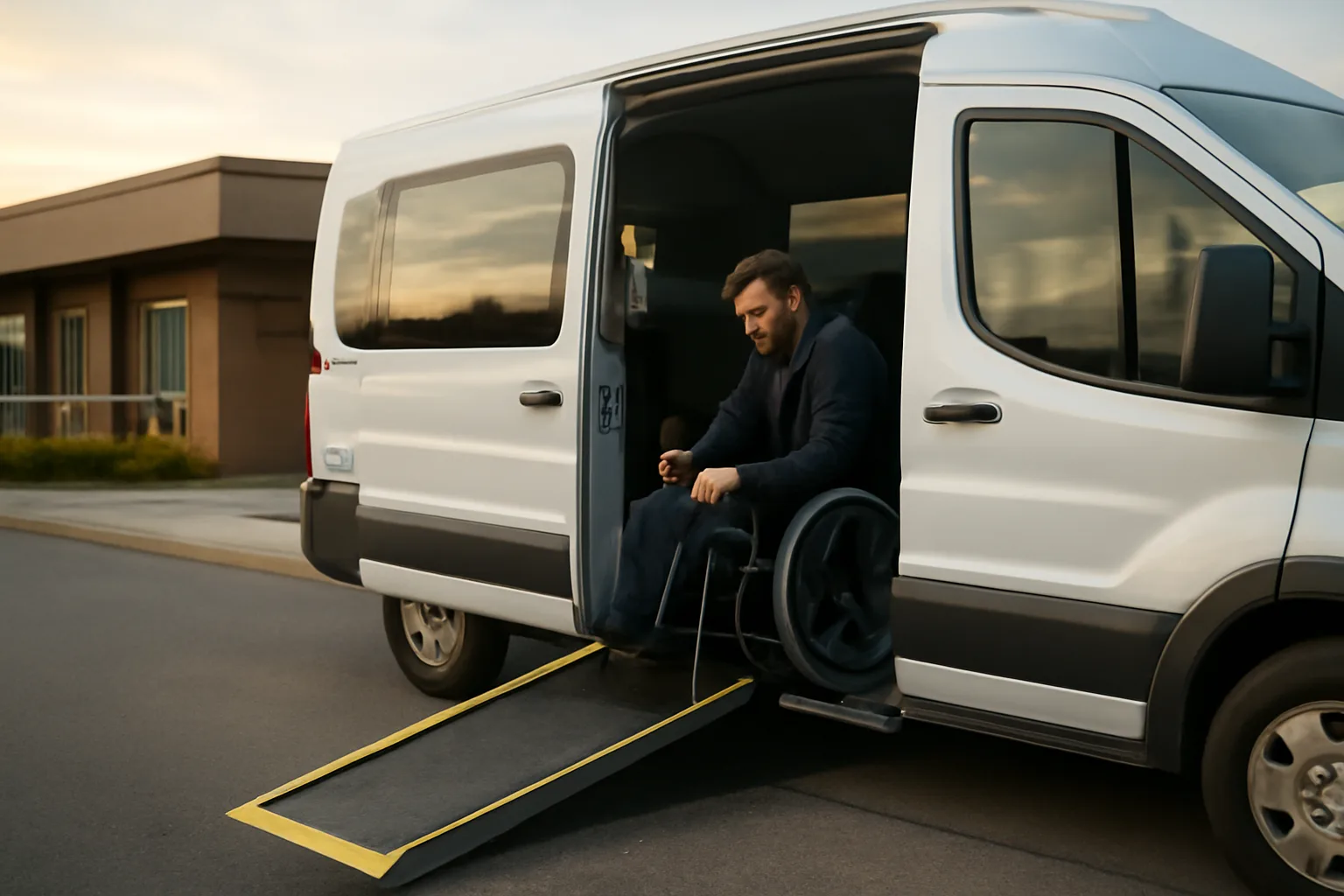
Wheelchair vans, ambulettes, stretcher vans, ambulatory sedans, and actual ambulances all fall under the medical transportation umbrella, but they're licensed, staffed, and billed completely differently. A wheelchair van has a lift or ramp and floor track or strap-down securement for one or more wheelchairs, plus regular bench seating for ambulatory riders. This is the workhorse vehicle for most new NEMT owner-operators because it can serve both wheelchair and ambulatory trips depending on how the seats and securement points are configured that day. An ambulette is basically the same vehicle concept under a different regional name, often used in states like New York where it has its own licensing category through the state health department, separate from general livery rules. A stretcher van (also called a gurney van) is built to carry a patient lying flat, with a cot mount and typically an attendant in back, but without ambulance-grade medical equipment or EMT staffing. It sits between wheelchair vans and true ambulances in capability and cost. Ambulances (BLS, basic life support, or ALS, advanced life support) are staffed by licensed EMS personnel, carry oxygen and monitoring equipment, and are licensed under your state's EMS or health department, not your state's for-hire vehicle or livery office. If you're starting with one van and a driver's license, you are building a NEMT company, not an ambulance company, and it's worth being precise about that distinction with every broker application you fill out, since the vehicle-type field on those applications determines which trips you'll even be offered.
How do you start a medical transportation business?
You start by deciding which type of medical transportation you're actually building, because a wheelchair-van NEMT business, a stretcher-van business, and an ambulance company have almost nothing in common on the regulatory side despite all falling under "medical transportation." For the overwhelming majority of new owner-operators asking "how to start a medical transportation business," the realistic answer is NEMT with a wheelchair van, because it doesn't require EMS licensure, paramedic staffing, or the capital of an ambulance fleet. Ambulance companies need state EMS agency licensing, ALS/BLS vehicle certification, and credentialed EMT or paramedic staff, none of which apply to standard NEMT. The basic build-out sequence for a NEMT business looks like this: form your business entity and get an EIN, secure a wheelchair-accessible vehicle that meets your state's ADA and NEMT vehicle standards, get commercial auto insurance sized for livery/NEMT use (not a personal auto policy), pass any state-required driver background checks and vehicle inspections, register as a Medicaid transportation provider with your state Medicaid agency, and then apply for credentialing with whichever broker (Modivcare, MTM, Access2Care, SafeRide, or a state-specific broker) manages NEMT in your service area. Some states also require a separate for-hire or livery permit from the state DOT or a local taxi/livery commission layered on top of Medicaid enrollment. The order matters more than people expect. Vehicle and insurance first, because you can't complete a Medicaid provider application or broker credentialing packet without proof of both. Medicaid enrollment and broker credentialing can run in parallel in some states, sequentially in others, and the paperwork burden (W-9s, vehicle inspection certificates, driver files, liability certificates naming the broker as certificate holder) is genuinely the single biggest bottleneck new operators underestimate.
How to start a NEMT business (step by step for a new owner-operator)
Starting a NEMT business means completing four parallel tracks: business setup, vehicle and insurance, state Medicaid enrollment, and broker credentialing, roughly in that order. 1. Business setup. Form an LLC or corporation, get an EIN from the IRS, open a business bank account. This is the same for any small business and takes days, not weeks, if you use your state's online formation portal. 2. Vehicle and insurance. Buy or convert a wheelchair-accessible van that meets your state's NEMT vehicle standards (tie-downs, lift/ramp maintenance records, often a specific vehicle age cap). Get commercial auto liability insurance at the limits your state Medicaid program and target broker require, which is often higher than minimum state auto liability. Confirm exact limits with your state Medicaid agency and broker before you buy a policy, because underinsuring is a common reason applications bounce back. 3. State Medicaid provider enrollment. Every state runs its own NEMT provider enrollment process through its Medicaid agency or its Medicaid transportation unit, and some states enroll transportation providers directly while others funnel everything through the broker's own network application. You'll typically need your EIN, vehicle registration and inspection proof, insurance certificates, driver background check results, and sometimes a surety bond. 4. Broker credentialing. If your state uses a broker model, Medicaid enrollment alone doesn't get you trips; you also need to be credentialed and contracted with that broker (Modivcare, MTM, Access2Care, SafeRide, or a regional equivalent). Each broker has its own vendor application, insurance certificate requirements, vehicle inspection form, and driver file standards, and they audit these periodically, more than at signup. Because every state's Medicaid transportation unit and every broker's paperwork differs, this is genuinely the part that trips people up, not the driving. Some owner-operators put together a document checklist themselves from scratch; others use a packaged reference like RideCredential's $199 State + Broker NEMT Launch Kit (/launch-kit-builder) to keep the state Medicaid and broker paperwork organized in one pass instead of learning each agency's format by trial and error. Either way, budget real time for this stage, easily as long as the vehicle search itself.
How to start a NEMT business with just one van
A single-van NEMT business is completely normal and is how most owner-operators in this industry begin; the credentialing and enrollment process is exactly the same whether you have one vehicle or twenty, it's just scaled to your fleet size. With one van, you file one vehicle inspection, one insurance certificate, one driver file (probably your own, if you're driving it yourself), and one broker application listing a single unit. States and brokers don't require a minimum fleet size to get started; what they require is that the one vehicle you have fully meets vehicle age, accessibility equipment, and inspection standards, and that your insurance limits are correct from day one. The practical risk with one van isn't credentialing, it's trip volume and vehicle downtime. If your single van is in the shop, you have zero capacity that day, and brokers track no-show and cancellation rates closely as part of ongoing performance reviews. New one-van operators should ask their broker directly what their expected on-time and completion-rate standards are before their first week of live trips, since falling below broker-specific service thresholds can trigger a corrective action plan or, eventually, network removal. It's also worth reading the emergency medical transport overview even if you're staying strictly NEMT, just so you know precisely where your wheelchair van's capability ends and a real ambulance call begins. That line matters every time a rider's condition looks borderline at pickup.
What's the difference between NEMT and "medical transportation services" generally?
"Medical transportation" is the umbrella term covering everything from a 911 ambulance to a scheduled wheelchair-van ride to dialysis; NEMT is the specific non-emergency slice of that umbrella that Medicaid, and increasingly Medicare Advantage, actually funds through broker networks. When people search "medical transportation services," they usually mean one of three things: an ambulance company, a NEMT company, or a home-health-adjacent service like medical courier or specimen transport, which is a different business entirely and not something we cover here. If you're researching for business purposes, the fastest way to sort this out is to ask which agency licenses the activity: EMS/health department licensing points to ambulance, Medicaid provider enrollment plus broker credentialing points to NEMT. The medical transportation hub page and the non-emergency medical transportation services guide both dig into this terminology confusion in more detail, including how it shows up differently across state Medicaid websites, which often use inconsistent labels ("medical transportation," "NEMT," "transportation services") for the exact same benefit.
How does Medicaid NEMT actually get paid for and dispatched?
In most states, Medicaid does not pay individual drivers or small transportation companies directly for NEMT; it pays a broker a capitated or per-trip management fee, and the broker in turn contracts with, dispatches, and pays transportation providers like you. This brokered model exists specifically because of the federal requirement CMS lays out: states "may use several different methods to ensure transportation" and "may use brokers to arrange non-emergency transportation" [1]. Modivcare, MTM, Access2Care, and SafeRide are the largest national and regional brokers operating under this model, though the specific broker (or brokers) in your service area depends entirely on your state and sometimes your county or region within the state. A smaller number of states run NEMT as a direct fee-for-service Medicaid benefit without a broker, or let managed care organizations (MCOs) handle transportation as part of their broader capitated payment. If your state uses MCOs for Medicaid, you may need to credential with each MCO's transportation network separately, more than one statewide broker, which adds another layer new owner-operators sometimes miss on their first pass through enrollment. Because the model varies this much state to state, confirm directly with your state Medicaid agency's transportation unit which structure applies to you before you spend money assuming a broker relationship that might not exist, or might be one of several, in your area.
What should a new owner-operator watch out for across all these transportation types?
The single biggest mistake is treating "medical transportation" as one licensing process when it's really several separate ones stacked on top of each other: business licensing, vehicle/ADA compliance, insurance, state Medicaid enrollment, and broker credentialing, each with its own paperwork and its own renewal clock. Second biggest mistake: assuming Medicaid coverage rules are the same as Medicare's. They're not. Medicaid's NEMT mandate flows from 42 CFR 431.53 [1] and is broadly similar in structure across states even though benefit details differ; Medicare's ambulance-only, medical-necessity standard flows from separate statute and CMS guidance [2] and simply doesn't include routine NEMT under original Medicare at all. Confusing the two when talking to a broker or a rider's family is an easy way to make a promise you can't keep. Third: insurance and vehicle standards are set by your specific state and often by your specific broker on top of that, not by any single federal rule. "Confirm with your broker and state Medicaid agency" isn't a cop-out, it's the actual correct process, because these requirements change and no article, including this one, should be treated as the final word on your state's current minimums. No one, including us, can promise you'll get approved by a given broker or state Medicaid program. Approval depends on your specific application, your vehicle, your background check, and each agency's own review, none of which any outside guide controls.
Frequently asked questions
What is NEMT?
NEMT stands for non-emergency medical transportation: scheduled rides to medical appointments (dialysis, therapy, routine visits) for people who don't need an ambulance but can't get there on their own. Federal Medicaid rules require states to ensure this transportation for eligible beneficiaries under 42 CFR 431.53, and most states run it through a broker like Modivcare, MTM, Access2Care, or SafeRide.
Does Medicaid cover ambulance rides?
Yes, Medicaid covers medically necessary ambulance transportation in every state, though prior authorization rules, coverage of non-emergency ambulance transfers, and payment rates vary by state. Emergency ambulance response is covered essentially universally; non-emergency ambulance use (like inter-facility stretcher transfers) often needs separate authorization, so confirm specifics with your state Medicaid agency.
Does Medicare cover medical transportation?
Traditional Medicare Part B covers ground ambulance transportation only when other transportation would endanger your health, per CMS coverage rules. It generally does not cover routine NEMT rides to appointments. Some Medicare Advantage (Part C) plans do offer NEMT-style rides as a supplemental benefit, so that's the more realistic path for owner-operators targeting Medicare-related work.
How do you start a medical transportation business?
First decide the type: ambulance (requires state EMS licensing and EMT/paramedic staffing) or NEMT (requires a compliant vehicle, commercial insurance, state Medicaid provider enrollment, and broker credentialing). Most new owner-operators start with NEMT and a single wheelchair van because it doesn't require EMS licensure or clinical staff.
How to start a NEMT business?
Form your business entity, get a wheelchair-accessible van that meets your state's vehicle standards, secure commercial auto insurance at required limits, enroll as a Medicaid transportation provider with your state agency, and get credentialed with your area's broker (Modivcare, MTM, Access2Care, SafeRide, or similar). These steps run partly in parallel depending on your state.
How to start a non-emergency medical transportation business with one van?
The process is identical to a larger fleet, just scaled down: one vehicle inspection, one insurance certificate, one driver file, one broker application. The main practical risk isn't credentialing, it's zero backup capacity if your single van needs repairs, so track your broker's on-time and completion-rate expectations from day one.
What is non-emergency medical transportation?
Non-emergency medical transportation (NEMT) is scheduled transport to medical appointments for people who need help getting there but aren't in a medical emergency. It includes ambulatory rides, wheelchair-van trips, and stretcher-van transfers, and is distinct from ambulance service, which handles 911 calls and clinically unstable patients.
What's the difference between an ambulette, a wheelchair van, and a stretcher van?
A wheelchair van has a lift or ramp and wheelchair securement for riders who stay seated in their chair; an ambulette is largely the same vehicle type under a regional name (common in New York); a stretcher van carries a patient lying flat with an attendant, but without ambulance-grade equipment or EMT staffing.
Do I need an EMS license to run a wheelchair van business?
No. EMS licensing applies to ambulance companies whose vehicles and staff are certified for BLS or ALS response. A standard wheelchair-van NEMT business is licensed through your state's Medicaid provider enrollment and often a separate for-hire or livery permit, not through the state EMS agency.
Who pays NEMT drivers, Medicaid directly or a broker?
In most states, Medicaid pays a broker (Modivcare, MTM, Access2Care, SafeRide, or a regional equivalent) to manage the NEMT benefit, and the broker contracts with and pays individual transportation providers. Some states instead use fee-for-service Medicaid billing or route transportation through managed care organizations, so confirm your state's specific model.
Can one company run both ambulance and NEMT services?
Yes, some companies operate both, but they need separate licensing tracks for each: state EMS certification and staffing for the ambulance side, and Medicaid provider enrollment plus broker credentialing for the NEMT side. They're regulated, staffed, and billed as distinct service lines even under one business name.
Is a stretcher van the same thing as an ambulance?
No. A stretcher van transports a patient lying flat but who doesn't need active clinical monitoring, and it's not staffed by EMTs or licensed under state EMS rules. An ambulance is staffed by certified EMS personnel, carries medical equipment, and is used when a patient's condition could become unstable during transport.
How long does it take to get NEMT Medicaid enrollment and broker credentialing done?
There's no single fixed timeline; it depends entirely on your state Medicaid agency's processing speed and your broker's application volume. Owner-operators should expect multiple weeks at minimum once every document (insurance, vehicle inspection, driver background check) is complete, and should confirm current processing estimates directly with their state and broker.
Sources
- CMS, Medicaid Non-Emergency Medical Transportation guidance (42 CFR 431.53): States must ensure necessary transportation for Medicaid beneficiaries to and from providers, including via brokers, under 42 CFR 431.53
- Medicare.gov, Ambulance Services coverage: Medicare Part B covers ground ambulance transportation only when transportation by other means could endanger the beneficiary's health
- 42 U.S.C. 1395dd, Emergency Medical Treatment and Labor Act (EMTALA): Federal law requires hospitals to screen and stabilize emergency patients regardless of ability to pay, underpinning emergency transport obligations
- 42 CFR 422.102, Supplemental benefits (Medicare Advantage): Federal regulation allows Medicare Advantage plans to offer supplemental benefits, including transportation, beyond original Medicare
- 42 CFR 431.53, Assurance of transportation: Text and structure of the federal Medicaid transportation assurance requirement
- CMS, Medicare Managed Care Manual, Chapter 4: Benefits and Beneficiary Protections: CMS guidance describing how Medicare Advantage plans structure and report supplemental benefits such as transportation