Last updated 2026-07-25
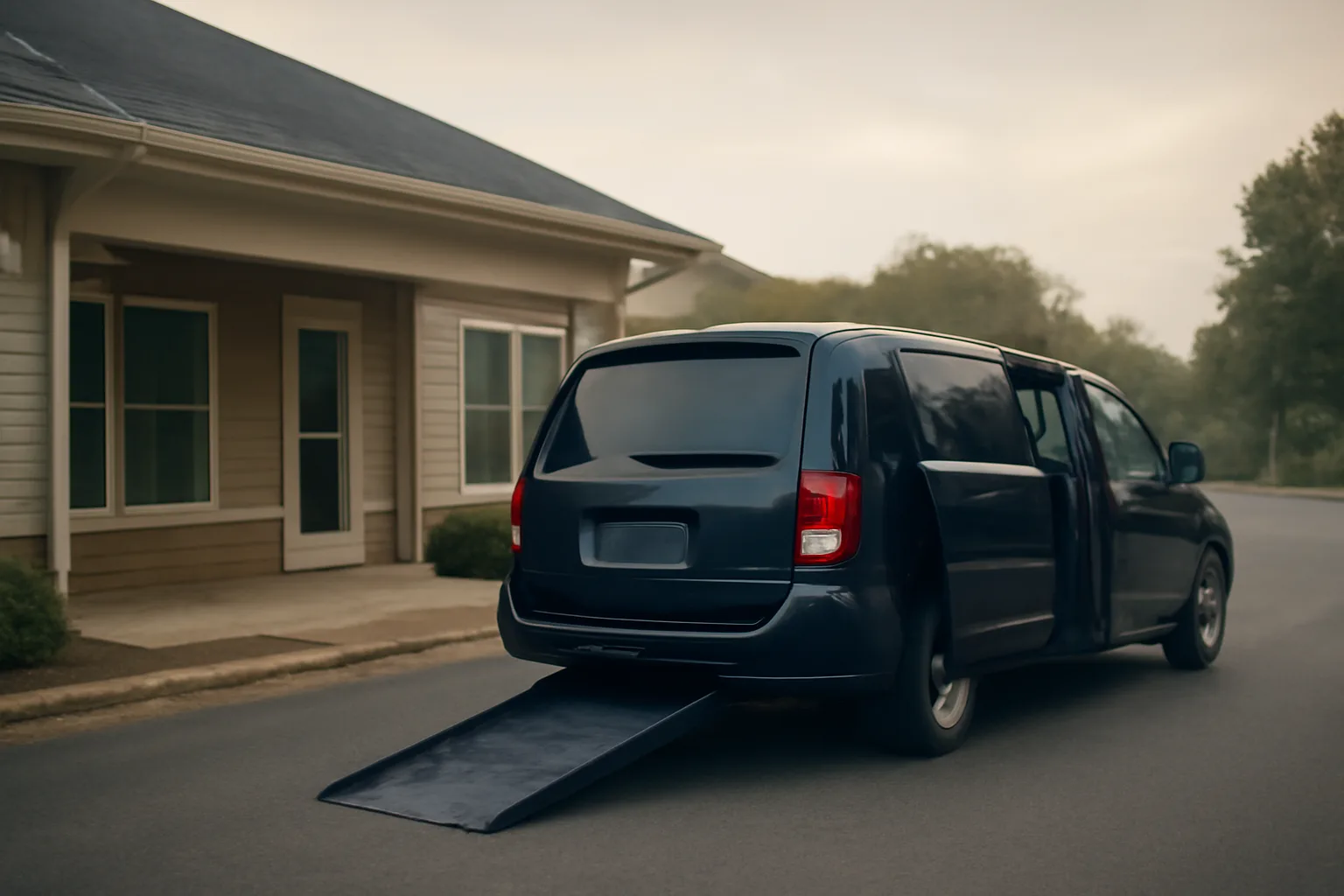
TL;DR
Virginia Medicaid non-emergency medical transportation (NEMT) is managed through a regional broker system under DMAS. To start a wheelchair-van NEMT business, you need a registered business entity, a compliant vehicle, driver background checks, insurance, and broker credentialing on top of state Medicaid enrollment. Confirm current broker assignments and requirements with DMAS and each broker directly.
What is non-emergency medical transportation (NEMT)?
Non-emergency medical transportation, usually shortened to NEMT, is transportation to and from medical appointments for people who don't need an ambulance but can't get there on their own. Think dialysis three times a week, chemo infusions, physical therapy, or a routine primary care visit for someone using a wheelchair or walker. It's not a 911 response. No lights, no sirens, no paramedic in the back. Federal Medicaid rules require states to make sure eligible people can actually get to covered services. The regulation at 42 CFR 431.53 says a state plan must "specify that the Medicaid agency will ensure necessary transportation for recipients to and from providers" [1]. States meet that obligation differently. Many, including Virginia, contract with a transportation broker to manage trip scheduling, driver credentialing, and vehicle standards instead of running it directly through the state agency. NEMT is different from ambulance transport, which is emergency or medically necessary transport that typically requires clinical monitoring during the ride. It's also different from ride-hail apps. NEMT drivers and vehicles go through a credentialing process specific to Medicaid rules, more than a background check through a rideshare app. For a broader look at how this fits nationally, see non emergency medical transportation and nemt transportation.
How does Virginia Medicaid NEMT work?
Virginia's Medicaid program is run by the Department of Medical Assistance Services (DMAS). DMAS contracts out most non-emergency medical transportation coordination to a regional broker system rather than paying individual drivers directly for scheduled rides. That means your actual customer relationship, in practical terms, is with the broker, not the state. Virginia's Medicaid State Plan Amendment authority for NEMT covers transportation for enrollees who have no other means of getting to covered medical services and don't require ambulance-level care [2]. The broker takes the ride requests from members or their case managers, matches them to a credentialed transportation provider in the area, and pays that provider according to a negotiated rate schedule. Brokers used in Virginia Medicaid NEMT have changed over the years and vary by region and by managed care plan. Some Virginia Medicaid members get NEMT through their managed care organization's own transportation vendor rather than a single statewide broker. Because assignments shift with contract cycles, don't assume the broker your neighbor uses is the one you'll be credentialed with. Confirm the current broker and regional assignment directly with DMAS's transportation unit before you build a business plan around any single company.
How do you start a medical transportation business?
Starting any medical transportation business, NEMT or otherwise, comes down to five layers that stack on top of each other: business formation, vehicle compliance, driver qualification, insurance, and payer credentialing. Skip a layer and you'll get stuck later, usually at the worst possible time, like after you've already bought the van. First, form your business entity (LLC is common for small operators) and get an EIN from the IRS. Second, register with the Virginia State Corporation Commission if you're forming an LLC or corporation in Virginia, following the process under Title 13.1 of the Code of Virginia governing corporations and LLCs [3]. Third, get your vehicle compliant: wheelchair lift or ramp, tie-downs, and any state-specific vehicle inspection or permit that applies to passenger transport vehicles. Fourth, get commercial auto insurance with limits that meet Medicaid and broker requirements (this is almost always higher than personal auto minimums). Fifth, apply for Medicaid enrollment as a provider through DMAS, and separately apply for broker credentialing with whichever broker or brokers operate in your service area. Those last two steps are not the same thing and people confuse them constantly. Medicaid enrollment gets you into the state's provider system. Broker credentialing gets you actual trip assignments. You typically need both to get paid for Virginia Medicaid NEMT trips. For a step-by-step breakdown that applies across states, see how to start a nemt business and non emergency medical transportation services.
How do you start a NEMT business with just one van?
You don't need a fleet to start. Plenty of Virginia NEMT owner-operators begin with a single wheelchair-accessible van and grow from there. The requirements don't shrink because you're small, though. You still need the same insurance minimums, the same driver background check, and the same vehicle safety equipment as a company running twenty vans. What changes with one van is your risk tolerance. If that vehicle breaks down or fails inspection, you have zero backup capacity and no revenue coming in until it's fixed. Owner-operators with one van should budget for downtime (a spare tire, a maintenance reserve, a relationship with a local mechanic who can turn around brake work fast) because a single mechanical failure can knock you out of broker rotation if you can't fulfill scheduled trips. Before you buy the van, confirm the exact wheelchair-securement standard your broker requires. Some brokers specify equipment that meets SAE J2249 wheelchair tiedown and occupant restraint recommendations, and vehicle inspectors may check for compliant lift mechanisms and tie-down anchor points. Buying a used van first and retrofitting it to broker spec after the fact usually costs more than buying one already built for NEMT work.
What's the difference between NEMT and ambulance transport in Virginia?
NEMT is for members who are medically stable enough to travel in a wheelchair van, minivan, or ambulatory sedan without clinical monitoring. Ambulance transport, by contrast, is for people who need medical supervision, oxygen, cardiac monitoring, or the possibility of emergency intervention during the ride. Virginia Medicaid separates these into different provider types with different enrollment tracks. If you're only running wheelchair vans and ambulatory sedans, you enroll as an NEMT provider, not an ambulance provider. Ambulance providers (ground ambulance, BLS, ALS) go through a separate DMAS enrollment process and typically need state EMS licensure through the Virginia Office of Emergency Medical Services in addition to Medicaid enrollment. If you're a new owner-operator buying wheelchair vans and not staffing EMTs or paramedics, you almost certainly belong on the NEMT enrollment path, not the ambulance path. Mixing these up on your application is a common and avoidable delay.
Does Medicaid cover ambulance rides?
Yes, Medicaid covers medically necessary ambulance transportation when a beneficiary's condition requires it, but coverage rules and prior authorization requirements vary by state. Federal regulation at 42 CFR 440.170 defines transportation, including ambulance transport, as a service state Medicaid programs may cover to help beneficiaries get to and from providers [4]. Coverage for ambulance rides is generally tied to medical necessity documented by the requesting provider or the ambulance crew, not member preference. A Medicaid member can't simply request an ambulance instead of an NEMT ride because it's more comfortable; the level of transport has to match the clinical need. States including Virginia set their own specific ambulance coverage policy, billing codes, and reimbursement rates through DMAS, so specifics (mileage rates, prior authorization thresholds) should be confirmed directly with the DMAS provider manual for ambulance services rather than assumed from another state's rules.
Does Medicare cover medical transportation?
Medicare's coverage of medical transportation is narrower than Medicaid's. Medicare Part B covers ground ambulance transportation when it's medically necessary and other transportation would endanger the beneficiary's health, according to Medicare.gov guidance on ambulance services [5]. Routine NEMT rides to a doctor's appointment for a stable wheelchair user, however, generally aren't a covered Medicare Part B benefit the way they can be under Medicaid. Some Medicare Advantage plans have started offering supplemental transportation benefits as an added perk, but that varies enormously by plan and by year, and it's not a guaranteed benefit under original Medicare. If you're building a business plan around Medicare Advantage transportation contracts in Virginia, you need to check each plan's specific supplemental benefit list, not assume Medicare parallels Medicaid here. It doesn't. This distinction matters for owner-operators because it shapes who your actual payer relationships will be. Most steady, repeatable NEMT volume for wheelchair van operators comes from Medicaid managed care and broker contracts, not from original Medicare fee-for-service.
What does Virginia Medicaid provider enrollment actually require?
Virginia Medicaid provider enrollment for NEMT typically runs through the DMAS provider enrollment system and requires documentation proving your business is legitimate, insured, and staffed with background-checked drivers. Exact form numbers and portal names change periodically, so treat this as a checklist to confirm against DMAS's current enrollment requirements rather than a fixed procedure. Generally expect to provide: your business's National Provider Identifier (NPI) or Atypical Provider Identifier (API) if you don't bill medical services directly, your EIN and business registration documents, proof of commercial auto insurance meeting minimum limits, vehicle registration and inspection records, driver background check results (often including a sex offender registry check and criminal history check), and a signed Medicaid provider agreement. DMAS's transportation-specific requirements sit alongside its general Medicaid provider enrollment rules, which are grounded in the federal provider participation requirements at 42 CFR Part 431 Subpart B [1]. Because NEMT providers in Virginia are typically atypical providers (they don't bill Medicaid directly for medical services, they get paid through the broker), the enrollment path can differ from a typical medical provider like a clinic. Confirm with DMAS provider enrollment staff whether your specific setup needs an NPI, an API, or both.
How does broker credentialing work once you're Medicaid-enrolled?
Getting Medicaid-enrolled doesn't automatically get you into a broker's active provider network. Brokers run their own credentialing process on top of state enrollment, and this is usually where new owner-operators lose the most time. Broker credentialing commonly asks for: proof of your Medicaid enrollment or provider number, current commercial auto insurance certificates naming the broker as a certificate holder, vehicle photos and equipment documentation (lift or ramp specs, tie-down system), driver credential files (license, background check, drug screening results, defensive driving certification), and a signed broker service agreement with its own rate schedule and cancellation policies. Because Virginia's broker assignments shift by region and by managed care contract, the specific broker you'll be credentialing with (which could include national NEMT brokers operating in Virginia) needs to be confirmed directly rather than assumed. Call DMAS's transportation unit, ask which broker or brokers cover your county, and start that broker's application in parallel with your DMAS Medicaid enrollment, since running them at the same time (rather than waiting for one to finish before starting the other) is usually the faster path. If you want a structured way to track every document both processes require, a tool like the State + Broker NEMT Launch Kit exists to keep the state paperwork and broker paperwork organized side by side instead of scattered across email threads.
How much does it cost to get a wheelchair van NEMT business running in Virginia?
Startup cost ranges vary enormously depending on whether you buy new or used, and whether you already own a qualifying vehicle. A new purpose-built wheelchair-accessible van with a factory ramp or lift commonly runs well into the $50,000 to $80,000+ range before any conversion add-ons, while a used, already-converted van can run substantially less depending on mileage and condition. These are general market ranges, not fixed prices, and they shift with vehicle supply and interest rates, so get current quotes from mobility-vehicle dealers before budgeting. Beyond the vehicle, plan for commercial auto insurance (rates depend heavily on your driving record, coverage limits, and vehicle type), business registration fees through the Virginia SCC, background check fees per driver, and any broker-required training or certification costs. None of these are one-time-only either; insurance renews annually and background checks often need periodic refresh depending on broker policy. The paperwork itself, business registration, Medicaid enrollment forms, broker credentialing packets, doesn't have heavy state filing fees in most cases, but it costs real time. Underestimating the hours needed to assemble a clean, complete application is the single most common reason new operators get delayed weeks past when they expected to start taking trips.
What's the realistic timeline from decision to first trip in Virginia?
There's no official published timeline for Virginia NEMT enrollment start to finish, and it varies by how complete your application is and how backed up DMAS and the broker are at that moment. Anecdotally within the industry, owner-operators commonly describe the combined process (Medicaid enrollment plus broker credentialing) taking somewhere in the range of four to twelve weeks when paperwork is clean and complete on the first submission. Missing documents, insurance certificates that don't match required limits, or vehicle inspection issues can push that well past three months. A rough sequence looks like this: form your business and get insured (week 1 to 2), buy or finalize your compliant vehicle (timing varies hugely if you're waiting on a conversion), submit Medicaid provider enrollment (processing time varies by DMAS workload), submit broker credentialing in parallel, complete any required driver training or background checks, and pass a vehicle inspection if the broker requires one. The biggest lever you control is submitting a complete, accurate application the first time. Resubmissions because of a missing insurance rider or an expired background check routinely add weeks, not days.
What ongoing compliance does a Virginia NEMT provider need to maintain?
Getting credentialed is the start, not the finish line. Virginia NEMT providers need to keep insurance current without lapses, since even a one-day gap can trigger suspension from a broker's active roster. Vehicle inspections and equipment checks (lift function, tie-down integrity) typically need to happen on a recurring schedule set by the broker, more than once at intake. Driver-side compliance also renews. Background checks, drug screening, and any required defensive-driving or passenger-assistance training usually have expiration windows, and brokers commonly require documentation refreshed annually or biannually. Missing a renewal deadline is a common way small operators unexpectedly lose active status mid-contract. On the billing side, Medicaid providers need to keep their DMAS enrollment information current, including any change in business address, ownership, or vehicle fleet. Failing to update DMAS on material changes can create problems at revalidation, which most state Medicaid programs require periodically to keep a provider active under 42 CFR 455.414 [1]. Build a simple recurring calendar reminder system for these dates; it's the least glamorous part of the business and the easiest thing to let slip.
Frequently asked questions
What is NEMT?
NEMT stands for non-emergency medical transportation. It's transportation to and from covered medical appointments for people who don't need ambulance-level care but can't get there on their own, often because of a disability, wheelchair use, or lack of a vehicle. Medicaid programs, including Virginia's, are federally required to ensure this kind of transportation access under 42 CFR 431.53.
Does Medicaid cover ambulance rides in Virginia?
Yes, when the transport is medically necessary. DMAS covers ambulance services as part of Virginia Medicaid's benefit package under the federal transportation coverage category at 42 CFR 440.170, but coverage depends on documented medical necessity and follows specific billing and authorization rules set by DMAS. Confirm current ambulance coverage policy, mileage rates, and prior authorization rules directly with the DMAS provider manual.
Does Medicare cover medical transportation?
Medicare Part B covers ground ambulance transportation when medically necessary, per Medicare.gov guidance, but routine non-emergency rides to a stable outpatient appointment usually aren't covered under original Medicare the way they can be under Medicaid. Some Medicare Advantage plans offer supplemental transportation benefits, but that varies by plan and isn't guaranteed.
How do you start a medical transportation business in Virginia?
Form a business entity, get an EIN, register with the Virginia SCC, buy a compliant vehicle with proper wheelchair securement equipment, get commercial auto insurance meeting required limits, complete driver background checks, then enroll as a Medicaid NEMT provider through DMAS and get credentialed with whichever broker covers your service region.
How do you start a NEMT business with just one van?
You can start with one wheelchair-accessible van; the requirements (insurance, background checks, vehicle equipment, Medicaid enrollment, broker credentialing) don't shrink for small operators. Budget for downtime risk since a single-vehicle fleet has no backup if that van breaks down, and confirm your broker's exact wheelchair-securement equipment spec before purchase.
How is NEMT different from ambulance transport?
NEMT is for medically stable members who don't need clinical monitoring during transport, using wheelchair vans, minivans, or ambulatory sedans. Ambulance transport is for members needing medical supervision or the possibility of emergency intervention en route, and it requires separate state EMS licensure and a different Medicaid provider enrollment track from NEMT.
Who runs Virginia Medicaid's NEMT broker system?
DMAS contracts with regional transportation brokers and, in some cases, managed care organizations' own transportation vendors to coordinate NEMT trips rather than paying drivers directly. Broker assignments vary by region and change with contract cycles, so confirm the current broker for your specific county directly with DMAS's transportation unit.
How long does Virginia NEMT enrollment and broker credentialing take?
There's no official published timeline. Anecdotally, owner-operators report the combined Medicaid enrollment and broker credentialing process taking roughly four to twelve weeks with a complete, error-free application, though missing documents or insurance mismatches commonly push it past three months.
Do I need both Medicaid enrollment and broker credentialing?
Yes, generally both. Medicaid enrollment through DMAS gets your business into the state's provider system. Broker credentialing is a separate process with the transportation broker (or brokers) covering your region, and it's what actually gets you assigned trips and paid. Skipping either step usually means you can't operate.
What insurance do I need for a wheelchair van NEMT business?
You need commercial auto insurance with limits that meet both DMAS and broker requirements, which are typically higher than personal auto minimums. Exact required limits vary by broker and by contract, so get the specific minimum liability figures from both DMAS and your assigned broker before shopping insurance quotes.
What equipment does my wheelchair van need for Virginia NEMT?
Brokers typically require a functioning wheelchair lift or ramp and a compliant tie-down and occupant restraint system, often referencing standards like SAE J2249 recommended practices. Confirm the exact equipment specification your assigned broker requires before buying or converting a vehicle, since specs can differ slightly by broker contract.
Can I do NEMT with a personal minivan instead of a full wheelchair van?
Some NEMT contracts include ambulatory transport (no wheelchair needed) using a standard sedan or minivan, alongside wheelchair-accessible service. If you want to serve wheelchair-using Medicaid members specifically, though, you need a vehicle with a compliant lift or ramp and tie-down system; a personal minivan without that equipment won't qualify for wheelchair-level trips.
What's the difference between an NPI and an API for NEMT providers?
An NPI (National Provider Identifier) is used by providers who bill Medicaid directly for medical services. An API (Atypical Provider Identifier) is used by providers, like many NEMT transportation companies, who don't bill for medical care directly and instead get paid through a broker arrangement. Confirm with DMAS which one applies to your business setup.
Sources
- eCFR, 42 CFR 431.53: Federal Medicaid regulation requiring states to ensure necessary transportation to and from providers, and periodic provider revalidation requirements
- Medicaid.gov, Virginia State Plan Amendments: Virginia Medicaid NEMT eligibility and broker-based coordination description
- eCFR, 42 CFR 440.170: Federal regulation defining transportation, including ambulance transport, as a Medicaid coverable service category
- Medicare.gov, Ambulance Services: Medicare Part B coverage rules for medically necessary ground ambulance transportation
- Code of Virginia, Title 13.1 (Corporations): Requirement to register a business entity such as an LLC or corporation under Virginia law
- SAE International, J2249 Wheelchair Tiedown and Occupant Restraint Systems: Industry standard referenced for wheelchair securement equipment in accessible vehicles
- eCFR, 42 CFR Part 431, Subpart B: Federal provider participation and enrollment framework that underlies state Medicaid provider enrollment processes, including NEMT providers