Last updated 2026-07-25
TL;DR
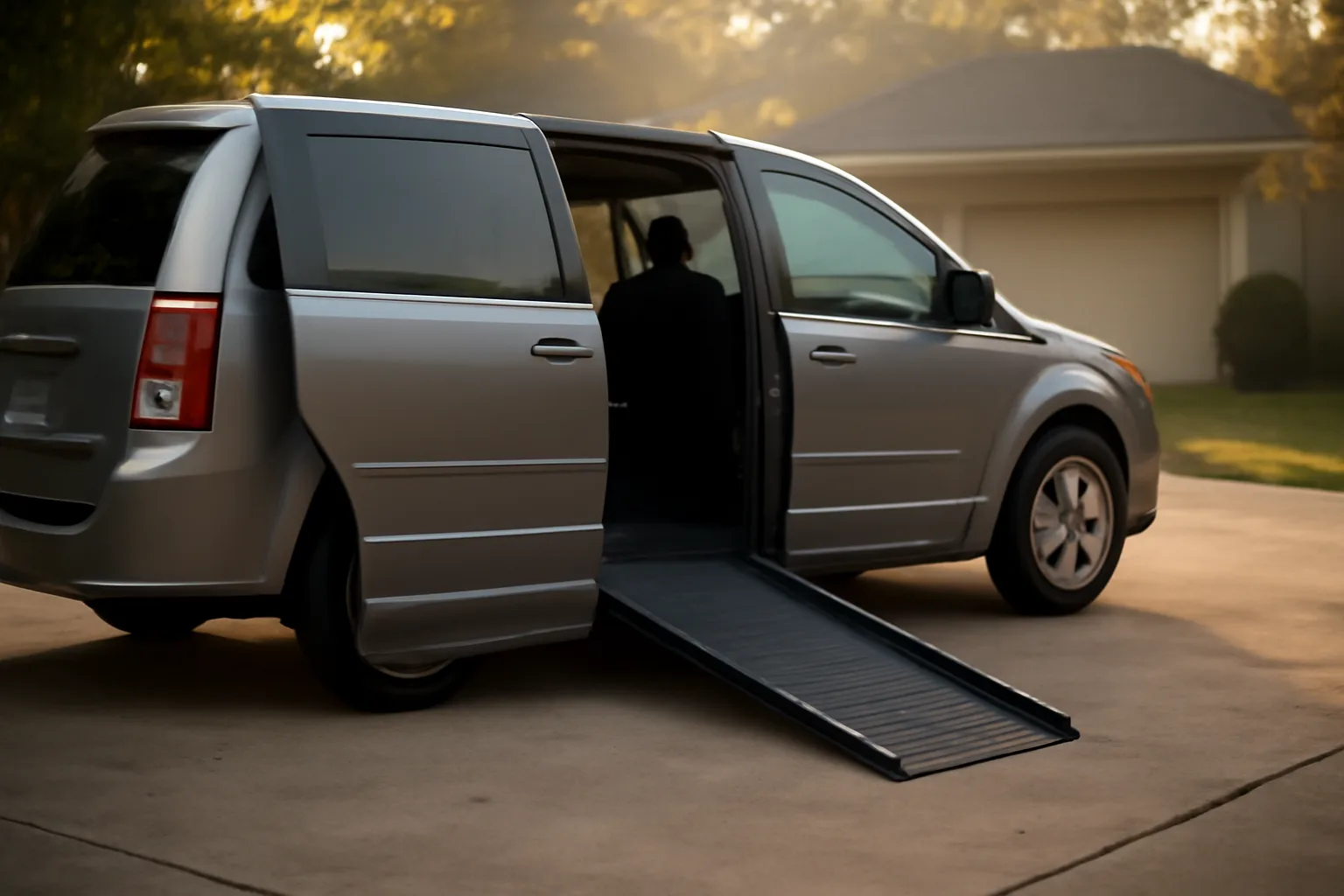
A wheelchair-van NEMT business can be profitable, but margins are thin and driven by your cost per mile, broker trip rates, and how many trips you can string together per shift. Fuel, insurance, and vehicle upkeep are the real margin-killers. Nobody can promise you a number; the honest answer is it depends on your local Medicaid rates and broker contract terms, which you should confirm directly.
Is a medical transportation business actually profitable?
There's no single answer, and anyone who gives you a flat percentage without asking about your state and vehicle type is guessing. Profitability in NEMT comes down to a handful of variables you can actually control: your cost per loaded mile, how much dead-mile driving you do between trips, your broker mix, and whether you're running one van or a small fleet. What is true everywhere: reimbursement rates for NEMT are set by state Medicaid agencies or negotiated through broker contracts, not by you. You don't get to name your price. That means your profit lives entirely in the cost side of the ledger, not the revenue side. Fuel, maintenance on a wheelchair lift, insurance premiums for a commercial vehicle carrying vulnerable passengers, and driver wages (even if that driver is you) all eat into a rate that's often fixed months or years at a time. The federal Medicaid statute requires states to "ensure necessary transportation for recipients to and from providers" under 42 CFR 431.53, which is why NEMT exists as a covered benefit in every state Medicaid program [1]. That guarantees demand. It does not guarantee your margin. Owner-operators who do well tend to run lean: one dependable van, low overhead, and a broker contract with predictable trip volume rather than sporadic on-demand pings. The honest framing: this is a low-margin, volume-and-discipline business, closer to a delivery route than a taxi service. If you go in expecting to get rich off Medicaid rates alone, you'll be disappointed. If you go in treating it as a steady, unglamorous logistics business with real underlying demand, it can work.
What is NEMT and how is it different from an ambulance ride?
NEMT stands for non-emergency medical transportation. It's Medicaid-covered transportation for people who need to get to a medical appointment, dialysis, or pharmacy but don't need an ambulance or emergency medical care. Think wheelchair vans, ambulatory sedans, and stretcher cars, not lights-and-sirens vehicles. The federal rule distinguishes NEMT from emergency ambulance transport specifically because it doesn't require EMT-level medical care during the ride. States are required to provide it "without regard to whether the services are furnished on a fee-for-service or managed care basis," per the Medicaid NEMT guidance from CMS [2]. Most states run this benefit through a broker (Modivcare, MTM, Access2Care, SafeRide, or a state-specific vendor) that dispatches trips to contracted transportation providers like you. If you're trying to figure out where NEMT fits versus emergency medical transport, the line is simple: NEMT is scheduled, non-emergency, and doesn't require clinical intervention en route. An ambulance call for chest pain is emergency medical transport, billed differently and regulated separately. A ride to a dialysis appointment three times a week is NEMT, and that's the market wheelchair-van owner-operators are in. For a broader look at how the category works nationally, see our guide to non emergency medical transportation and the NEMT overview.
Does Medicaid cover ambulance rides?
Yes. Medicaid covers ambulance transportation when it's medically necessary, meaning the recipient's condition requires the vehicle itself and the medical care furnished during transport, per CMS guidance on emergency and non-emergency transportation benefits [2]. This is separate from the NEMT benefit that covers wheelchair vans and ambulatory rides. Emergency ambulance coverage is billed under different codes and typically involves a licensed EMT or paramedic crew, state EMS licensure, and often a certificate of need depending on the state. That's a different business than what most new wheelchair-van owner-operators are starting. If you're weighing whether to pursue ambulance-level licensure versus a NEMT wheelchair-van operation, know that ambulance services carry far higher barriers to entry: state EMS certification, clinical staffing requirements, and often a local certificate-of-need process that can take months. Most people asking "is medical transportation profitable" are really asking about the NEMT side, wheelchair vans and ambulatory sedans, not the ambulance side. That's the focus of this article and the lower-barrier entry point for a new owner-operator.
Does Medicare cover medical transportation?
Medicare's coverage of non-emergency transportation is much narrower than Medicaid's. Original Medicare (Part B) covers ambulance services when other transportation would endanger the patient's health, per Medicare's ambulance services coverage rules [3]. It does not generally pay for routine non-emergency rides to a doctor's office the way Medicaid NEMT does. There is a narrower carve-out: some Medicare Advantage (Part C) plans offer non-emergency transportation as a supplemental benefit, but this varies plan by plan and is not a guaranteed Medicare benefit like Medicaid NEMT is. The statutory basis for Medicare Advantage supplemental benefits, including transportation, is at 42 U.S.C. 1395w-22, which allows plans to offer items and services "not otherwise covered" under Original Medicare [4]. If a chunk of your business plan depends on Medicare trips, verify with each specific Medicare Advantage plan administrator what they cover and how they pay, because it is not standardized nationally the way Medicaid NEMT is required to be under 42 CFR 431.53 [1]. For a new owner-operator, Medicaid managed-care and broker contracts are almost always the bigger and steadier revenue stream compared to Medicare Advantage transportation benefits, which are optional add-ons plans can change or drop.
How do you start a medical transportation business?
Starting a NEMT business follows a rough sequence, and skipping steps costs you time later. Here's the order that actually works: 1. Form your business entity (LLC is standard) and get an EIN from the IRS. 2. Get commercial auto insurance for a vehicle carrying passengers for hire, plus general liability. Confirm minimum coverage amounts with your state Medicaid agency and any broker you plan to contract with, since minimums vary by state and by broker contract. 3. Buy or lease a wheelchair-accessible van that meets ADA and state inspection standards, including a certified wheelchair lift or ramp. The ADA's accessibility requirements for vehicles are set out in the Department of Justice's ADA regulations at 28 CFR Part 36 [5]. 4. Enroll as a Medicaid provider with your state Medicaid agency (this is separate from broker credentialing). 5. Apply for credentialing with the broker(s) operating in your state (Modivcare, MTM, Access2Care, SafeRide, or a state-run alternative). 6. Get driver background checks, drug testing, and any required passenger-assistance or defensive-driving certification completed before you're cleared to run trips. 7. Set up trip-tracking and billing software or a manual log system that satisfies your broker's documentation requirements. Each state runs its Medicaid transportation enrollment slightly differently, and each broker has its own credentialing packet, insurance minimums, and vehicle inspection checklist. There is no universal national form. You will need to confirm the specific requirements with your state Medicaid transportation unit and with each broker directly, because these details change and vary by state. If you want the paperwork side handled in one pass rather than hunting state-by-state, that's the gap our $199 one-time Launch Kit Builder fills: state Medicaid enrollment packets and broker credentialing checklists in one place, not a guarantee of approval, just organized paperwork.
How do you start a NEMT business with just one van?
One van is not a limitation, it's the standard entry point for almost every owner-operator in this industry. You don't need a fleet to start, and most successful operators spent their first year or two running a single vehicle before adding a second. The practical starting checklist for a one-van operation: - Buy a used or new wheelchair-accessible van with a working lift or ramp system that passes your state's vehicle inspection standard.
- Get commercial auto and general liability insurance sized for a passenger-for-hire vehicle, not personal auto coverage (personal policies typically exclude commercial passenger transport).
- Enroll with your state Medicaid agency as an NEMT provider.
- Apply for credentialing with the broker(s) active in your county or region, since coverage areas are broker-specific and county-specific in many states.
- Track every trip carefully (mileage, pickup/dropoff times, passenger signature if required) because broker audits happen and missing documentation is the single most common reason claims get denied or clawed back. With one van, your profitability hinges on trip density: how many scheduled trips you can chain together in a shift without long dead-mile gaps between pickups. A driver who does four dialysis trips back-to-back in a tight geographic cluster earns more per hour than one crisscrossing a rural county for the same four trips. This is worth thinking about before you pick your service area.
How do you start a non-emergency medical transportation business specifically (not ambulance)?
The path for NEMT specifically differs from general "medical transportation" in one big way: you don't need EMT or paramedic licensure, and you generally don't need state EMS certification, because you're not providing medical care during the ride, just safe transport. What you do need, confirmed with your specific state Medicaid transportation unit: - Vehicle standards: wheelchair lift/ramp certification, regular safety inspections, and often specific signage or vehicle marking rules (these vary by state).
- Driver requirements: background checks, driving record checks, sometimes passenger-assistance training or CPR/first aid certification.
- Insurance minimums: commercial auto liability limits set by the state or the broker, often higher than standard commercial auto minimums because you're transporting Medicaid beneficiaries.
- Provider enrollment: a state Medicaid provider number, separate from any broker credentialing.
- Broker credentialing: a separate application and vetting process with each broker operating in your service area (a single state can have one statewide broker or multiple regional ones). For state-specific rules, start with your state Medicaid agency's transportation unit page rather than a national aggregator, since 42 CFR 431.53 sets the federal floor but leaves implementation to each state [1]. Our non emergency medical transportation services guide breaks down what to expect broker by broker.
What does it actually cost to get started?
| Used wheelchair van | $15,000 to $45,000 | Price depends on age, mileage, and lift condition; new conversions run higher | |
|---|---|---|---|
| Commercial auto insurance (annual) | Varies widely by state and driving record | Confirm minimums with broker and state Medicaid agency | |
| LLC formation and EIN | Under $500 in most states | State filing fees vary | |
| Broker credentialing application | Often no fee, sometimes a background-check fee | Confirm per broker | |
| Driver background check/drug screen | $50 to $150 per driver | Confirm with broker requirements | |
| Ongoing vehicle maintenance | Ongoing, higher for lift mechanisms | Budget for lift servicing specifically | The vehicle is almost always the largest single expense, and it's also where new operators most often underestimate ongoing cost. A wheelchair lift is a mechanical system that needs regular servicing, and a lift failure means a canceled trip, an unhappy broker, and a vehicle out of service. Budget for that maintenance line as seriously as you budget for the purchase price. There is no reliable published national average for NEMT owner-operator profit margins; this varies too much by state Medicaid rate, broker contract terms, and local fuel and insurance costs for anyone to state a credible national figure. |
Costs vary enormously by market and vehicle condition, so treat any number here as a range, not a promise. The big line items: | Cost category | Typical range | Notes |
What's the difference between Medicaid enrollment and broker credentialing?
These are two separate processes, and mixing them up is one of the most common mistakes new operators make. Medicaid enrollment is your registration with the state Medicaid agency as a recognized transportation provider, giving you a provider number the state and its contractors can bill against. Broker credentialing is a separate vetting process run by whichever private company (Modivcare, MTM, Access2Care, SafeRide, or others) manages trip dispatch and payment in your state or region. You typically need both, in roughly that order: state enrollment first, then broker credentialing, though some states or brokers may process them differently. Skipping state enrollment and going straight to a broker application is a common reason applications get stuck or rejected outright, because the broker will ask for your state Medicaid provider number as part of the paperwork. Each broker sets its own insurance minimums, vehicle inspection standard, and background-check requirements, layered on top of whatever the state already requires. That means a single state can have different practical requirements depending on which broker covers your county. Confirm the current specifics directly with your state Medicaid transportation unit and with each broker, since these requirements change without much public notice.
What actually drives profit margin in this business?
Five variables matter more than anything else, and they're all things you can influence directly: Cost per loaded mile. This is the single most useful number to track. It's your total operating cost (fuel, insurance, maintenance, driver pay) divided by miles actually driven with a paying passenger aboard. Dead miles between trips don't generate revenue but do cost fuel and wear. Trip density and routing. Four tightly clustered trips in one shift beat four scattered trips across a rural county, even at the same per-trip rate, because dead-mile time is unpaid time. Broker mix. Relying on a single broker means a single point of failure if that contract changes or trip volume dries up. Many established operators work with more than one broker where coverage areas overlap. No-show and cancellation handling. Some brokers pay a reduced rate for a documented no-show, others don't pay at all. Know your specific broker's policy before you count on that trip's revenue. Vehicle uptime. A wheelchair lift out of service means zero revenue from that vehicle until it's fixed. A spare vehicle or a fast repair relationship with a mobility equipment shop matters more than people expect going in.
Is this a good business for a first-time owner-operator?
It can be, if you go in with realistic expectations about margin and paperwork. This is not a business where you set a price and collect it. Your rate is set by contract, your documentation has to be clean enough to survive an audit, and your biggest cost driver, the vehicle, needs real ongoing upkeep. The people who do well tend to be disciplined about logging trips, conservative about vehicle purchases (a reliable used van beats a shiny new one you're still financing), and realistic about how many trips they can actually run per day given their local geography. The people who struggle tend to underestimate insurance and maintenance costs, or take on broker contracts without reading the no-show and documentation clauses closely. If you're weighing whether to start with a single wheelchair van or look at ambulatory sedans too, see our medical transportation overview and the NEMT transportation guide for how vehicle type affects your broker options.
Frequently asked questions
Is a medical transportation business profitable for a new owner-operator?
It can be, but margins are thin and set almost entirely by your cost control, not your pricing power, since Medicaid and broker rates are fixed by contract. Fuel, insurance, and lift maintenance are the biggest margin risks. There's no reliable national profit figure; it depends on your state's rate, your broker mix, and your trip density.
How do I start a NEMT business?
Form an LLC, get commercial auto and liability insurance, buy a wheelchair-accessible van meeting your state's inspection standard, enroll as a Medicaid provider with your state agency, then apply for broker credentialing (Modivcare, MTM, Access2Care, SafeRide, or others active in your area). Confirm exact requirements and order of operations with your state Medicaid transportation unit.
What is NEMT?
NEMT stands for non-emergency medical transportation, a Medicaid benefit covering rides to medical appointments, dialysis, or pharmacies for people who don't need ambulance-level care. Federal law under 42 CFR 431.53 requires states to ensure this transportation is available to Medicaid recipients who need it.
Does Medicaid cover ambulance rides?
Yes, Medicaid covers medically necessary ambulance transportation, separate from the NEMT benefit that covers wheelchair vans and ambulatory rides. Ambulance coverage requires the vehicle and clinical care during transport to be medically necessary, per CMS transportation guidance, and involves licensed EMT or paramedic staffing.
Does Medicare cover medical transportation?
Original Medicare Part B covers ambulance services only when other transportation would endanger the patient's health. It generally does not cover routine non-emergency rides the way Medicaid NEMT does. Some Medicare Advantage plans offer non-emergency transportation as a supplemental benefit, but this varies by plan and isn't guaranteed.
How do I start a medical transportation business with just one van?
One van is the normal starting point. Buy a wheelchair-accessible van meeting inspection standards, get commercial insurance, enroll with your state Medicaid agency, and get broker credentialing for your service area. Focus on trip density (clustered trips beat scattered ones) since that drives your per-hour revenue more than anything else.
What's the difference between Medicaid provider enrollment and broker credentialing?
Medicaid enrollment registers you with the state agency and gives you a provider number. Broker credentialing is a separate vetting process run by the private company (Modivcare, MTM, etc.) that dispatches trips in your area. You typically need both, usually state enrollment first, then broker credentialing.
How much does it cost to start a wheelchair-van NEMT business?
The van itself is usually the biggest cost, with used wheelchair vans commonly ranging from about $15,000 to $45,000 depending on age and lift condition. Add insurance, LLC formation fees, driver background checks ($50 to $150 typically), and ongoing lift maintenance. Exact insurance minimums vary by state and broker.
What is non-emergency medical transportation exactly?
Non-emergency medical transportation (NEMT) is scheduled transport, usually by wheelchair van, ambulatory sedan, or stretcher car, for Medicaid recipients getting to medical appointments who don't need emergency or ambulance-level care. It's a required Medicaid benefit under federal regulation, though states administer it through different broker structures.
Do I need an EMT license to run a NEMT business?
No. NEMT doesn't require EMT or paramedic licensure because you're not providing medical care during transport, just safe passenger transport. You will need driver background checks, sometimes passenger-assistance or first-aid training, and vehicle certification, but not clinical licensure.
How long does it take to get Medicaid and broker approval?
There's no universal timeline; it depends on your state's processing speed and each broker's application backlog. Insurance setup, vehicle inspection, and background checks can each take days to weeks. Confirm current expected timelines directly with your state Medicaid transportation unit and the specific broker you're applying to.
Can I run NEMT trips with a personal auto insurance policy?
Generally no. Personal auto policies typically exclude commercial passenger-for-hire use, and most states or brokers require specific commercial auto liability coverage with minimums that exceed standard personal policy limits. Confirm the exact minimum with your state Medicaid agency and the broker you're contracting with before you drive your first trip.
Sources
- eCFR, 42 CFR 431.53: States must ensure necessary transportation for Medicaid recipients to and from providers
- Medicaid.gov, Non-Emergency Medical Transportation: NEMT is a required Medicaid benefit distinct from emergency ambulance transportation
- Medicare.gov, Ambulance Services coverage: Medicare Part B covers ambulance services only when other transportation would endanger health
- 42 U.S.C. 1395w-22, Benefits and beneficiary protections under Medicare Advantage: Medicare Advantage plans may offer supplemental benefits, including transportation, not otherwise covered under Original Medicare
- eCFR, 28 CFR Part 36 (ADA Title III regulations): ADA accessibility requirements applicable to vehicles and facilities used in transportation services
- eCFR, 42 CFR 440.170: Federal definition of transportation as a Medicaid-coverable service, including NEMT and ambulance transport