Last updated 2026-07-25
TL;DR
To start a medical transportation business in Virginia, form your company, get a wheelchair-accessible or ambulatory vehicle inspected, secure commercial auto insurance, register with Virginia DMV as a motor carrier if required, then enroll as a Medicaid provider through DMAS and credential with its regional NEMT broker. Most owner-operators can launch with one van in roughly 60 to 120 days.
How do you start a medical transportation business in Virginia?
Starting a medical transportation business in Virginia means stacking four separate approval processes: business formation, vehicle and driver compliance, insurance, then Medicaid enrollment. None of these offices talk to each other automatically, so you're the one who has to sequence them correctly. The short version: form an LLC or corporation with the Virginia State Corporation Commission, get an EIN from the IRS, buy or lease a wheelchair van that passes Virginia State Police or DMV safety inspection, carry commercial auto liability insurance (Virginia requires at least $50,000/$100,000/$20,000 in liability coverage for for-hire passenger vehicles under Va. Code § 46.2-472, though NEMT contracts almost always require far more) [1], and then apply for Medicaid provider enrollment through the Department of Medical Assistance Services (DMAS) [2]. NEMT in Virginia is not run directly by DMAS caseworkers trip-by-trip. DMAS contracts with a broker (historically Modivcare, branded LogistiCare in older documents) to manage trip dispatch and provider credentialing for most of the state [3]. That means your real gatekeeper, day to day, is the broker's credentialing team, not a state office. You still need the DMAS provider enrollment approved first, because the broker checks for it. A realistic timeline: 2 to 4 weeks for business formation and EIN, 2 to 6 weeks for vehicle sourcing and inspection, 4 to 8 weeks for DMAS Medicaid provider enrollment (DMAS's own guidance describes enrollment processing in phases and recommends applying well before you plan to start seeing members) [2], then another 2 to 6 weeks for broker credentialing on top of that. Plan for 60 to 120 days total if everything goes cleanly, longer if your application gets kicked back for missing documents, which happens constantly with first-time NEMT applicants.
What is NEMT, and how is it different from an ambulance service?
NEMT stands for non-emergency medical transportation. It's Medicaid-covered transport for members who have no other way to get to a covered medical appointment, using a wheelchair van, ambulatory sedan, or stretcher vehicle, not an ambulance with lights and sirens. Federal Medicaid rules require states to make sure transportation is available to and from providers, and to describe those procedures in their state plan. The Code of Federal Regulations lays this out at 42 CFR § 431.53, which says the Medicaid agency must "specify that the Medicaid agency will ensure necessary transportation for recipients to and from providers". That's the federal hook that makes NEMT a required benefit, not an optional add-on states can drop. NEMT is not emergency medical services. An ambulance responds to a 911 call or an urgent transfer; NEMT is scheduled ahead of time (usually 2 to 5 business days out, depending on the broker's rules) for things like dialysis, chemotherapy, physical therapy, and routine specialist visits. If you're picturing flashing lights, you're building the wrong business. If you're picturing a clean van, a ramp or lift, and a driver trained in passenger assistance, you're in the right place. For a broader look at how the NEMT category fits into the larger medical transport industry, see medical transportation and nemt.
Does Medicaid cover ambulance rides, and does it cover NEMT too?
Yes to both, but they're different benefits with different rules. Medicaid covers ambulance transportation when it's medically necessary, meaning any other means of transport would endanger the person's health, per federal guidance describing ambulance services as covered when other transportation would be medically contraindicated [4]. Medicaid also covers NEMT separately, for members who need a ride to a covered service but don't need emergency-level care. In Virginia, DMAS runs the NEMT benefit through its Non-Emergency Transportation program, which is what your business would be credentialing for. Ambulance transport (emergency and some non-emergency stretcher cases) is billed under a different DMAS provider type and typically requires EMS licensure through the Virginia Office of EMS, a separate credential from NEMT wheelchair-van enrollment [5]. Most new owner-operators buying a single wheelchair van are going after the NEMT contract, not the ambulance one, because ambulance licensure requires EMT-level staffing and equipment that a basic wheelchair van doesn't have. Don't assume "covers ambulance" means "covers my wheelchair van the same way." They run through different DMAS provider types, different fee schedules, and in Virginia's case, different oversight bodies.
Does Medicare cover medical transportation the same way?
No, and this trips up a lot of new operators. Medicare Part B covers ambulance services when other transportation could endanger the patient's health, and Medicare's own coverage page states plainly that it "covers ground ambulance transportation" under those medically necessary conditions [6]. Medicare does not have a general NEMT benefit like Medicaid does. Some Medicare Advantage plans voluntarily add non-emergency transportation as a supplemental benefit, but that's plan-specific, not a federal Medicare rule. If you want Medicare Advantage NEMT work in Virginia, you'd contract directly with individual MA plans or their transportation vendors, which is a separate sales process from Medicaid broker credentialing. Most new single-van operators start with Medicaid NEMT because the volume and the credentialing path are more established, then add Medicare Advantage contracts later once they have a track record.
What licenses and registrations does Virginia actually require?
Virginia doesn't have one single "NEMT license." Instead you're stacking several registrations, and which ones apply depends on your vehicle size and whether you cross into interstate operation. Business entity: register your LLC or corporation with the Virginia State Corporation Commission (SCC), which handles all Virginia business filings . Motor carrier registration: if your vehicle is designed to carry more than a small number of passengers for compensation, Virginia DMV's Motor Carrier Services division handles intrastate for-hire passenger carrier registration and safety compliance, including vehicle inspections and driver qualification files . Confirm with DMV Motor Carrier Services which thresholds apply to your specific van seating configuration, since requirements shift based on gross vehicle weight rating and passenger capacity. Driver requirements: Virginia doesn't require a commercial driver's license (CDL) for most wheelchair vans under 26,001 lbs GVWR carrying fewer than 16 passengers, but your broker contract will layer on its own driver requirements regardless of state CDL thresholds, things like a clean MVR, background check, and passenger assistance training. See [drivers-and-training resources] for what brokers typically expect beyond the state minimum. Medicaid provider enrollment: apply through DMAS as a Non-Emergency Transportation provider [2]. This is the credential that actually lets you bill Medicaid, and it's separate from anything DMV issues.
How do I enroll as a Virginia Medicaid NEMT provider?
You apply directly through the Department of Medical Assistance Services. DMAS maintains a provider enrollment portal and instructs new applicants to review its provider manuals for non-emergency transportation before submitting an application [2]. Expect the application to ask for your business license, EIN, vehicle registration and insurance documents, driver rosters with background check attestations, and your NPI (National Provider Identifier) if the provider type requires one. DMAS processes applications in the order received and can reject incomplete submissions outright, so get every document lined up before you hit submit rather than trickling them in. Once DMAS approves your enrollment, that doesn't automatically mean you're taking trips. Virginia's NEMT trips are dispatched through the state's contracted broker, so you still need to complete that organization's separate credentialing and contracting process, which typically includes its own vehicle inspection, insurance certificate review, and driver file audit. Confirm current broker assignment and credentialing steps directly with DMAS's transportation unit, since broker contracts are rebid periodically and the vendor can change.
How do I start a NEMT business with just one van?
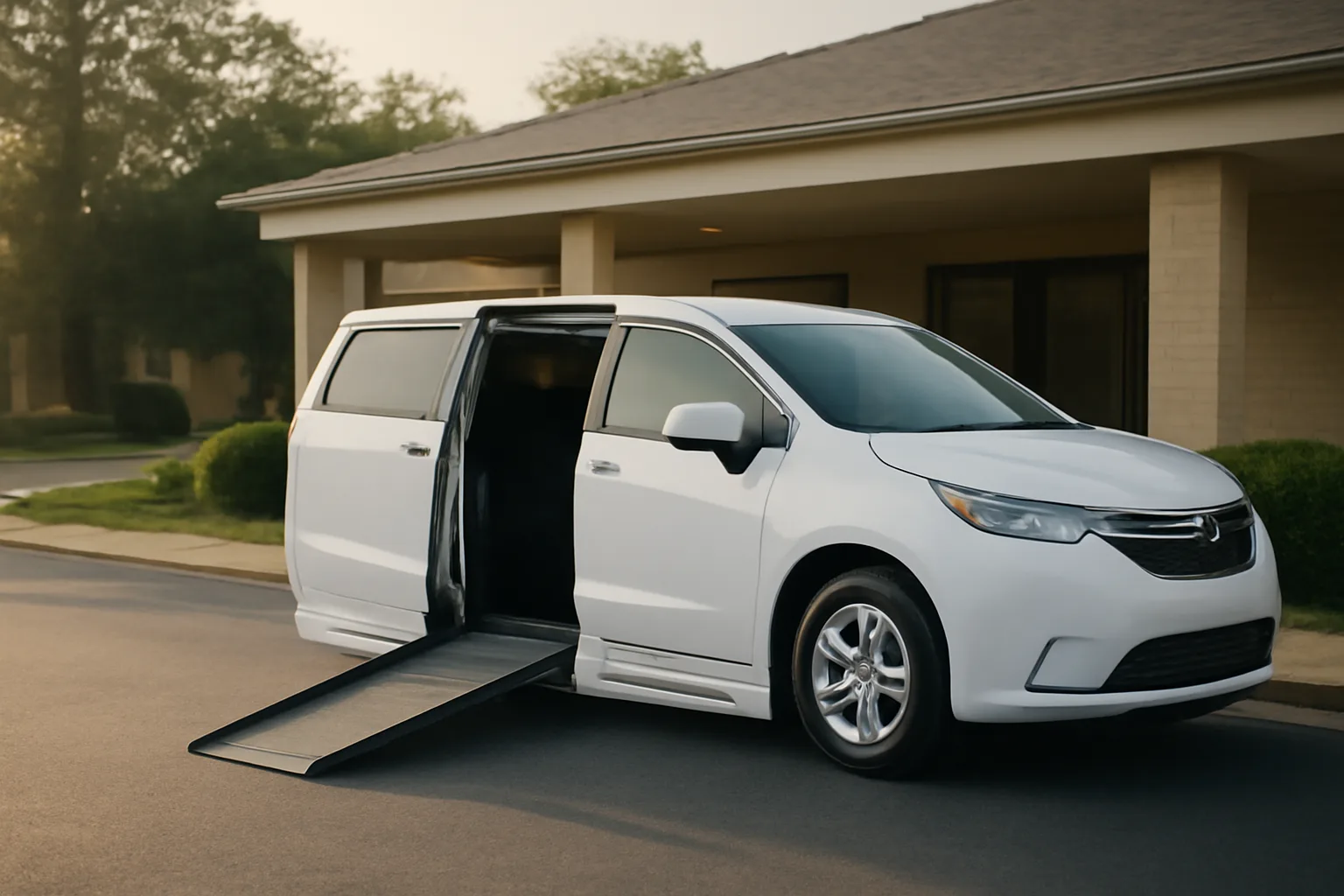
One van is a completely normal way to start, and plenty of successful NEMT companies in Virginia began exactly there. The sequence doesn't change based on fleet size, but a few things matter more when you have zero redundancy. First, pick the right vehicle. A used minivan conversion (Dodge Grand Caravan, Toyota Sienna, or Honda Odyssey with a factory or aftermarket ramp) tends to run cheaper to buy and maintain than a full-size cutaway van, and it's usually enough for ambulatory-plus-wheelchair trip mixes. Full-size cutaways cost more up front and burn more fuel, but they handle bariatric and multiple-wheelchair loads that a minivan conversion can't. Second, build in a backup plan before your first credentialed day. If your one van is in the shop, you have zero capacity, and brokers track no-shows and late cancellations closely; a pattern of missed trips can get your contract suspended. Line up a relationship with another local operator for overflow coverage, or budget for a loaner/rental option, before you need it. Third, don't skip the insurance conversation just because you're small. A single-van business still needs commercial auto liability that meets or exceeds broker minimums (many brokers require $1,000,000 combined single limit, well above Virginia's statutory for-hire minimum under Va. Code § 46.2-472 [1]), plus general liability and workers' comp if you have any employees. One accident without adequate coverage can end a one-van business permanently. Fourth, get your paperwork batch-ready. Because you're doing DMAS enrollment and broker credentialing back to back, keeping a single folder of insurance certificates, vehicle inspection reports, driver background checks, and business licenses saves you from re-requesting the same documents twice. Some owner-operators build this packet themselves from state and broker checklists; others use a prebuilt reference like RideCredential's $199 State + Broker NEMT Launch Kit (see the launch kit builder) to get the document list and sequencing organized upfront rather than learning it by trial and error.
What does a wheelchair van need to pass inspection in Virginia?
Virginia State Police, in coordination with DMV, sets vehicle safety inspection standards that apply to any vehicle operated on public roads, and for-hire passenger vehicles get additional scrutiny under DMV motor carrier oversight . For a wheelchair van specifically, inspectors and brokers alike will check the wheelchair lift or ramp mechanism, tie-down and securement points meeting a recognized standard (many operators reference SAE or WC19-style securement specs, though your broker contract will state its own minimum), interior grab rails, and emergency exit signage. Beyond the ramp itself, expect the same baseline checks any commercial passenger vehicle gets: brakes, tires, lights, mirrors, seatbelts, and window tint limits. Age and mileage caps vary by broker, not by the state; some brokers won't credential a van older than 5 to 7 model years or with mileage above a set threshold, regardless of how well it runs. Confirm current age and mileage limits with your specific broker before you buy a used van, because a great deal on an 8-year-old cutaway can turn out to be uncredentialable.
How much does it cost to launch, and what insurance do I need?
| Business formation (SCC) | $25-$100 | LLC filing fee varies by entity type | |
|---|---|---|---|
| DMV motor carrier registration | Varies by carrier type | Confirm current fee schedule with DMV Motor Carrier Services | |
| Used wheelchair van | Wide range, tens of thousands | Depends heavily on age, mileage, lift condition | |
| Commercial auto liability | Varies by insurer and coverage limit | Broker minimums often exceed Va. Code § 46.2-472 floor [1] | |
| Driver background checks | Modest per-driver cost | Confirm current vendor and price with your broker | General liability and workers' comp (if you have employees) round out the required coverage stack in most broker contracts. Get all quotes in writing before you commit to a vehicle purchase, since insurers sometimes decline older conversions outright. |
Costs vary a lot by vehicle condition and whether you're buying new, used, or converting an existing van, so treat these as rough planning ranges rather than quotes. A used wheelchair-accessible minivan conversion commonly runs somewhere in the tens of thousands of dollars depending on age, mileage, and lift condition; new mobility vans and full-size cutaways cost substantially more. Business formation with the Virginia SCC and DMV motor carrier registration fees are comparatively small, typically well under a few hundred dollars combined, but they add up alongside insurance, background checks, and driver training costs. Insurance is where new operators most often underbudget. Virginia's statutory minimum for for-hire passenger vehicles is $50,000 per person/$100,000 per accident bodily injury and $20,000 property damage under Va. Code § 46.2-472 [1], but that floor is far below what NEMT brokers actually require in their contracts. Get a quote specifically for commercial NEMT/paratransit auto liability, not a generic commercial auto policy, since some insurers won't cover wheelchair-lift equipped vehicles carrying Medicaid passengers without a specific rider. | Cost category | Typical range | Notes |
How do I get credentialed with Modivcare or Virginia's NEMT broker?
Once your DMAS Medicaid enrollment is approved, you apply separately to the broker Virginia has under contract for NEMT management. Historically this has been Modivcare (formerly LogistiCare) for much of the state, but broker contracts are competitively rebid, so confirm the current vendor directly with DMAS's transportation unit before you invest time in an application [3]. Broker credentialing typically asks for the same core documents as DMAS enrollment, plus its own additions: a vehicle inspection specific to the broker's checklist, proof of insurance naming the broker as certificate holder or additional insured (confirm the exact requirement, since it varies), driver background checks often run through a broker-specified vendor, and sometimes a facility or garaging address inspection. Expect an onboarding call or orientation session where the broker walks through its dispatch software, trip acceptance rules, cancellation and no-show penalties, and billing/claims submission process. Read the no-show and late-cancellation policy closely before you sign; brokers can suspend or terminate contracts over repeated service failures, and a one-van operator has much less room to absorb a suspension than a multi-van fleet.
What ongoing compliance do I need to keep my Virginia NEMT contract active?
Credentialing once isn't the finish line. DMAS and your broker both require periodic re-verification, usually annually, of insurance certificates, vehicle inspections, and driver background checks. Missing a renewal deadline is one of the most common reasons active NEMT providers get suspended, not fraud or bad service. Keep a renewal calendar for: insurance policy expiration dates, vehicle inspection due dates (Virginia State Police inspections are typically annual for most passenger vehicles), driver license and MVR pull schedules, and any DMAS revalidation cycle the agency requires for continued Medicaid enrollment. DMAS periodically requires providers to revalidate enrollment information; check current revalidation frequency directly with DMAS provider enrollment, since federal rules under 42 CFR require state Medicaid agencies to revalidate provider enrollment on a set cycle, generally every five years, though states can set shorter intervals . Also track your trip performance metrics. Brokers usually monitor on-time percentage, no-show rate, and complaint volume, and a pattern of poor metrics can trigger a corrective action plan or contract termination even if your paperwork is perfectly current.
What's the difference between NEMT and broader medical transportation services?
NEMT is one slice of the larger medical transportation category. The broader field includes emergency ambulance transport, medical courier and specimen transport, air medical transport, and non-emergency medical transportation services for Medicaid, Medicare Advantage, and private-pay clients. A new owner-operator with one wheelchair van is almost always entering through the NEMT door specifically, because it has the lowest equipment and licensure bar compared to ambulance-level EMS work. If you eventually want to expand, options include adding stretcher-capable vehicles (which usually require additional state EMS-adjacent licensure depending on the level of medical care provided en route), taking on private-pay non-Medicaid clients directly, or contracting with Medicare Advantage plans for supplemental transportation benefits. For a wider view of how these categories relate, see non emergency medical transportation, non emergency medical transportation services, nemt transportation, and emergency medical transport if you're weighing whether to expand into higher-acuity transport later.
Frequently asked questions
How do I start a medical transportation business in Virginia from scratch?
Form your LLC with the Virginia SCC, get an EIN, buy or lease a wheelchair van that passes inspection, secure commercial auto insurance above Virginia's statutory minimum, register with DMV Motor Carrier Services if required, enroll as a DMAS Medicaid provider, then complete broker credentialing. Budget 60 to 120 days for the full sequence, longer if paperwork gets kicked back.
Does Medicaid cover ambulance rides in Virginia?
Yes. Medicaid covers ambulance transportation when it's medically necessary, meaning other transportation would endanger the patient's health. This runs through a separate DMAS provider type and Virginia EMS licensure, distinct from the NEMT wheelchair-van benefit most new owner-operators are pursuing.
What is NEMT?
NEMT stands for non-emergency medical transportation, a Medicaid benefit that provides scheduled rides (wheelchair van, ambulatory sedan, or stretcher vehicle) to and from covered medical appointments for members with no other way to get there. It's required under federal Medicaid transportation assurance rules at 42 CFR § 431.53.
Does Medicare cover medical transportation?
Medicare Part B covers ground ambulance transportation when medically necessary, but it doesn't have a general NEMT benefit like Medicaid does. Some Medicare Advantage plans add non-emergency transportation as a supplemental benefit, but you'd need to contract with those specific plans separately from Medicaid broker credentialing.
How do I start a NEMT business with just one van?
One van is a normal start. Pick a reliable used or new wheelchair-accessible vehicle, get commercial auto insurance that meets broker minimums (often well above Virginia's statutory floor), line up backup coverage for when your van is down, and complete DMAS enrollment plus broker credentialing before accepting your first trip.
What insurance does a Virginia NEMT business need?
Virginia requires at least $50,000/$100,000 bodily injury and $20,000 property damage for for-hire passenger vehicles under Va. Code § 46.2-472, but NEMT brokers typically require higher limits, often $1,000,000 combined single limit. Add general liability and workers' comp if you have employees, and confirm exact broker minimums before buying a policy.
Do I need a CDL to drive a wheelchair van in Virginia?
Most wheelchair vans under 26,001 lbs GVWR carrying fewer than 16 passengers don't require a Virginia CDL. However, your NEMT broker will still impose its own driver requirements, like clean motor vehicle records, background checks, and passenger assistance training, regardless of the state CDL threshold.
How long does Virginia Medicaid NEMT enrollment take?
Expect roughly 4 to 8 weeks for DMAS provider enrollment processing, then an additional 2 to 6 weeks for the contracted broker's separate credentialing process. Total time from business formation to first credentialed trip commonly runs 60 to 120 days if documents are complete on first submission.
Who is the NEMT broker for Virginia Medicaid?
DMAS contracts with a broker to manage NEMT trip dispatch and provider credentialing; Modivcare (formerly LogistiCare) has historically held much of this work in Virginia. Broker contracts are periodically rebid, so confirm the current vendor directly with DMAS's transportation unit before applying.
What does DMAS require for NEMT provider enrollment?
DMAS requires a completed provider enrollment application, business license, EIN, vehicle registration and insurance documents, driver rosters with background check attestations, and an NPI if applicable. Review DMAS's non-emergency transportation provider manual before applying, since incomplete applications are rejected outright.
Can I run a Virginia NEMT business without Medicaid credentialing at all?
Yes, some operators run private-pay-only transport (assisted living facilities, hospital discharge contracts, individual clients paying out of pocket) without Medicaid enrollment. But most NEMT demand and volume flow through Medicaid broker contracts, so skipping credentialing usually means a much smaller addressable market.
What's the difference between NEMT and emergency medical transport in Virginia?
NEMT is scheduled, non-emergency transport to covered medical appointments using a wheelchair van or ambulatory vehicle. Emergency medical transport involves 911 response or urgent transfers using licensed ambulances staffed by EMTs or paramedics, a separate credential through the Virginia Office of EMS, not DMAS NEMT enrollment.
Sources
- Virginia Code § 46.2-472, financial responsibility for for-hire vehicles: Virginia's statutory minimum liability insurance for for-hire passenger vehicles
- 42 CFR § 431.53, Assurance of transportation: Federal requirement that state Medicaid agencies ensure necessary transportation to and from providers
- Medicaid.gov, Medicaid Benefits: Non-Emergency Medical Transportation: Medicaid coverage of ambulance and non-emergency medical transportation as required and optional benefits
- Medicare.gov, Ambulance Services Coverage: Medicare Part B covers ground ambulance transportation when medically necessary
- Virginia State Corporation Commission, Business Entities: Virginia business entity formation and filing requirements for LLCs and corporations
- 42 CFR § 455.414, Revalidation of enrollment: Federal requirement that state Medicaid agencies revalidate provider enrollment on a periodic cycle