Last updated 2026-07-25
TL;DR
Original Medicare (Parts A and B) generally does not cover non-emergency medical transportation. It covers ambulance transport only when medically necessary, and it covers non-emergency ambulance transport in narrow cases with prior authorization. Routine rides to dialysis or checkups fall to Medicaid NEMT benefits, Medicare Advantage supplemental benefits, or private pay.
does original medicare cover non-emergency medical transportation?
No, not in the way most people mean it. Original Medicare (Part A and Part B) is built around medical necessity, and "non-emergency medical transportation" (NEMT), meaning a wheelchair van or ambulette ride to a routine appointment, dialysis, or a specialist visit, generally falls outside that definition. Medicare.gov states plainly that Part B covers ambulance services "only if it would endanger your health to travel by other means" [1]. That's an emergency-transport standard, not a NEMT standard. A wheelchair van company hoping to bill Original Medicare directly for routine, non-emergency rides is going to be disappointed almost every time. There is one narrow exception worth knowing: scheduled, non-emergency ambulance transport (not a wheelchair van) can be covered under Part B if a doctor certifies in writing that the patient's medical condition requires ambulance-level transport and other transportation would be medically contraindicated. CMS regulations at 42 CFR 410.40 set the medical necessity and physician certification standards for this ambulance benefit, and CMS has used prior authorization models for repetitive scheduled non-emergency ambulance transport, most notably for dialysis patients getting three or more round trips over a 10-day period [2]. That's still an ambulance benefit, not a van or car service benefit.
does medicare cover medical transportation in general?
Original Medicare's transportation coverage is almost entirely ambulance-shaped. It pays for ground ambulance transport when another form of transportation would endanger the patient's health, and it pays for air ambulance transport when the pickup location can't be reached quickly enough by ground or geographic barriers make ground transport impossible [1]. It does not have a general "get me to my doctor's appointment" transportation benefit. There's no Original Medicare line item for a livery car, a rideshare, or a wheelchair van picking someone up for a routine primary care visit. Where people get confused is Medicare Advantage. Some Medicare Advantage (Part C) plans, which are run by private insurers under contract with CMS, do offer supplemental non-emergency transportation benefits, like a set number of one-way trips per year to plan-approved locations. Federal rule at 42 CFR 422.102 allows Medicare Advantage plans to offer supplemental benefits beyond what Original Medicare covers, and CMS has confirmed transportation qualifies when it's primarily health-related [3]. But that benefit belongs to the specific Medicare Advantage plan, not to Original Medicare, and it varies enormously by plan and county. If you're an owner-operator trying to figure out whether you can bill Medicare, the honest answer is: you can't bill Original Medicare for NEMT, and if a passenger has a Medicare Advantage plan with a transportation benefit, you'd be contracting with that plan's transportation network or broker, not billing Medicare directly.
what is non-emergency medical transportation (nemt)?
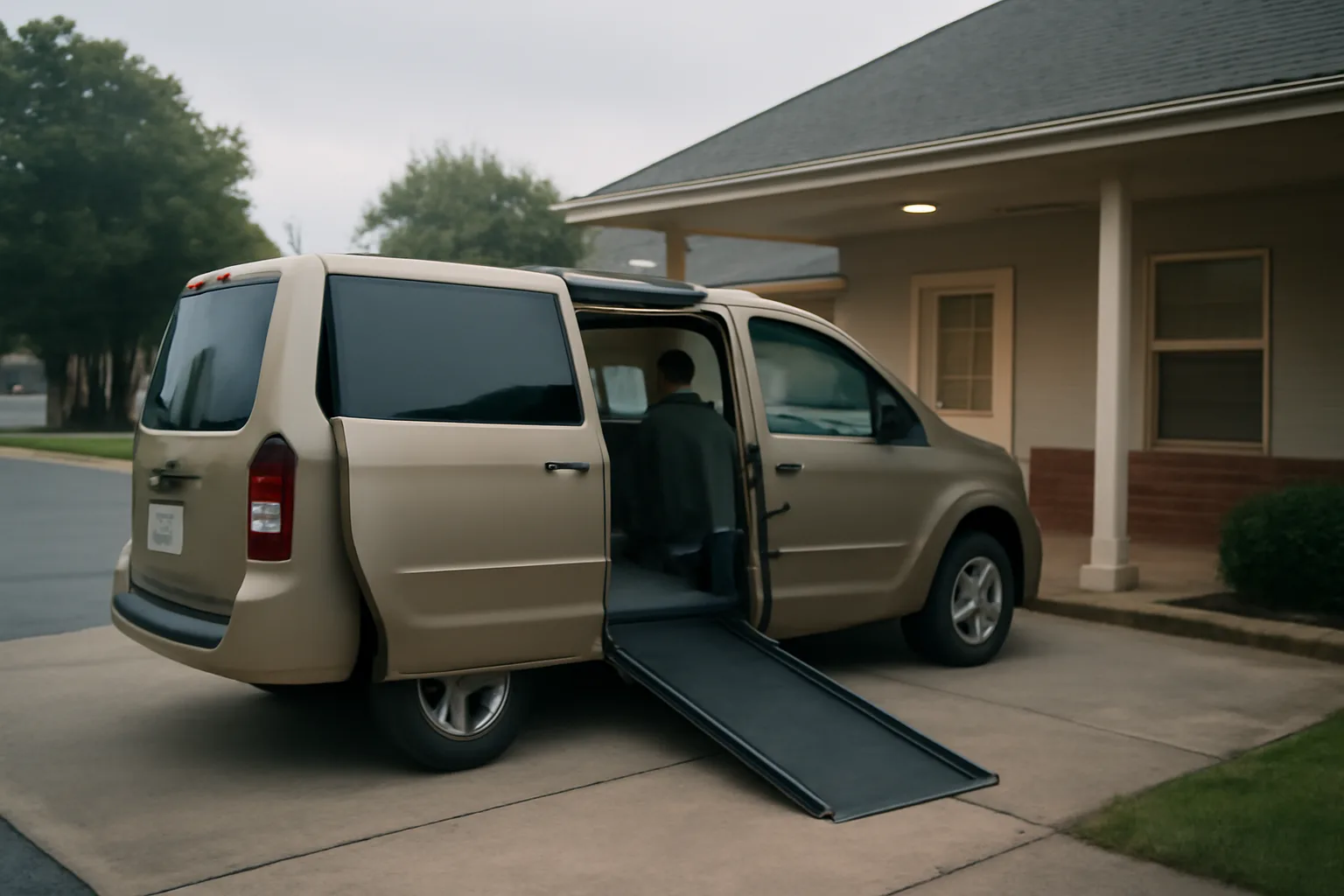
Non-emergency medical transportation is transport to and from medical appointments for people who don't need emergency care but can't get there safely on their own, often because of a disability, a wheelchair, a walker, dialysis-related fatigue, or lack of another ride. It covers everything from ambulatory sedans to wheelchair vans to stretcher vans, depending on the passenger's needs. NEMT is primarily a Medicaid benefit, not a Medicare one. Federal Medicaid regulations at 42 CFR 431.53 require states to "ensure necessary transportation for beneficiaries to and from providers," and CMS guidance describes this as assuring transportation for beneficiaries with no other means of getting to covered Medicaid services [4]. States can run this benefit directly, contract with regional brokers, or use a mix of both. That federal requirement is the reason NEMT exists as an industry at all: it's a mandatory Medicaid transportation assurance, not a Medicare add-on. If you're building a business around wheelchair van transport, Medicaid enrollment and broker credentialing (with companies like Modivcare, MTM, Access2Care, or SafeRide, depending on the state) is where the real revenue path runs, not Medicare billing. For background on how the benefit is structured, see our guide to non emergency medical transportation and what NEMT actually covers.
does medicaid cover ambulance rides?
Yes. Medicaid covers ambulance transportation when it's medically necessary, meaning the beneficiary's condition requires the medical monitoring, equipment, or staffing an ambulance provides. Coverage details, prior authorization rules, and payment rates vary by state because each state Medicaid program sets its own transportation policies within the federal framework [4]. Ambulance coverage (emergency and some non-emergency ambulance transport) is a distinct benefit from the NEMT benefit that funds wheelchair vans, ambulatory sedans, and stretcher vans for routine appointments. A dialysis patient who needs three trips a week to a clinic and can sit upright in a van seat generally qualifies for NEMT, not an ambulance. A patient who needs oxygen monitoring or can't be safely transported any other way may qualify for non-emergency ambulance transport instead, subject to that state's medical necessity documentation. If you're comparing the two benefit types for your own service planning, our emergency medical transport page breaks down where ambulance-level care ends and NEMT begins.
how to start a non-emergency medical transportation business
Starting an NEMT business is a state-by-state Medicaid enrollment process layered on top of ordinary small business setup. There's no single national license. Every state Medicaid agency (and often each regional broker) has its own vehicle, driver, and insurance requirements, so the steps below are the common backbone, not a universal checklist. 1. Form your business entity (LLC is common) and get an EIN from the IRS. 2. Get commercial auto insurance that meets your state's minimum liability requirements for for-hire passenger transport; NEMT insurance requirements are frequently higher than personal auto minimums. 3. Buy or convert a wheelchair-accessible vehicle that meets Americans with Disabilities Act accessibility standards and any state-specific vehicle inspection requirements. 4. Enroll as a Medicaid transportation provider with your state Medicaid agency, or, in broker-managed states, apply for credentialing directly with the broker (Modivcare, MTM, Access2Care, SafeRide, or whichever broker holds the contract in your region). 5. Complete driver background checks, drug testing, and any state-mandated passenger assistance or first aid/CPR training. 6. Get your vehicle inspected and pass any broker-required ride-along or vehicle audit before you're activated to receive trip assignments. Because every state runs this differently, confirm current requirements with your state Medicaid transportation unit and with the specific broker operating in your service area before you spend money on a vehicle or insurance policy.
how do you start a medical transportation business (step by step)
The mechanics are the same whether you call it "medical transportation" or NEMT specifically. The order that saves the most money is: confirm demand and broker contracts first, then buy the vehicle, not the other way around. Start by identifying which broker (or brokers) manage Medicaid NEMT in your state and county. Some states run NEMT through a single statewide broker, others carve it up regionally, and a few states still let counties or managed care organizations manage it directly. Call or check your state Medicaid transportation unit's provider page before assuming which broker applies to you. Next, get pre-qualified on paper before buying a vehicle. Many brokers publish minimum vehicle age, mileage, and ADA lift/ramp specifications, and building or buying a van that doesn't meet spec is a common and expensive first mistake. Ask the broker for their current vehicle standards in writing. Then handle insurance, driver qualifications, and Medicaid provider enrollment in parallel, since they often have overlapping paperwork (W-9s, EIN, insurance certificates, background check results). Budget real time for this: state Medicaid enrollment alone can take several weeks to a few months depending on the state's backlog, and broker credentialing runs on its own separate timeline layered on top. For a structured rundown of what to gather before you apply, see medical transportation and nemt transportation.
how to start a medical transportation business with one van
One van is a completely normal way to start, and plenty of owner-operators run their entire first year on a single wheelchair-accessible vehicle. The catch is that most brokers and state programs treat you the same on paperwork whether you own one van or twenty, so the compliance workload doesn't shrink just because your fleet is small. With one van, plan for these realities: you'll need a backup plan for when that vehicle is in the shop, since most broker contracts expect you to complete assigned trips or notify them promptly if you can't. You'll also want to be honest with yourself, and with the broker, about your service radius; a single van covering a huge rural county is a different operational bet than one van in a dense metro area. On the money side, a one-van operation still needs the same commercial insurance minimums, the same Medicaid provider enrollment, and the same broker credentialing steps as a bigger fleet; there's usually no volume discount on compliance. What you save is on overhead: no dispatch software for multiple drivers, no second set of insurance premiums, and a simpler bookkeeping picture. Many owner-operators intentionally start with one van specifically to learn the credentialing process and broker relationship before scaling up.
what does it cost and take to get credentialed?
Costs vary by state and broker, and neither RideCredential nor any broker guarantees approval or timelines, but a few components show up almost everywhere: business formation fees (often $50 to $500 depending on the state and entity type), commercial auto insurance premiums (which run considerably higher for wheelchair-accessible for-hire vehicles than for personal vehicles), vehicle purchase or conversion cost, and any state Medicaid provider application fee. Some states charge an application fee for Medicaid provider enrollment, and federal rule allows states to require this under 42 CFR 455.460 for certain provider types; the fee amount and whether NEMT providers are subject to it varies by state, so confirm directly with your state Medicaid agency [5]. Broker credentialing itself (the process of getting approved to receive trip dispatches from Modivcare, MTM, Access2Care, SafeRide, or a regional broker) doesn't always carry its own separate fee, but it does require its own paperwork, vehicle inspection, and sometimes a ride-along audit, so budget time as much as money. Because requirements and fees change and differ by state, confirm current numbers with your broker and state Medicaid agency before you commit to a vehicle purchase. If you want a single organized starting point for gathering the paperwork most states and brokers ask for, that's exactly what our $199 one-time State + Broker NEMT Launch Kit is built around; it's a reference tool, not a guarantee of approval.
medicare vs. medicaid vs. medicare advantage: who actually pays for the ride?
| Coverage type | Covers routine NEMT (van/sedan)? | Covers ambulance? | Who pays the driver/company | |
|---|---|---|---|---|
| Original Medicare (Part A/B) | No | Yes, when medically necessary; limited non-emergency ambulance with certification [1][2] | Medicare Administrative Contractor, ambulance provider only | |
| Medicaid | Yes, mandatory federal assurance under 42 CFR 431.53 [4] | Yes, when medically necessary, state-specific rules | State Medicaid agency or contracted broker | |
| Medicare Advantage (Part C) | Sometimes, as a supplemental benefit permitted under 42 CFR 422.102 [3] | Same as Original Medicare, plus possible extra plan benefits | The private MA plan or its transportation vendor | The table above is the whole story in miniature. If a passenger is on Original Medicare only, with no Medicaid, routine NEMT is almost never billable to Medicare, and the ride is either private pay or doesn't happen through your business at all. If they're dual-eligible (Medicare and Medicaid), the Medicaid side of their coverage is what typically funds NEMT. If they're on a Medicare Advantage plan, check whether that specific plan includes a transportation supplemental benefit and who administers it. |
why medicaid, not medicare, is where nemt businesses actually make money
Because federal law requires states to assure transportation for Medicaid beneficiaries to covered services [4], and there's no equivalent mandatory NEMT assurance under Original Medicare, the entire NEMT brokered industry (Modivcare, MTM, Access2Care, SafeRide, and various state and regional brokers) is built around Medicaid trips, not Medicare trips. This matters for how you plan your business. If your business plan assumes Medicare will be a revenue source for routine wheelchair van trips, that assumption is wrong, and you should rebuild the plan around Medicaid enrollment and broker credentialing instead. Medicare Advantage supplemental transportation benefits are real in some plans and some counties, but they're optional for the plan to offer, capped in trip count, and administered separately from Medicaid, so they're a supplement to your business, not its foundation. For readers weighing NEMT against other forms of medical transport work, see non emergency medical transportation services for a broader look at how the service category breaks down by vehicle type and payer.
Frequently asked questions
Does Original Medicare cover non-emergency medical transportation?
Generally no. Original Medicare (Parts A and B) covers ambulance transport when medically necessary and, in narrow certified cases, non-emergency ambulance transport. It does not have a general benefit for wheelchair vans or car rides to routine appointments. Medicare.gov confirms Part B ambulance coverage applies only when other transportation would endanger the patient's health.
Does Medicare cover medical transportation of any kind?
Original Medicare's transportation coverage is essentially limited to ambulance services, ground and air, when medically necessary. Some Medicare Advantage plans offer supplemental non-emergency transportation benefits as an extra, but that's plan-specific, not part of Original Medicare, and varies by insurer and county.
Does Medicaid cover ambulance rides?
Yes, Medicaid covers medically necessary ambulance transportation, though specific rules, prior authorization requirements, and payment rates vary by state. This is a separate benefit from routine NEMT (wheelchair van or sedan) trips, which fall under a state's broader Medicaid transportation assurance obligation.
What is NEMT?
NEMT stands for non-emergency medical transportation: rides to and from medical appointments for people who don't need emergency care but can't get there on their own due to disability, wheelchair use, or lack of transportation access. It's primarily funded through state Medicaid programs, often via contracted brokers.
How do I start an NEMT business?
Form a business entity, get commercial auto insurance meeting your state's for-hire minimums, acquire an ADA-compliant wheelchair van, then enroll as a Medicaid transportation provider with your state agency and get credentialed with whichever broker (Modivcare, MTM, Access2Care, SafeRide, etc.) manages NEMT in your area. Requirements differ by state, so confirm specifics locally.
How much does it cost to start a medical transportation business with one van?
Costs vary widely by state, vehicle condition, and insurance market, and no article can honestly give a fixed number. Expect business formation fees, higher-than-personal commercial auto insurance, the vehicle itself, and possibly a state Medicaid application fee. Confirm current fee amounts with your state Medicaid agency and chosen broker before budgeting.
Can I bill Medicare directly for wheelchair van trips?
No. Original Medicare doesn't pay for routine, non-emergency wheelchair van or sedan transport. Ambulance providers can bill Medicare for medically necessary ambulance transport, but a standard NEMT wheelchair van business bills Medicaid, a broker, or private pay, not Medicare.
What's the difference between NEMT and ambulance transport?
NEMT is transport for people stable enough to ride in a wheelchair van, sedan, or stretcher van without medical monitoring. Ambulance transport is for people whose condition requires medical equipment, monitoring, or staffing during the ride. Medicaid and Medicare both treat these as separate benefit categories with different rules.
Do Medicare Advantage plans cover rides to doctor appointments?
Some do, as an optional supplemental benefit federal rule permits plans to offer beyond Original Medicare's coverage. Availability, trip caps, and approved destinations vary by plan and county, so you'd need to check the specific Medicare Advantage plan's benefit summary, not assume it applies universally.
How long does Medicaid NEMT provider enrollment take?
It varies by state and current application volume; some states process applications in a few weeks, others take a few months, and broker credentialing (a separate step) adds its own timeline. Confirm current processing times directly with your state Medicaid transportation unit.
Is a wheelchair van business the same as an ambulance business?
No. A wheelchair van (NEMT) business transports stable patients without medical monitoring and is credentialed through Medicaid and NEMT brokers. An ambulance business requires EMT/paramedic licensure, emergency medical equipment, and separate state EMS regulatory approval, which is a different licensing track entirely.
Do I need a special license to start an NEMT business?
You typically need standard business licensing, a for-hire commercial driver's license if your state requires one for your vehicle class, Medicaid provider enrollment, and broker credentialing, rather than a single unified "NEMT license." Requirements differ by state, so check with your state Medicaid transportation unit and DMV.
Sources
- Medicare.gov, Ambulance Services coverage page: Part B covers ambulance services only if traveling by other means would endanger health
- 42 CFR 410.40, Coverage of ambulance services: medical necessity and physician certification standards apply to non-emergency ambulance transport, including repetitive scheduled trips such as dialysis-related transport
- 42 CFR 422.102, Supplemental benefits: Medicare Advantage plans may offer supplemental benefits, including transportation, beyond Original Medicare coverage
- 42 CFR 431.53, Assurance of Transportation: states must ensure necessary transportation for Medicaid beneficiaries to and from providers
- 42 CFR 455.460, Application fee for institutional providers: federal rule permits states to require an application fee from certain Medicaid provider types during enrollment
- Social Security Act Section 1902(a)(4), as codified at 42 U.S.C. 1396a(a)(4): state Medicaid plans must provide methods of administration necessary for proper and efficient operation, the statutory basis underlying the transportation assurance regulation at 42 CFR 431.53