Last updated 2026-07-25
TL;DR
Starting an NEMT business means forming a legal entity, getting the right vehicle and commercial insurance, enrolling as a Medicaid transportation provider with your state (or its broker), and passing driver/vehicle inspections. Most states route Medicaid rides through brokers like Modivcare or MTM, so you'll likely need both a state Medicaid provider number and separate broker credentialing before you can bill for a ride.
What is non-emergency medical transportation (NEMT)?
Non-emergency medical transportation is scheduled transport for people who need to get to a medical appointment, dialysis, physical therapy, or a pharmacy pickup but don't need an ambulance. Think wheelchair vans, ambulatory sedans, and stretcher cars, not lights and sirens. Federal Medicaid rules require states to make sure eligible people can actually get to covered care. The regulation at 42 CFR 431.53 says states must "specify that the Medicaid agency will ensure necessary transportation for recipients to and from providers" [1]. That's the legal hook that created the entire NEMT industry. Someone has to provide the rides, and states usually contract that job out. Most states don't run NEMT themselves. They hire a transportation broker (Modivcare, MTM, Access2Care, SafeRide Health, and others depending on the state and region) to manage scheduling, dispatch, and provider networks. As an owner-operator, you're typically applying to two different gatekeepers: the state Medicaid agency (to get a provider number) and the broker (to get credentialed and put on the schedule). Some states also allow direct Medicaid enrollment without a broker for certain trip types, so this varies a lot by state. See our overview of medical transportation and the broader nemt landscape for how these pieces fit together state by state.
How do you start a medical transportation business, step by step?
There's no single national process, because each state Medicaid agency sets its own enrollment rules and each broker has its own credentialing packet. But the sequence is close to universal. 1. Pick your entity and get your EIN. Most owner-operators form an LLC. You'll need this before you can open a business bank account or apply for insurance. 2. Get your operating authority sorted. Depending on your state, this might mean a state DOT or Public Utilities Commission permit for passenger transport, plus local livery or ambulance-service licensing if your state classifies wheelchair vans that way. Confirm with your state Medicaid agency and your state DOT which permits apply, because this differs by state and sometimes by county. 3. Buy or convert your vehicle to meet accessibility and safety standards (more on that below). 4. Get commercial auto insurance with the liability limits your state and broker require. Many broker contracts specify combined single limits well above personal auto minimums, often $1,000,000 or more per occurrence, though the exact figure depends on the contract. Confirm the number in writing before you buy a policy. 5. Enroll as a Medicaid provider with your state, if the state allows direct enrollment for NEMT. Search "[Your State] Medicaid non-emergency transportation provider enrollment" or check your state Medicaid agency's transportation unit page. 6. Apply for broker credentialing with whichever broker(s) manage NEMT in your service region. This is a separate application even if you already have a state provider number. 7. Pass vehicle inspections and driver background checks required by the state and/or broker. 8. Get your NPI number if your state or broker requires one for billing (most do, since Medicaid claims use the National Provider Identifier system administered by CMS). Each step can take anywhere from a couple of weeks to a few months depending on your state's backlog. Build in lead time before you count on any income from Medicaid trips.
How to start a NEMT business with one van?
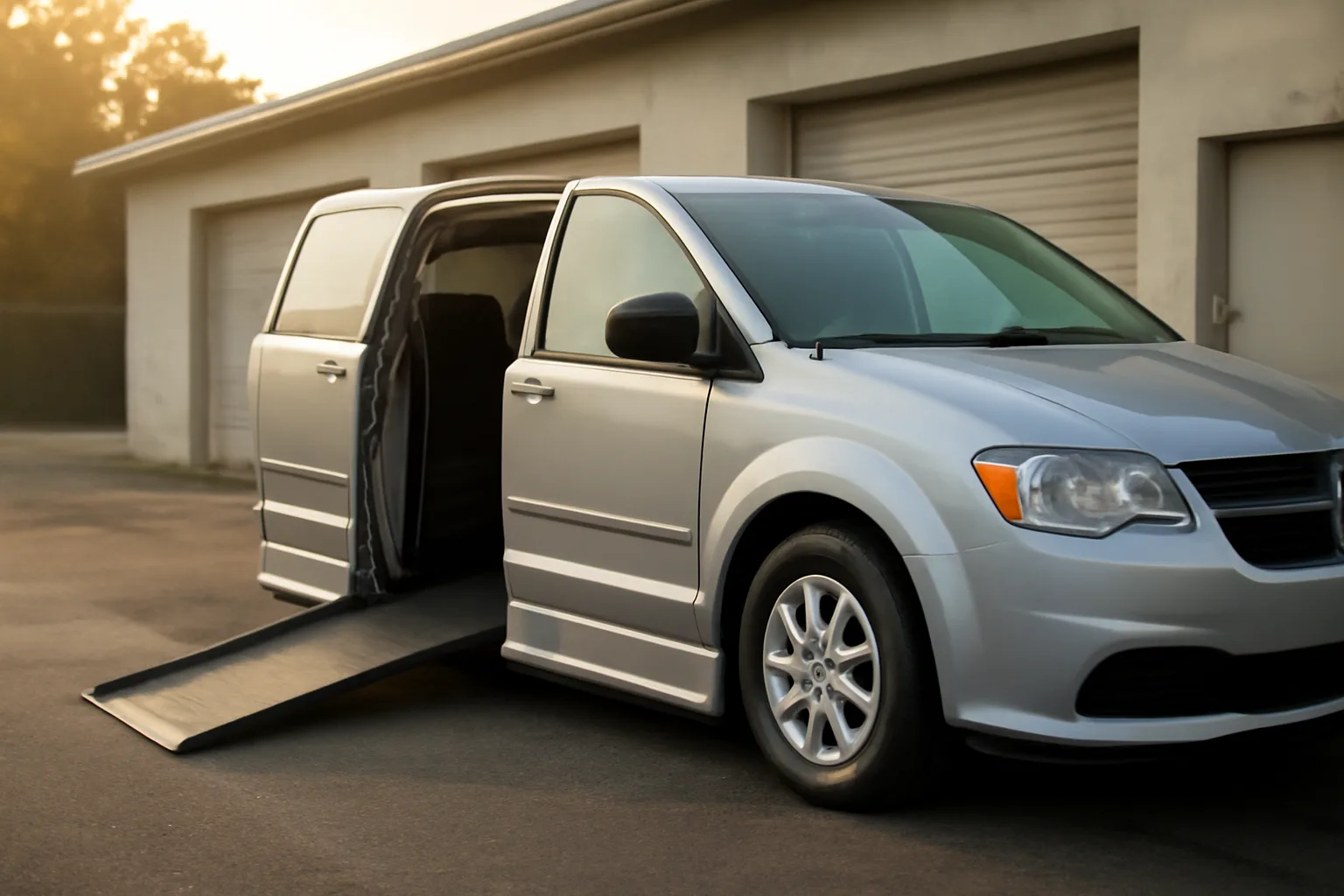
Plenty of owner-operators start with exactly one wheelchair-accessible van, and it's a completely workable model. The credentialing and insurance requirements don't scale down much just because you have one vehicle, though. You'll still need a business entity, commercial insurance meeting the broker's minimums, a compliant wheelchair lift or ramp, driver background checks (often including a Motor Vehicle Record pull and sometimes a DOT physical), and the same state/broker paperwork as a fleet operator. The main difference is capacity: with one van you can typically only serve one trip at a time, and brokers may cap how many trips they route to a single-vehicle provider, or ask about backup vehicle plans in case yours is down for maintenance. A realistic one-van plan looks like this: buy or lease a used wheelchair van (many owner-operators start with a used Dodge Grand Caravan, Ford Transit, or similar mobility conversion), get it inspected for lift/ramp function and tie-down anchor points, carry the insurance limits your broker requires, and apply to one broker at a time rather than all of them simultaneously so you're not juggling multiple credentialing timelines with limited paperwork on hand. Don't skip the maintenance question. If your one van breaks down, you have no trips to cover with, and brokers do track no-show and cancellation rates. Confirm with your broker what their performance standards are before you sign, since falling below them can get you removed from the schedule.
Does Medicaid cover ambulance rides?
Yes, but ambulance transport (emergency or non-emergency by ambulance) is billed and regulated differently from the wheelchair-van and sedan trips most owner-operators run. Medicaid covers medically necessary ambulance transportation under its transportation benefit, and federal rules require states to ensure necessary transportation to covered services under 42 CFR 431.53 [1]. The distinction matters for anyone starting a business. An ambulance company needs EMT/paramedic staffing, medical equipment, and often a separate state EMS license, on top of Medicaid enrollment. A wheelchair-van or sedan NEMT provider does not transport patients who need medical monitoring en route and generally doesn't need EMS certification, just a driver trained in passenger assistance and securement. If you're planning to buy a used ambulance and convert it, understand you're stepping into EMS licensing territory, not standard NEMT. See emergency medical transport for how that licensing track differs.
Does Medicare cover medical transportation?
Medicare's coverage of transportation is much narrower than Medicaid's. Original Medicare Part B covers ambulance services when other transportation "could endanger your health" and the transport is medically necessary, per CMS guidance on ambulance services [2]. It does not generally cover routine non-emergency rides to a doctor's office in a wheelchair van or sedan. Some Medicare Advantage plans offer NEMT-like transportation as a supplemental benefit, but that's plan-specific, not a standard Medicare entitlement. If a caller asks whether Medicare will pay for a ride to dialysis in your van, the honest answer is usually no, unless it's billed as an ambulance transport under Part B rules or the rider has a Medicare Advantage plan with a transportation benefit built in. This is a common point of confusion for new operators pricing out private-pay versus Medicaid versus Medicare trips, so it's worth explaining clearly to riders and their case managers up front.
What vehicle and equipment requirements should you expect?
States and brokers set their own vehicle standards, but most converge on similar basics for wheelchair-accessible vehicles (WAVs). Expect requirements covering: wheelchair lift or ramp function and load capacity, wheelchair securement systems (tie-downs meeting SAE or ADA-referenced standards), passenger seatbelts and occupant restraints, annual or semi-annual vehicle safety inspections, vehicle age limits (some brokers won't credential vans older than 8 to 10 years, though this varies), and clean interior/exterior appearance standards enforced at inspection. The Americans with Disabilities Act doesn't directly regulate individual NEMT vehicles the way it regulates public transit vehicles under 49 CFR Part 37, but many state contracts and broker agreements borrow ADA-style securement and accessibility language anyway [3]. Confirm the specific inspection checklist with your state Medicaid transportation unit and your broker, because a van that passes one broker's inspection may not automatically pass another's if you're credentialed with more than one. Budget for recurring costs too. Annual vehicle inspections, lift maintenance, and commercial insurance renewals all repeat every year, and brokers can suspend you for letting any of them lapse.
How does state Medicaid enrollment actually work?
Every state Medicaid agency has some form of transportation unit or NEMT policy manual, even if the day-to-day scheduling is outsourced to a broker. That state page is where you'll find the actual provider enrollment application, required forms, and sometimes fee schedules. The enrollment packet typically asks for: your business entity documents and EIN, your NPI, proof of required insurance, vehicle registration and inspection records, driver qualification files, and sometimes a surety bond. Processing time varies enormously by state and by how complete your packet is on first submission. Incomplete applications are the single biggest cause of delay. Some states enroll NEMT providers directly through their Medicaid Management Information System (MMIS) even when a broker also exists, because certain trip types (like emergency dental transport or specific waiver populations) get billed straight to Medicaid rather than through the broker's system. Others require 100% of trips to route through the broker. You genuinely have to check your specific state's transportation unit page, because this single detail changes your entire billing workflow. For a state-by-state starting point, see non emergency medical transportation and non emergency medical transportation services.
How does broker credentialing work, and why is it separate from Medicaid enrollment?
Brokers like Modivcare, MTM, Access2Care, and SafeRide Health hold the actual state contracts to manage NEMT networks in most Medicaid managed-transportation states. Being enrolled with the state Medicaid agency does not automatically put you on a broker's schedule. You have to apply separately, and each broker's packet looks a little different. A typical broker credentialing application asks for: certificate of insurance meeting their minimums, vehicle inspection reports, driver files (license, MVR, background check, drug screen results), your state Medicaid provider number (if applicable), W-9 and banking information for payment, and sometimes a service-area map showing where you're willing to run trips. After you're approved, expect an onboarding period where the broker tests your responsiveness before sending real trip volume, and expect their contract to include performance standards around on-time pickups, no-show rates, and complaint thresholds. Falling below those standards repeatedly can get you suspended from the network even if your Medicaid enrollment stays active. Because each broker's paperwork, timelines, and minimum insurance limits differ, and because states periodically switch which broker holds the contract, treat this as an ongoing compliance relationship, not a one-time application. A $199 one-time State + Broker NEMT Launch Kit can help you organize the state and broker paperwork side by side so you're not starting each application from a blank page, but the actual approval decision always rests with the state agency and the broker, not with any kit or service.
What does it cost to start, and where does the money actually go?
Nobody has a clean national number for NEMT startup costs, because vehicle prices, insurance rates, and state fees vary too much to average honestly. What's knowable is the category breakdown. The largest cost is almost always the vehicle. A used wheelchair-accessible conversion van typically runs from the high five figures into six figures depending on age, mileage, and lift type, while a new WAV conversion costs considerably more. Commercial auto insurance for a WAV, given the liability limits brokers often require, is usually a bigger recurring line item than personal auto insurance, sometimes several times higher, and rates depend heavily on your state, driving record, and coverage limits. Other recurring costs include state provider enrollment or license fees (varies by state, sometimes zero, sometimes several hundred dollars), background check and drug screen fees per driver, annual vehicle inspection fees, and any surety bond your state requires. None of these numbers are stable enough nationally to quote as a single figure here. Confirm actual costs with your state Medicaid transportation unit and your insurance broker before you budget. What you should NOT do is treat any of the above as a promise of income. NEMT trip volume, reimbursement rates, and broker trip assignment all vary by region and are outside any single company's control, including brokers themselves.
What's the real timeline from decision to first trip?
Plan on this taking longer than you'd like. A realistic sequence: entity formation and EIN (days), vehicle purchase and conversion inspection (weeks), insurance binding (days to weeks once you have quotes), state Medicaid provider enrollment (commonly several weeks to a few months depending on the state's backlog and your application completeness), and broker credentialing (often runs in parallel with state enrollment but can add its own multi-week review). Many owner-operators find that broker credentialing and state enrollment can happen at the same time rather than sequentially, which saves real calendar time. But you generally can't bill for Medicaid trips until both are done, so treat the slower of the two as your actual launch date. The most common way people blow their own timeline is submitting an incomplete packet: missing insurance certificates, wrong liability limits, expired background checks, or a vehicle inspection that hasn't happened yet. Get your documents ready before you submit anything, not after.
NEMT owner-operator startup steps at a glance
| Step | What it involves | Typical timing | |
|---|---|---|---|
| Form business entity | LLC formation, EIN, business bank account | Days to 1-2 weeks | |
| Vehicle acquisition | Buy or convert wheelchair-accessible van, pass inspection | 1-4 weeks | |
| Commercial insurance | Meet state and broker liability minimums | 1-2 weeks once quoted | |
| State Medicaid enrollment | Provider application through state MMIS/transportation unit | Weeks to a few months | |
| Broker credentialing | Separate application to Modivcare, MTM, Access2Care, SafeRide, etc. | Weeks, often parallel to state enrollment | |
| Driver qualification | Background check, MVR, drug screen, passenger assistance training | 1-3 weeks per driver | This table is a general planning reference, not a guarantee. Confirm every timing and requirement with your specific state Medicaid agency and the broker(s) operating in your service area, since both can change their rules with little notice. |
Frequently asked questions
How do I start a medical transportation business from scratch?
Form a business entity and get an EIN, secure a compliant wheelchair-accessible vehicle and commercial insurance, then pursue two parallel applications: state Medicaid provider enrollment and broker credentialing (Modivcare, MTM, Access2Care, SafeRide, or whichever broker manages your state). You generally need both before you can bill Medicaid for a ride. Confirm exact requirements with your state Medicaid transportation unit.
What is NEMT?
NEMT stands for non-emergency medical transportation: scheduled rides to medical appointments, dialysis, or pharmacies for people who don't need an ambulance. Federal Medicaid rules under 42 CFR 431.53 require states to ensure this transportation is available to eligible beneficiaries, which is why most states contract the work out to transportation brokers and independent providers.
Does Medicaid cover ambulance rides?
Yes, Medicaid covers medically necessary ambulance transportation as part of its transportation benefit under federal rules requiring states to ensure necessary transportation to covered services. Ambulance transport requires EMS licensing and staffing, which is a different regulatory track than standard wheelchair-van or sedan NEMT that most new owner-operators start with.
Does Medicare cover medical transportation?
Medicare Part B covers ambulance transport when it's medically necessary and other transportation would endanger the patient's health, but it generally does not cover routine non-emergency rides in a wheelchair van or sedan. Some Medicare Advantage plans add NEMT-style benefits, but that varies by plan and isn't a standard Medicare entitlement.
How much does it cost to start a NEMT business with one van?
There's no single reliable national figure, because vehicle price, insurance rates, and state fees vary widely. The main cost drivers are the wheelchair-accessible vehicle itself (often high five figures to six figures used), commercial insurance meeting broker liability minimums, and state enrollment or licensing fees. Get quotes locally rather than relying on a national average.
Can I start a NEMT business with just one van?
Yes, plenty of owner-operators start with one wheelchair-accessible van. You'll still need the same business entity, insurance, state Medicaid enrollment, and broker credentialing as a larger fleet, and brokers may ask about backup vehicle plans or cap trip volume for single-vehicle providers, so confirm their specific expectations before you apply.
Do I need both state Medicaid enrollment and broker credentialing?
In most states, yes. The state Medicaid agency issues your provider number, but the broker (Modivcare, MTM, Access2Care, SafeRide, etc.) controls which providers get scheduled for trips in a given region. Some states allow certain trip types to bypass the broker entirely, so confirm your state's specific model with its Medicaid transportation unit.
What vehicle requirements does NEMT credentialing usually involve?
Expect requirements for a working wheelchair lift or ramp, compliant wheelchair securement/tie-down systems, passenger seatbelts, regular safety inspections, and sometimes a vehicle age limit. Exact standards differ by state and by broker, so a van credentialed with one broker isn't automatically approved by another without its own inspection.
How long does it take to get credentialed as an NEMT provider?
Plan for weeks to a few months total, since state Medicaid enrollment and broker credentialing can run in parallel but both have to finish before you can bill. The most common delay is an incomplete application: missing insurance certificates, wrong liability limits, or drivers whose background checks haven't cleared yet.
What insurance do I need to start a NEMT business?
You'll need commercial auto insurance, not a personal auto policy, at liability limits that meet your state's and broker's minimums, which are often $1,000,000 per occurrence or higher depending on the contract. Confirm the exact required limits in writing with your broker and your state Medicaid agency before purchasing a policy.
What's the difference between NEMT and ambulance transport?
NEMT covers wheelchair vans, ambulatory sedans, and stretcher cars for people who don't need medical monitoring during the ride. Ambulance transport requires EMS-licensed staff and equipment for patients who do need monitoring or emergency-level care, and it's regulated and reimbursed on a separate track from standard NEMT.
Do I need an NPI number to start an NEMT business?
Most states and brokers require a National Provider Identifier for Medicaid billing, since claims run through the standard NPI system administered by CMS under 45 CFR Part 162, Subpart D. Confirm with your specific state Medicaid transportation unit whether NPI is required for your provider type before you submit your enrollment application.
Which broker do I need to get credentialed with?
It depends entirely on your state and county, since Modivcare, MTM, Access2Care, and SafeRide Health each hold contracts in different regions, and states periodically switch which broker manages their NEMT program. Check your state Medicaid transportation unit's page to confirm which broker currently operates in your service area.
Sources
- eCFR, 42 CFR 431.53 - Assurance of transportation: States must ensure necessary transportation for Medicaid recipients to and from providers
- CMS, Medicare Coverage of Ambulance Services: Medicare Part B covers ambulance services when other transportation would endanger the patient's health
- eCFR, 49 CFR Part 37 - Transportation Services for Individuals with Disabilities: ADA-based federal regulations govern accessibility requirements for public transit vehicles, which many state NEMT contracts borrow language from
- eCFR, 45 CFR 162.410 - National Provider Identifier standard: NPI is the standard identifier required for covered healthcare providers in HIPAA standard transactions, including Medicaid billing
- Medicaid.gov, Non-Emergency Medical Transportation: Medicaid's NEMT benefit overview and federal transportation assurance requirement
- eCFR, 42 CFR 440.170 - Transportation: Federal regulation defining transportation, including ambulance transportation, as a Medicaid service states may cover