Last updated 2026-07-25
TL;DR
NEMT (non-emergency medical transportation) moves Medicaid enrollees to covered medical appointments when they have no other way to get there. States must offer it under federal Medicaid rules. Medicare generally does not cover it outside narrow cases. Starting a business means an EIN, state vehicle and driver requirements, Medicaid provider enrollment, and broker credentialing with companies like Modivcare or MTM.
What is NEMT (non-emergency medical transportation)?
NEMT stands for non-emergency medical transportation. It's the ride that gets a Medicaid enrollee to a dialysis appointment, a physical therapy session, or a prenatal visit when that person has no car, no license, or a disability that rules out a bus or a personal vehicle. It is not an ambulance and it is not for emergencies. A 911 call goes to emergency medical services. NEMT is scheduled, usually a day or more ahead, through a broker or directly through the state Medicaid agency. Federal Medicaid regulation requires states to make sure eligible people can actually get to and from providers. The rule sits at 42 CFR 431.53, which says states must "ensure necessary transportation for beneficiaries to and from providers" [1]. That single sentence is the whole legal foundation for the entire NEMT industry. Every state runs it differently, but the requirement itself is federal, not optional. Most states don't run NEMT with state employees driving vans. They contract it out to a transportation broker, or they let managed care organizations handle it, or in some states counties or transit authorities do it. The company you'll actually deal with day to day, the one that sends you trip assignments and cuts your check, is almost always the broker: Modivcare, MTM, Access2Care, SafeRide Health, or a regional equivalent, not the state Medicaid office itself. You can read more on how state programs structure this on our medical transportation overview.
Does Medicaid cover ambulance rides and NEMT?
Yes, Medicaid covers both, but they're different benefits with different rules. Ambulance transport (emergency medical transport) is for situations where moving the patient any other way would endanger their health, think heart attack, stroke, severe trauma. NEMT is for stable patients who need a ride to a covered service and have no other transportation option available to them. CMS describes NEMT as covering trips "to and from medical services" for Medicaid beneficiaries who have no other way to get there [2]. The benefit is mandatory for what's called "NEMT" access assurance under 431.53, but each state Medicaid agency writes its own rules on trip authorization, mileage reimbursement, mode of transport (ambulatory sedan, wheelchair van, stretcher van), and which trips qualify. A ride to get a haircut doesn't qualify. A ride to a scheduled dialysis appointment does, assuming the person has no car and no family member who can drive them. Emergency medical transport (ambulance) sits under a separate Medicaid benefit category and is billed very differently, usually through the state's ambulance fee schedule rather than through a broker's trip-based reimbursement. If you're building a business around wheelchair vans, you're in the NEMT lane, not the ambulance lane, and the two credentialing processes don't overlap. See our emergency medical transport piece if you're weighing both.
Does Medicare cover medical transportation?
Mostly no. Original Medicare (Part B) covers ambulance transportation when it's medically necessary and other transportation would endanger the patient's health, per CMS guidance on ambulance services [3]. It does not have a general non-emergency ride benefit the way Medicaid does. If you're stable and just need a lift to a dialysis center or a follow-up visit, traditional Medicare typically won't pay for that ride. The exception is Medicare Advantage (Part C) plans. CMS has allowed Medicare Advantage plans to offer supplemental benefits that go beyond what original Medicare covers since 2019 guidance broadened what counts as "primarily health related," and many plans now include a limited number of non-emergency transportation trips per year as a supplemental benefit [4]. Coverage varies enormously by plan and by year, so if you want Medicare Advantage trip volume, you need to contact each plan (or the broker they've hired) directly and confirm what they currently offer. Bottom line for someone starting a wheelchair van business: your steady, dependable payer is going to be state Medicaid NEMT, not Medicare. Medicare Advantage transportation benefits can be a nice supplemental stream if you can get credentialed with the plan's broker, but don't build your business plan around it.
How do you start a medical transportation business?
There's no single national license for NEMT. It's a patchwork of business registration, state-specific vehicle and driver rules, Medicaid provider enrollment, and broker credentialing, stacked in that rough order. Here's the sequence that actually works. 1. Form your business entity and get an EIN from the IRS. Most owner-operators use an LLC for liability separation. 2. Check your state's specific NEMT requirements. Some states require a separate NEMT provider license or permit through the Department of Transportation or Department of Health, on top of Medicaid enrollment. Confirm with your state Medicaid agency's transportation unit, because this varies a lot: some states (Texas, for example) require permits through the Department of Motor Vehicles for for-hire vehicles, while others fold it into Medicaid enrollment directly. 3. Buy or convert a compliant wheelchair-accessible vehicle. It needs a wheelchair lift or ramp meeting accessibility standards, tie-downs, and usually state-specific inspection sign-off. 4. Get commercial auto insurance with the liability limits your state and brokers require. This is very often the single biggest surprise cost for new owner-operators; some state contracts require $1,000,000 combined single limit coverage per vehicle. 5. Enroll as a Medicaid provider with your state Medicaid agency. This is separate from broker credentialing and usually involves an NPI number (through NPPES), a provider enrollment application, and background checks. 6. Apply for credentialing with the broker(s) operating in your state or region, since most day-to-day trip dispatch runs through them, not the state directly. Expect this whole process to take weeks to a few months, not days, mostly because of insurance underwriting timelines and broker credentialing queues. Nobody in this industry can promise you a fixed approval timeline, and you should be skeptical of anyone who tries.
What licenses and paperwork does Medicaid provider enrollment actually require?
Medicaid provider enrollment is the step where you formally register your business as an approved biller with the state Medicaid program, separate from whatever contract you sign with a broker. Every state runs its own portal and paperwork, so treat the list below as a common baseline, then confirm specifics with your state Medicaid agency's transportation or provider enrollment unit. Common requirements across states include: a National Provider Identifier (NPI) obtained free through the National Plan and Provider Enumeration System, proof of business registration, vehicle registration and inspection records, driver background checks (many states require FBI and state-level criminal history checks), proof of insurance meeting minimum limits, and often a site visit or vehicle inspection before final approval. Some states also require a separate Medicaid transportation network provider agreement layered on top of general Medicaid enrollment, especially in states that use managed care organizations for NEMT rather than a single statewide broker. If your state uses a broker model (most do), you'll typically need both: Medicaid enrollment as the underlying legal requirement, and broker credentialing as the practical gateway to getting trips assigned. Our nemt guide breaks down how these two tracks interact state by state.
How do you start a NEMT business with just one wheelchair van?
Starting with one van is completely normal and probably the smarter move than buying a fleet before you've run a single trip. Most owner-operators in this industry begin exactly this way: one wheelchair-accessible van, one driver (often the owner), and credentialing with one or two brokers in their service area. The math changes a bit for a one-van shop. You don't need dispatch software beyond what the broker itself requires. You don't need a maintenance yard. You do need to be realistic that a single van means you can be down for days if it needs a repair, and brokers often penalize no-shows and late cancellations under their contract terms, so a breakdown without a backup plan can hurt your standing with the broker fast. Realistic one-van startup costs break into a few buckets: the vehicle itself (a used, converted wheelchair van typically runs from the high teens to mid-$30,000s depending on age, mileage, and lift condition), commercial insurance (varies hugely by state and driving record, get multiple quotes), business formation and EIN (free to cheap), and Medicaid/broker enrollment paperwork (mostly your time, though background checks and vehicle inspections often have a small state fee). Confirm current fee schedules with your state Medicaid agency, since these numbers shift and some states charge revalidation fees every few years.
What does Medicaid NEMT broker credentialing involve, and how is it different from Medicaid enrollment?
Medicaid enrollment makes you a legally recognized Medicaid provider. Broker credentialing is what actually gets you trips. In most states, the state Medicaid agency contracts with a broker (Modivcare, MTM, Access2Care, SafeRide Health, or a regional company) to manage scheduling, dispatch, and trip verification. You apply to that broker separately, submit your insurance certificates, vehicle photos and inspection records, driver credentials, and W-9, and go through their onboarding process before you're activated in their dispatch system. Each broker has its own portal, its own document formats, and its own re-credentialing cycle (often annual). If your state uses multiple brokers or lets managed care plans each run their own transportation vendor network, you may need to repeat this process more than once to maximize the trip volume available to you. This is the part of the process that trips up new owner-operators the most, not because it's conceptually hard, but because it's repetitive, paperwork-heavy, and every broker wants slightly different documentation. This is also where a lot of first-timers waste money, paying consultants thousands of dollars to "handle credentialing" for tasks that are really just organized paperwork. A flat-fee document kit that walks you through both state Medicaid enrollment and broker credentialing paperwork, like the $199 State + Broker NEMT Launch Kit at /launch-kit-builder, can save real time versus assembling every form from scratch, though no kit and no consultant can promise you'll be approved. Approval decisions always rest with the state agency and the broker.
How much does it cost to start an NEMT business?
| Wheelchair-accessible van (used) | $18,000 to $38,000 | Depends on lift/ramp condition, mileage, conversion age | |
|---|---|---|---|
| Commercial auto insurance (annual) | Varies widely by state and driving record | Some state contracts require $1M CSL | |
| LLC formation and EIN | $0 to a few hundred dollars | State filing fee varies; EIN itself is free via IRS.gov | |
| Medicaid provider enrollment fees | $0 to a few hundred dollars | Some states charge revalidation fees periodically | |
| Broker credentialing | Usually no direct fee | Time cost is the real expense here | |
| Driver background checks | Tens of dollars per driver | State/FBI check fees vary | The biggest variable cost by far is insurance, and the biggest variable time cost is credentialing paperwork across multiple brokers if your state has more than one operating in your region. |
Costs vary by state and by how many vehicles you start with, but the major categories for a one-van startup are consistent nationally. There's no single official government figure for "average NEMT startup cost" because CMS doesn't track private business formation costs, so treat these as ranges built from typical industry cost centers, and verify current numbers against your own quotes. | Cost category | Typical range | Notes |
What kind of vehicle and equipment do you need for NEMT?
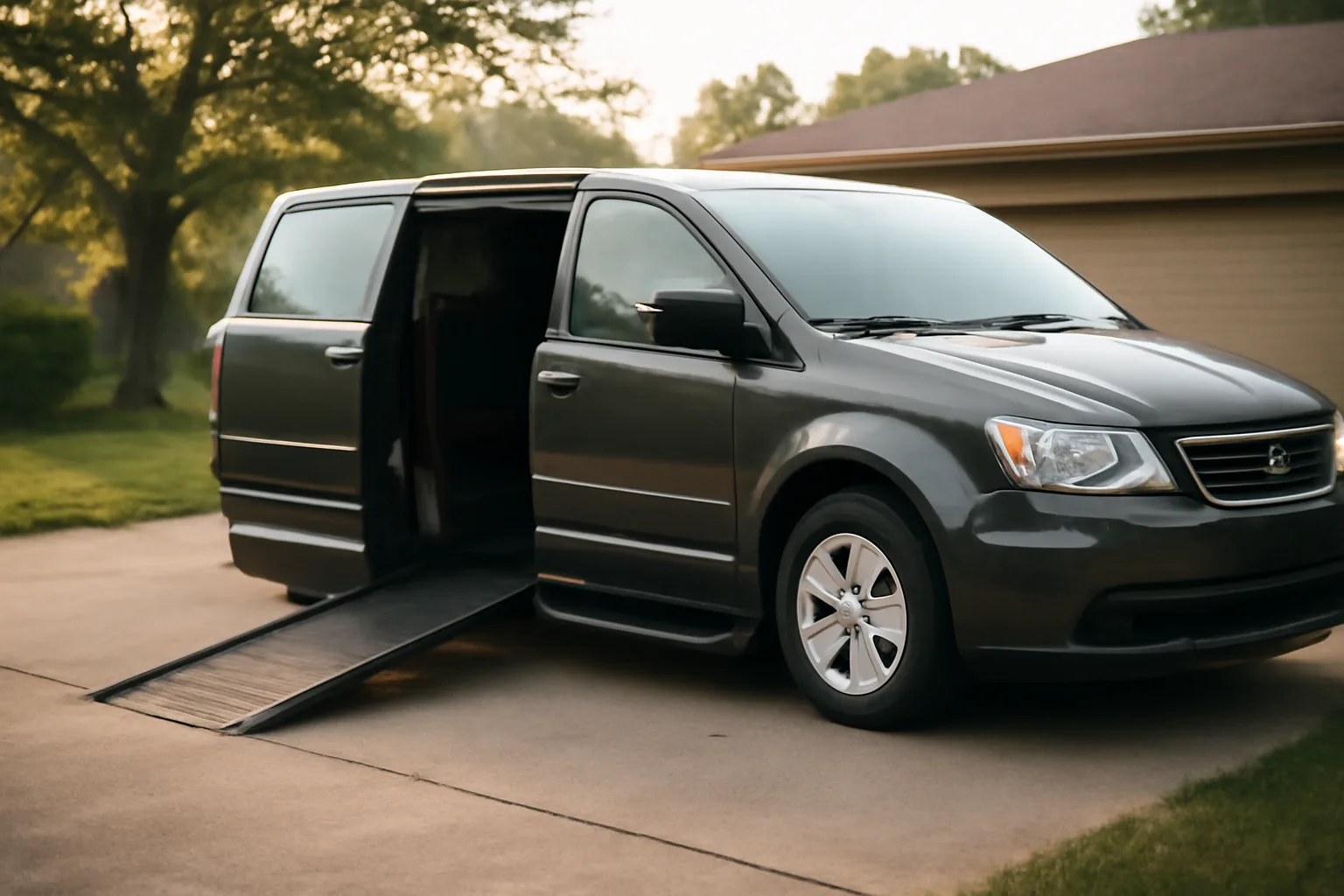
For wheelchair transport specifically, you need a van with a functioning wheelchair lift or ramp, four-point tie-down restraint systems for the wheelchair, and a securement system for the occupant that meets your state's accessibility and passenger safety standards. Many states reference accessibility requirements tied to federal disability access rules for public accommodation vehicles, and your state Medicaid transportation unit or Department of Transportation will have specific inspection checklists. Beyond the lift itself, expect state inspectors to check: seatbelt and harness condition, fire extinguisher and first aid kit presence, vehicle age and mileage limits (some states cap the age of vehicles used for Medicaid NEMT), and signage or vehicle marking requirements, which again differ state to state. Confirm your state's specific vehicle inspection checklist with its Medicaid transportation unit before you buy, not after, because retrofitting an out-of-spec van after purchase can cost more than the price difference between two used vans upfront. Our nemt transportation and non emergency medical transportation services guides go deeper on state-by-state vehicle specification differences if you're comparing vans before you buy.
How does dispatch and trip assignment actually work day to day?
Once you're credentialed with a broker, trips come to you through their dispatch system, usually a mobile app or a driver portal, sometimes still by phone in smaller regions. A typical trip is scheduled at least 24 to 72 hours ahead by the Medicaid member or their care coordinator, routed through the broker's software, and assigned to a driver in the area based on availability, vehicle type match (ambulatory vs. wheelchair vs. stretcher), and sometimes a bidding or rotation system the broker controls. You log pickup and drop-off times, sometimes with GPS verification built into the broker's app, and get paid on whatever cycle the broker's contract specifies, commonly weekly or biweekly, per completed and verified trip. No-shows, late cancellations, and failed pickups usually count against your performance metrics with the broker, and repeated issues can affect your standing or lead to removal from their network. Read your broker contract's performance and cancellation policy closely before you sign it; that section matters more day to day than almost anything else in the agreement.
What's the difference between NEMT and emergency ambulance service?
NEMT moves stable patients to scheduled medical appointments. Ambulance service (emergency medical transport) moves patients whose condition requires medical monitoring or intervention during transport, or whose condition would be endangered by any other mode of transportation. The billing, licensing, and vehicle requirements are completely different between the two. NEMT vehicles are typically vans or sedans with a wheelchair lift or ramp, no onboard medical equipment beyond basic first aid. Ambulances require EMT or paramedic staffing, medical equipment, and state EMS licensing that's a wholly separate regulatory track from Medicaid NEMT provider enrollment. If someone tells you they're starting "a medical transportation business" and means an ambulance company, that person needs an EMS license through their state's EMS office, not NEMT broker credentialing. The two industries share a payer (Medicaid, sometimes) but almost nothing else operationally.
What should you check with your state Medicaid agency before you commit money?
Before you buy a van or sign a broker application, call or check the website of your state's Medicaid transportation unit and confirm four things directly, because generic national guides (including this one) can't give you state-specific answers that change year to year. First, confirm whether your state runs NEMT through a single statewide broker, multiple regional brokers, or managed care organization-specific vendors, since this determines how many separate credentialing applications you'll need to file. Second, confirm current vehicle age, inspection, and equipment requirements specific to your state, since these are not federally standardized. Third, confirm minimum insurance limits required for your state's Medicaid NEMT contracts, since these vary and some states require higher limits than your personal commercial auto policy defaults to. Fourth, confirm current provider enrollment and revalidation fees and cycles, since some states charge periodic renewal fees that catch new owner-operators off guard. None of this information should cost you anything to obtain; it's public information from a government agency. Be wary of anyone charging a large fee just to tell you what your state Medicaid transportation unit will tell you for free over the phone. For a broader look at how NEMT programs vary from state to state, see non emergency medical transportation and our full nemt hub.
Frequently asked questions
What is NEMT?
NEMT stands for non-emergency medical transportation. It's a Medicaid benefit that gets eligible enrollees to and from scheduled medical appointments (dialysis, therapy, prenatal visits) when they have no other transportation option. It's not for emergencies and it's not an ambulance service; scheduled rides go through a state Medicaid agency or a contracted broker.
How to start a NEMT business?
Form an LLC and get an EIN, confirm your state's specific vehicle and driver requirements, buy a compliant wheelchair van, get commercial insurance meeting state minimums, enroll as a Medicaid provider (you'll need an NPI), and apply for credentialing with the broker(s) operating in your state, such as Modivcare or MTM. Expect weeks to months, not days.
Does Medicaid cover ambulance rides?
Yes. Medicaid covers ambulance transport when moving the patient any other way would endanger their health, billed under a separate benefit category from NEMT. Federal rule 42 CFR 431.53 requires states to ensure necessary transportation to providers, and each state sets its own specific ambulance coverage and reimbursement rules.
Does Medicare cover medical transportation?
Original Medicare Part B covers ambulance transport when medically necessary but generally does not cover routine non-emergency rides to appointments. Medicare Advantage plans, since 2019, can offer limited non-emergency transportation as a supplemental benefit, but coverage varies by plan and year, so confirm directly with the specific plan or its transportation vendor.
How much does it cost to start a medical transportation business with one van?
Expect a used wheelchair-accessible van in the roughly $18,000 to $38,000 range, plus commercial auto insurance (varies widely by state), LLC formation fees, and modest Medicaid enrollment and background check fees. Broker credentialing itself usually has no direct fee; the real cost there is your time assembling documentation.
How do you start a medical transportation business with one van?
One van is a normal, common starting point. Get your business entity and insurance in place, buy a wheelchair-accessible van meeting your state's inspection standards, enroll with your state Medicaid agency, and get credentialed with one or two brokers in your service area before scaling to more vehicles or drivers.
What's the difference between NEMT and ambulance transport?
NEMT serves stable patients who need a scheduled ride to a medical appointment and have no other transportation option; vehicles are vans or sedans, no onboard medical equipment required. Ambulance transport (emergency medical transport) requires EMT or paramedic staffing and separate state EMS licensing for patients whose condition needs monitoring during transport.
Do I need a special license to drive for NEMT?
Requirements vary by state. Some states only require a standard driver's license plus a background check and defensive driving or passenger assistance training; others require a specific NEMT driver certification or a for-hire vehicle permit. Confirm current driver requirements directly with your state Medicaid transportation unit or Department of Motor Vehicles.
Which brokers handle Medicaid NEMT credentialing?
Major national and regional brokers include Modivcare, MTM, Access2Care, and SafeRide Health, though the specific broker (or brokers) operating in your area depends entirely on your state's contract structure. Some states use one statewide broker; others let managed care organizations each contract with a different vendor, requiring separate applications.
How long does NEMT provider enrollment and credentialing take?
There's no universal timeline, and no company can promise you a fixed approval date. Realistically, expect insurance underwriting, background checks, vehicle inspection, Medicaid enrollment, and broker credentialing combined to take anywhere from several weeks to a few months, depending on your state's process and how complete your paperwork is on first submission.
Can I run NEMT as an owner-operator without employees?
Yes. Many NEMT businesses start as a single owner-operator driving their own wheelchair van, credentialed with one or more brokers. You'll still need to meet the same state Medicaid enrollment, insurance, and vehicle inspection requirements as a larger fleet; the paperwork burden per vehicle doesn't shrink just because you're solo.
Does NEMT pay per trip or on a schedule?
Payment structure is set by each broker's contract, not by federal Medicaid rule. Most brokers pay owner-operators per completed, verified trip, on a weekly or biweekly cycle. Rates and any mileage or wait-time add-ons vary by broker and by state contract, so confirm current rates directly with the broker before you sign on.
Sources
- eCFR, 42 CFR 431.53 Assurance of transportation: Federal Medicaid regulation requiring states to ensure necessary transportation for beneficiaries to and from providers
- Medicaid.gov, Non-Emergency Medical Transportation: CMS description of NEMT as transportation to and from medical services for beneficiaries with no other means of transportation
- Medicare.gov, Ambulance Services coverage: Original Medicare Part B covers ambulance transport when medically necessary and other transport would endanger health
- Federal Register, Medicare and Medicaid Programs; Policy and Technical Changes to the Medicare Advantage, Medicare Prescription Drug Benefit, PACE, Medicaid Fee-For-Service, and Medicaid Managed Care Programs for Year 2019 (83 FR 16440): Since 2019 CMS has allowed Medicare Advantage plans to offer expanded supplemental benefits including non-emergency transportation
- 28 CFR Part 36, Nondiscrimination on the Basis of Disability by Public Accommodations: Wheelchair-accessible vehicle equipment such as lifts and securement systems must meet federal disability access standards
- IRS, Apply for an Employer Identification Number (EIN): Business EIN registration is free and done directly through the IRS