Last updated 2026-07-25
TL;DR
NEMT (non-emergency medical transportation) moves Medicaid enrollees to covered appointments when they have no other way to get there. Medicaid must cover it under 42 CFR 431.53; Medicare generally does not, except limited ambulance and some Medicare Advantage supplemental rides. Starting a business means an entity, a compliant vehicle, insurance, state Medicaid enrollment, and broker credentialing, usually in that order.
What is non-emergency medical transportation (NEMT)?
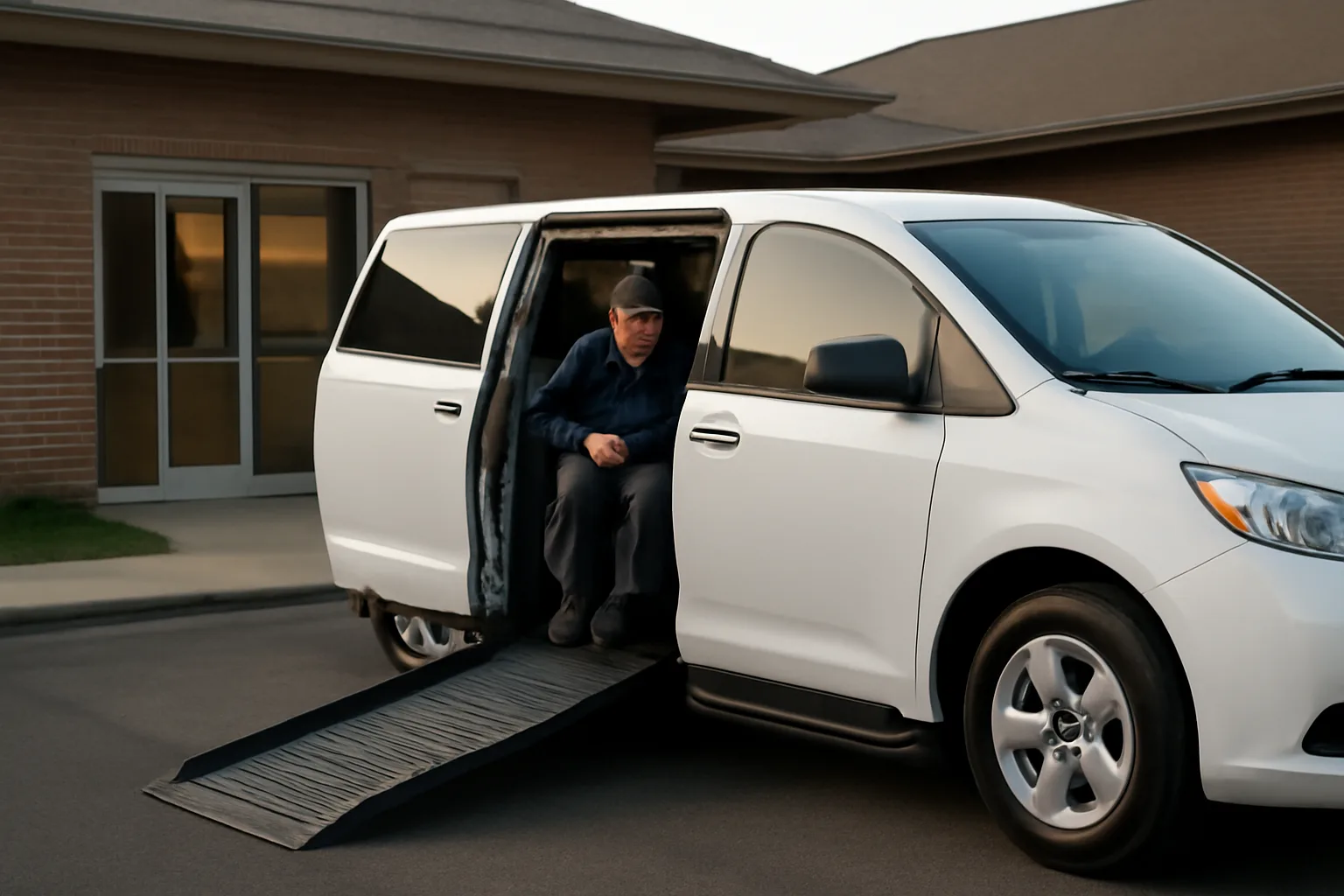
NEMT is transportation for Medicaid (and some Medicare Advantage) enrollees who need to get to a covered medical service but have no way to get there themselves. It is not an ambulance and it is not for emergencies. Think dialysis three times a week, a wheelchair user going to physical therapy, or a rural senior with no car getting to a specialist two counties over. Federal Medicaid rules require states to make sure eligible people can get to and from providers. The regulation, 42 CFR 431.53, says a state plan must "specify that the Medicaid agency will ensure necessary transportation for recipients to and from providers" [1]. States meet that duty in different ways: some run it in-house, most contract with a broker like Modivcare, MTM, Access2Care, or SafeRide to manage trip scheduling and driver networks. NEMT vehicles range from a sedan doing ambulatory (walking) trips to a wheelchair-accessible van with a ramp or lift, to a stretcher van for someone who can't sit up. Most new owner-operators start with one wheelchair van because it opens up both ambulatory and non-ambulatory trip types on most broker platforms, which means more available work than a sedan-only fleet. If you want the fuller picture of how state programs structure this, see the medical transportation overview and the NEMT breakdown, both of which cover how individual states define and pay for these trips.
How does Medicaid cover NEMT, and what does it not cover?
Medicaid covers NEMT as an assurance of access to care, not as a standalone benefit you bill line by line the way you'd bill a doctor visit. The federal requirement is that the trip gets the enrollee to a Medicaid-covered service, and that no other means of transportation is available (a family member with a working car, public transit, etc. usually has to be ruled out first, depending on the state's rules) [1]. Coverage does not include trips to non-covered services, trips for people who have their own reliable transportation, or trips that are really emergencies (call 911 for those; that's emergency ambulance transport, a different Medicaid and Medicare benefit governed by different rules, see emergency medical transport). Each state Medicaid agency runs its own NEMT program design, mileage reimbursement rate, and broker contract, so "how much does a trip pay" and "what counts as a covered trip" varies state to state. Confirm with your state Medicaid agency's transportation unit and with your assigned broker before you assume a trip type is billable in your area.
Does Medicaid cover ambulance rides?
Yes, separately from NEMT. Medicaid covers ambulance transportation (ground and, when needed, air) when it is medically necessary, meaning the person's condition requires the equipment or trained personnel an ambulance provides and other transportation would endanger them [1]. That is a distinct benefit category from routine NEMT van or sedan trips, with its own enrollment path, vehicle standards (ambulances are regulated separately from NEMT vans), and billing codes. If you're building a wheelchair-van NEMT business, you are not in the ambulance business unless you separately license and staff for it. Don't confuse the two when you're reading state Medicaid manuals; NEMT sections and ambulance/emergency transportation sections are usually written by different program staff with different rules.
Does Medicare cover medical transportation?
Mostly no, with narrow exceptions. Original Medicare (Part B) covers ambulance transportation when it is medically necessary and other transportation would be unsafe, and only to the nearest appropriate facility [2]. Medicare.gov states plainly: "Medicare Part B (Medical Insurance) covers ground ambulance transportation when you've had a sudden medical emergency... and transportation in any other vehicle could endanger your health" [2]. Routine non-emergency rides to a doctor's office, dialysis, or physical therapy are generally not a covered Original Medicare benefit. Some Medicare Advantage (Part C) plans offer non-emergency transportation as a supplemental benefit, but that varies plan by plan and is not guaranteed [3]. If you're chasing Medicare-funded ambulatory trip work, you're really chasing individual Medicare Advantage plan contracts, not a standard Medicare NEMT benefit, and you'll need to confirm terms directly with each plan. This is one of the most common points of confusion for new owner-operators: Medicaid NEMT and Medicare transportation coverage are governed by completely different rules, and most of the steady contracted volume in this industry runs through Medicaid brokers, not Medicare.
How do you start a medical transportation business? (the real sequence)
Here's the order that actually works, based on how state Medicaid enrollment and broker credentialing are structured, not the order most blog posts describe. 1. Pick your entity and get your basics. Form an LLC or corporation, get an EIN from the IRS, open a business bank account. This part is the same as any small business and takes a couple of weeks if you don't overthink it. 2. Buy or convert the vehicle to spec. Most states and brokers require a wheelchair-accessible van to meet specific tie-down, ramp/lift, and clearance standards, and altered seating and wheelchair securement systems must meet Federal Motor Vehicle Safety Standard No. 222 for school bus/vehicle seating and crash protection where applicable, and FMVSS No. 403/404 style securement guidance referenced by NHTSA for wheelchair tie-down systems [4]. Get documentation from the converter showing the securement system's compliance before you buy a used conversion. 3. Get commercial auto insurance built for NEMT, not personal auto or generic livery coverage. Brokers typically require specific minimum liability limits and named-insured language; this is one of the most common reasons applications get bounced back. See the operations resources for what a compliant policy usually needs to show. 4. Enroll as a Medicaid provider (or subcontractor) with your state Medicaid agency. Some states require NEMT operators to enroll directly as Medicaid providers before a broker will even talk to you; others let the broker handle enrollment as part of their own network application. This differs state by state and sometimes broker by broker within the same state, so confirm the sequence with your state Medicaid agency's transportation unit first. 5. Apply for broker credentialing. Once you're Medicaid-enrolled (where required) and insured, you apply to the broker(s) operating in your region: Modivcare, MTM, Access2Care, SafeRide, or a state-run alternative. Expect background checks, vehicle inspections, driver qualification file requirements, and often a facility or vehicle photo review. 6. Set up drivers, training, and compliance recordkeeping before you take your first trip, not after. Broker audits happen, and missing driver files are one of the fastest ways to get suspended from a network. Skipping steps, buying the van before confirming state and broker vehicle-spec requirements especially, is the single most expensive mistake new owner-operators make.
How to start a NEMT business with one van (does it work?)
| Entity + EIN | LLC/corp formation, EIN | Your state's Secretary of State site, IRS.gov | |
|---|---|---|---|
| Vehicle | Compliant WAV, ramp/lift, wheelchair securement | Vehicle converter compliance documentation [4] | |
| Insurance | Commercial auto, NEMT-specific limits | Broker contract + state requirements | |
| Driver quals | Background check, MVR, often defensive driving cert | State Medicaid transportation unit | |
| Medicaid enrollment | Provider or subcontractor enrollment | State Medicaid agency transportation unit | |
| Broker credentialing | Application, vehicle inspection, insurance certs | Modivcare/MTM/Access2Care/SafeRide portal | One van limits your growth rate, obviously, but it doesn't limit your ability to get properly licensed and credentialed. Plenty of operators run profitably for years on one or two vehicles before adding a second van. We built a $199 State + Broker NEMT Launch Kit specifically because this sequence, entity, vehicle spec, insurance, state enrollment, broker application, trips up so many one-van operators who do the steps out of order and end up re-doing paperwork. It's a reference kit, not a guarantee of approval; every state Medicaid agency and every broker makes its own credentialing decisions. |
Yes, one van is a completely normal way to start, and it's how most independent owner-operators in this space actually begin. The math and paperwork don't scale down much just because you have one vehicle: you still need the same insurance categories, the same state Medicaid enrollment steps, and the same broker credentialing file that a 20-van company needs. What's different with one van is capacity and scheduling flexibility. Brokers assign trips through a dispatch system, and with a single vehicle you can only take what your one van and one (or two, if you run shifts) driver(s) can physically cover. Many one-van operators start with wheelchair-accessible service specifically because it qualifies them for both ambulatory and non-ambulatory trip assignments on most broker platforms, versus a sedan that's ambulatory-only. A realistic one-van starter checklist looks like this: | Step | What's required | Typical source of truth |
What state Medicaid enrollment actually involves
State Medicaid provider enrollment for NEMT is not one national process. Each state Medicaid agency runs its own transportation unit, sets its own vehicle and driver standards, and decides whether NEMT operators enroll as direct Medicaid providers, as broker subcontractors only, or some hybrid of both. Common elements across most states include a provider enrollment application (often through the state's Medicaid Management Information System portal), proof of business licensing, vehicle registration and inspection records, driver background check results, and proof of the required insurance. Processing time varies widely by state and by how complete your application is on the first submission; incomplete applications are the number one cause of delay, not agency backlog. Because this varies so much, the honest answer to "how long does state enrollment take" is: confirm with your specific state Medicaid agency's transportation unit, because a number that's accurate for one state's portal can be wrong for the state next door. The NEMT transportation state-by-state guides on this site track what's publicly documented by each transportation unit, but agency requirements do change, so treat any specific number as a starting point to verify, not a guarantee.
What does broker credentialing involve, and how is it different from state enrollment?
State Medicaid enrollment establishes that you're allowed to bill Medicaid for NEMT services in that state. Broker credentialing is a separate, private-contract process where a broker like Modivcare, MTM, Access2Care, or SafeRide decides whether to add you to their driver/vehicle network for the trips they manage on the state's behalf. Brokers typically require: a completed vendor application, current certificates of insurance naming the broker as certificate holder, vehicle photos and inspection reports, driver qualification files (license, background check, drug screening results, defensive driving training), and sometimes a facility visit or virtual interview. Each broker's specific document list and portal differs, and brokers update their requirements periodically, so confirm the current checklist directly with your assigned broker before you assemble your file. A practical point new operators miss: being state Medicaid-enrolled does not automatically get you into a broker's network, and being in a broker's network in one state does not carry over to a different state's broker contract, even if it's the same company. Each state contract is negotiated and administered separately.
What vehicle and insurance requirements should you expect?
Vehicle standards for wheelchair-accessible NEMT vans generally track federal motor vehicle safety rules for wheelchair securement and occupant protection in altered vehicles, along with each state's own inspection checklist covering ramp slope, anchor points, and interior clearance. The National Highway Traffic Safety Administration maintains guidance and standards on wheelchair securement systems and modified vehicle safety that converters use as their baseline [4]. States and individual brokers may add their own inspection checklists on top of that, covering things like vehicle age limits, mileage caps, and required signage or equipment (first aid kits, fire extinguishers, communication devices). Insurance requirements are set by both your state Medicaid transportation unit and by your broker contract, and the two don't always match exactly, so check both. NEMT-specific commercial auto policies usually carry higher liability limits than a personal policy and include language recognizing the vehicle's use for hire and its wheelchair securement equipment. Skipping a NEMT-rated policy in favor of cheaper standard commercial coverage is a common way applications get rejected at the credentialing stage. Buying a used conversion van without confirming the securement system meets current standards is another frequent, expensive mistake; get documentation of the conversion's compliance before you sign, not after.
What does a NEMT business actually cost to start?
Costs vary enormously by state, vehicle condition, and whether you buy new or a used conversion, so treat any number here as a range to verify against your own market, not a promise. Rough categories to budget for: the wheelchair van itself (new accessible conversion vans commonly run well into the $40,000 to $70,000+ range, used conversions less but with more inspection risk), NEMT-specific commercial insurance premiums, business entity formation fees (usually under $500 depending on your state), state Medicaid enrollment fees where applicable, driver background checks and required training courses, and working capital to cover fuel, maintenance, and payroll before broker payments start arriving on their normal schedule (which is often net-15 to net-30, not same-day). We are not going to give you a revenue or trip-volume projection here, and you should be skeptical of anyone who does before you have a signed broker agreement in your specific service area. Trip volume, pay rates, and mileage reimbursement differ by state, by broker, and by how many other vendors are already credentialed in your zip code.
What mistakes do new owner-operators make most often?
Buying the vehicle before confirming state and broker vehicle-spec requirements is probably the single most expensive mistake, because a non-compliant conversion can mean thousands of dollars in retrofitting or a resale at a loss. Other recurring problems: applying to a broker before Medicaid enrollment is complete in states that require enrollment first, letting insurance certificates lapse or naming the wrong certificate holder, submitting incomplete driver qualification files, and assuming one state's broker requirements will transfer to a neighboring state. The fix for most of these is sequencing and documentation, not luck. Build your compliance file (entity docs, insurance certs, vehicle inspection records, driver files) before you submit anything, and confirm current requirements directly with your state Medicaid agency's transportation unit and your target broker rather than relying on secondhand forum advice, since requirements do get updated.
Where to go next
If you're deciding between service types, read the non emergency medical transportation and non emergency medical transportation services guides for how ambulatory, wheelchair, and stretcher service lines differ in scope and typical vehicle requirements. If you're specifically trying to understand how emergency ambulance transport is regulated differently from the NEMT work described here, the emergency medical transport page walks through that distinction in more depth. And if you want a structured way to organize the state enrollment and broker credentialing paperwork described above into one file instead of assembling it from scratch, the $199 State + Broker NEMT Launch Kit is built around exactly this sequence. It doesn't replace your state Medicaid agency's or your broker's own requirements, and it doesn't guarantee approval; those decisions are made by the agency and broker, not by any kit.
Frequently asked questions
What is NEMT?
NEMT stands for non-emergency medical transportation. It's transportation, usually by wheelchair van, sedan, or stretcher vehicle, for Medicaid enrollees who need to get to a covered medical appointment and have no other way there. It's not an ambulance and it's not for emergencies; states must cover it under 42 CFR 431.53 as part of ensuring access to care.
How do you start a NEMT business?
Form your business entity, get a compliant wheelchair van, secure NEMT-specific commercial insurance, enroll with your state Medicaid agency (where required before broker credentialing), then apply for broker credentialing with Modivcare, MTM, Access2Care, SafeRide, or whichever broker manages your state's Medicaid trips. Set up driver files and compliance recordkeeping before your first trip, not after.
How do you start a medical transportation business with just one van?
One van is a normal starting point. You'll still need the same entity setup, insurance, state Medicaid enrollment, and broker credentialing as a larger fleet; you just have less trip capacity. Many owner-operators choose a wheelchair-accessible van specifically because it qualifies for both ambulatory and non-ambulatory broker trip assignments.
Does Medicaid cover ambulance rides?
Yes. Medicaid covers ambulance transportation when it's medically necessary, meaning the person's condition requires ambulance equipment or trained staff and other transport would be unsafe. This is a separate benefit category from routine NEMT van or sedan trips, with its own vehicle standards and billing rules.
Does Medicaid cover NEMT for all enrollees?
Federal rule requires state Medicaid programs to ensure necessary transportation to covered services under 42 CFR 431.53, but each state defines eligibility details, like proving no other transportation is available, differently. Confirm specific eligibility rules with your state Medicaid agency's transportation unit.
Does Medicare cover medical transportation?
Original Medicare Part B covers ambulance transportation only when medically necessary and only to the nearest appropriate facility; it generally does not cover routine non-emergency rides. Some Medicare Advantage plans offer non-emergency transportation as a supplemental benefit, but this varies by plan and isn't a standard Medicare benefit.
What's the difference between a Medicaid NEMT broker and state Medicaid enrollment?
State Medicaid enrollment authorizes you to bill Medicaid for NEMT in that state. Broker credentialing is a separate process where a private company like Modivcare or MTM decides whether to add your vehicles and drivers to the network they manage for the state. You often need both, and the order depends on your state.
How long does it take to get NEMT Medicaid credentialed?
Timelines vary widely by state and by how complete your application is on first submission; there's no single national number. Confirm current processing times directly with your state Medicaid agency's transportation unit and your target broker, since incomplete applications are the most common cause of delay.
What vehicle do I need to start a wheelchair NEMT business?
A wheelchair-accessible van with a compliant ramp or lift and a wheelchair securement system meeting federal motor vehicle safety guidance for altered seating and tie-downs. States and brokers may add their own inspection requirements, vehicle age limits, or equipment checklists on top of that baseline.
Can I run NEMT with a personal auto insurance policy?
No. Brokers and state Medicaid programs require commercial auto insurance built for NEMT, usually with higher liability limits and specific certificate-holder language, not a personal auto or generic livery policy. Submitting the wrong type of policy is a common reason credentialing applications get rejected.
What is the biggest mistake new NEMT owner-operators make?
Buying or converting the vehicle before confirming state and broker vehicle-spec requirements. A non-compliant used conversion can cost thousands of dollars to retrofit or force a resale at a loss. Confirm the exact vehicle standards with your state Medicaid transportation unit and broker before you purchase.
Do all states require NEMT operators to enroll with Medicaid directly?
No. Some states require direct Medicaid provider enrollment before broker credentialing; others let the broker handle much of that process as part of network onboarding. This differs by state and sometimes by broker, so confirm the required sequence with your state Medicaid agency's transportation unit first.
Sources
- eCFR, 42 CFR 431.53 (Assurance of transportation): State Medicaid plans must assure necessary transportation for enrollees to and from Medicaid providers.
- Medicare.gov, Ambulance Services coverage page: Medicare Part B covers ground ambulance transportation only for medical emergencies where other transport would endanger health, and does not broadly cover routine non-emergency transportation.
- eCFR, 42 CFR 440.170 (Transportation): Federal definition of transportation as a Medicaid benefit, including the distinction covering ambulance versus other forms of transportation.
- Medicaid.gov, Non-Emergency Medical Transportation page: Medicaid.gov's overview of how NEMT fits within state Medicaid benefit administration.
- National Highway Traffic Safety Administration, Wheelchair Securement and Occupant Protection final rule, 49 CFR Part 571: Federal standards govern wheelchair securement and occupant restraint systems in vehicles modified for wheelchair transport.
- CMS, Medicare Managed Care Manual, Chapter 4 (Benefits and Beneficiary Protections), Section 30: Medicare Advantage plans may offer supplemental benefits, including non-emergency transportation, that vary by plan and are not part of standard Original Medicare coverage.