Last updated 2026-07-25
TL;DR
"NEMT business cards" usually means the basic paperwork identity of your company (business cards, EIN, business license) that brokers and state Medicaid agencies want on file, not a payment card. You need a legal business entity, EIN, NPI (in most states), vehicle permits, and insurance before any broker will credential you. Budget weeks, not days, for enrollment.
What does "NEMT business cards" actually mean in this industry?
People search this phrase two different ways, and it's worth untangling before you spend money on the wrong thing. Some new owner-operators mean literal business cards, the paper kind you hand a discharge planner or a dialysis clinic front desk. Others mean the business identity paperwork a broker or state Medicaid agency requires before they'll let you carry a single member: your EIN, your business license, your NPI, your Certificate of Insurance. That second meaning is the one that determines whether you get paid. Honestly, printed business cards matter less than people think. What matters is that when a broker like Modivcare, MTM, Access2Care, or SafeRide runs your application, every document lines up: same legal name, same address, same EIN, same NPI. Mismatches are the single most common reason credentialing gets kicked back for "corrections needed." So this article covers both. We'll tell you what to put on an actual card if you want one, but most of the piece is about the paperwork identity that gets you enrolled with Medicaid and credentialed with a broker. If you haven't decided on your entity structure yet, that decision (LLC vs. sole proprietor vs. corporation) comes before anything else, because your EIN and NPI both key off it.
What is NEMT, and why does it need this much paperwork?
NEMT stands for non-emergency medical transportation. It's transportation to and from covered medical services for people who don't need an ambulance but can't get there on their own, whether that's because of a wheelchair, a walker, dialysis fatigue, or no working vehicle at all. Federal Medicaid regulation requires states to make sure eligible people can get to and from providers. The regulation at 42 CFR 431.53 says states must "specify that the Medicaid agency will ensure necessary transportation for recipients to and from providers" and may do this directly, by contract, or through the recipient's own arrangement [1]. That single regulation is why almost every state now runs a broker system (Modivcare, MTM, and others) instead of paying individual drivers directly. Because NEMT is funded by a federal-state program, the paperwork load is heavier than, say, a private courier business. States and brokers have to verify you're a legitimate, insured, background-checked operator before public money touches your bank account. That's the root reason behind every form you'll fill out: EIN, NPI, insurance certificate, vehicle inspection, driver background check. None of it is arbitrary bureaucracy for its own sake, though it sure feels that way at 11pm filling out your fourth W-9. For a broader look at what counts as NEMT versus emergency transport, see what is non emergency medical transportation.
How do you start a medical transportation business, step by step?
There's no single national checklist because each state Medicaid agency and each broker sets its own rules, but the sequence is fairly consistent across states. Confirm each step with your broker and state Medicaid agency before you spend money, because requirements shift. 1. Pick your business entity (LLC is common for liability separation) and register it with your state. 2. Get an EIN from the IRS, free, directly at irs.gov [2]. 3. Get a National Provider Identifier (NPI) through NPPES if your state Medicaid program requires one for transportation providers [3]. 4. Buy or lease your wheelchair van and get it inspected to whatever standard your state sets (many states reference ADA and state DOT vehicle standards). 5. Get commercial auto insurance with the liability limits your state or broker requires, plus general liability. 6. Run background checks and drug screens on every driver, per your state's requirements. 7. Apply for Medicaid enrollment as a transportation provider with your state Medicaid agency. 8. Apply for broker credentialing (Modivcare, MTM, Access2Care, SafeRide, or whichever broker holds the contract in your service area) separately from Medicaid enrollment. Those last two steps are not the same thing and people mix them up constantly. Medicaid enrollment gets you a provider number with the state. Broker credentialing gets you actual trip assignments. You typically need both, and the order varies: some states want Medicaid enrollment first, some brokers will start intake before your state number is finalized. That's a "confirm with your broker and state Medicaid agency" moment, every time. For a state-by-state framework of who runs what, medical transportation breaks down the enrollment side in more detail.
How do you start a NEMT business with just one van?
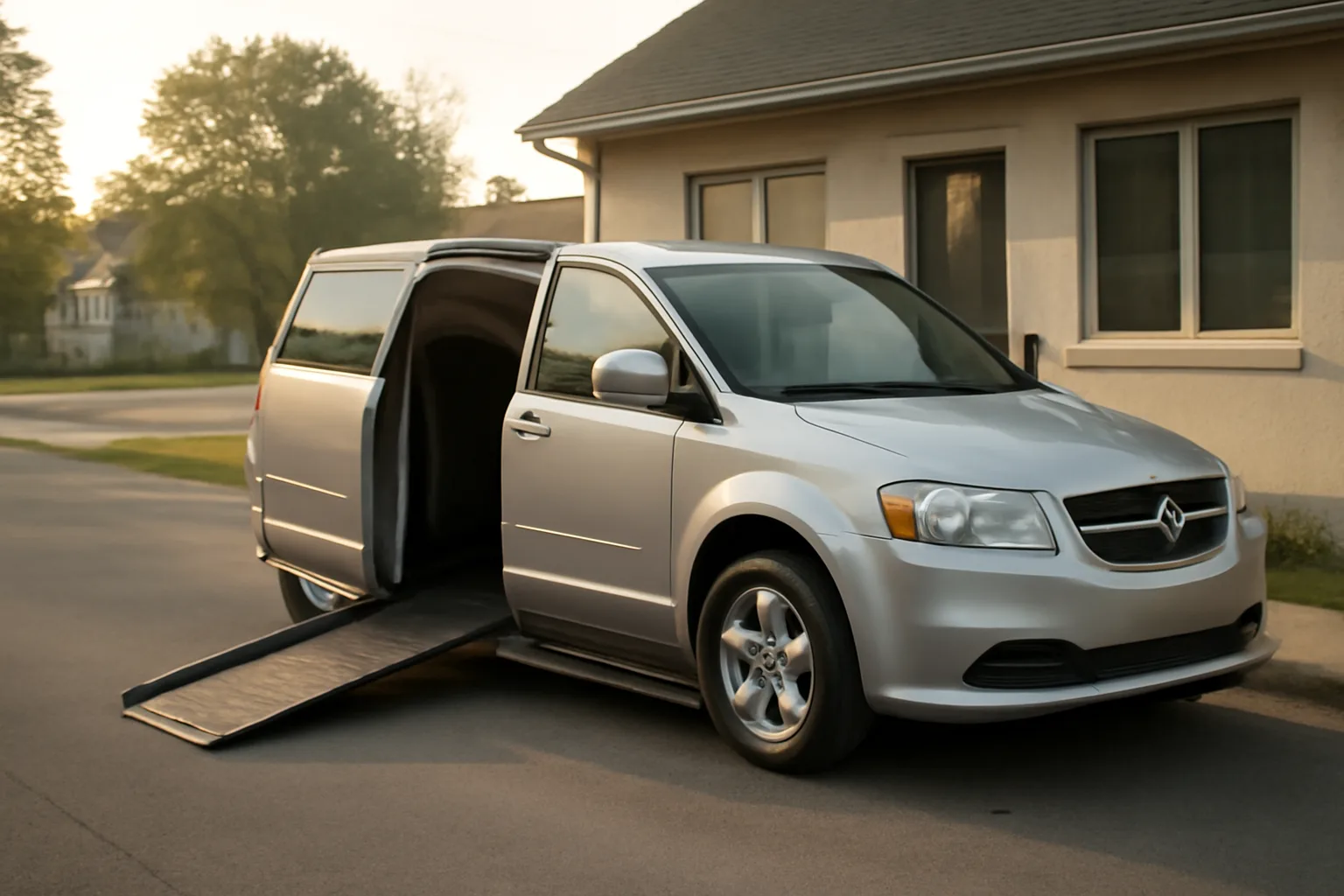
One van is plenty to start. Plenty of operators run their entire company off a single wheelchair-accessible minivan for the first year or two, and there's nothing wrong with that model as long as your paperwork treats you like a real business, not a side hustle. The practical difference between a one-van operation and a fleet is mostly about what you skip, not what you do differently. You still need the entity, EIN, NPI, insurance, and credentialing. You don't need a dispatch software subscription on day one. You don't need a second driver on payroll. You don't need a physical office; a lot of states accept a home business address as long as it matches your registered agent address. What trips people up with a single van is redundancy. If your one van is in the shop, you have zero capacity, and a missed trip can flag you with the broker as unreliable. Brokers like Modivcare and MTM track on-time performance and no-show/cancellation rates per contract, and repeated failures can affect your standing (confirm the specific performance thresholds with your broker, since these are set contract by contract and not published nationally). Spend the money you're not spending on a fleet on: a reliable used or certified pre-owned wheelchair van with a documented lift inspection history, a maintenance reserve fund, and insurance that actually covers wheelchair securement liability, more than basic auto liability. That last one gets skipped constantly and it's the wrong place to cut.
How do you start a non-emergency medical transportation business specifically for Medicaid work?
Starting a general transportation business and starting a Medicaid NEMT business are different projects that happen to use the same van. The Medicaid-specific work is the enrollment and credentialing layer. Every state Medicaid agency has a transportation unit or a designated broker that handles provider enrollment. Some states run this in-house through their Medicaid agency's own portal; others hand the entire function to a broker who does both credentialing and trip dispatch. You have to find out which model your state uses, because it changes where you send your paperwork first. The federal floor is set by 42 CFR 431.53, which requires states to ensure transportation to covered services [1], but each state's Medicaid State Plan Amendment and provider manual spells out the actual mechanics: required forms, insurance minimums, vehicle inspection cycles, driver qualification standards. These provider manuals are public documents on state Medicaid transportation unit websites, and reading yours before you apply saves you a rejected application. A few things that show up in most state Medicaid NEMT provider manuals: - Proof of business registration and good standing with the Secretary of State
- EIN and, in most states, an NPI classified under the NEMT taxonomy code
- Commercial auto insurance certificate naming the state or broker as certificate holder in some cases
- Vehicle inspection report, often annual
- Driver background check results, sometimes including a state-specific registry check
- W-9 and direct deposit / EFT enrollment form For the enrollment side specifically, nemt and nemt transportation walk through what state programs typically ask for.
What does Medicaid actually cover, ambulance and non-ambulance?
Medicaid covers both, but they're two different benefit categories with different rules, and mixing them up on an application or a business card is an easy way to confuse a broker reviewing your file. Does Medicaid cover ambulance rides? Yes, when medically necessary. Medicaid.gov describes ambulance services as a covered benefit category, and states set their own medical necessity criteria and payment rates within federal guidelines [4]. Ambulance transport is for emergencies or situations requiring medical monitoring en route; it requires licensed EMS-level staff and specific vehicle certification, which is a separate business (and separate licensing track) from NEMT. Does Medicaid cover ambulance, wheelchair van, and stretcher car trips all under the same umbrella? No. NEMT (wheelchair vans, ambulatory sedans, stretcher cars without EMS staff) is a distinct benefit, delivered through the broker system in most states under the federal transportation assurance requirement at 42 CFR 431.53 [1]. If you're building a wheelchair van business, you are not in the ambulance business, and you shouldn't market yourself as one, even loosely, because it can create real confusion with dispatchers and referral sources about what level of care you're licensed to provide. Does Medicare cover medical transportation? Sometimes, but far more narrowly than Medicaid. Medicare Part B covers ambulance transportation when other transportation could endanger your health, per CMS guidance on ambulance services [5]. Medicare generally does not cover routine non-emergency wheelchair van rides the way state Medicaid NEMT benefits do; some Medicare Advantage plans offer supplemental transportation benefits, but that varies by plan and isn't a statutory Medicare guarantee. If you plan to work Medicare Advantage transportation contracts alongside Medicaid NEMT, treat them as a separate credentialing track with separate rules; don't assume Medicaid broker credentialing covers you for Medicare Advantage work.
What goes on an actual NEMT business card (the printed kind)?
If you do want a physical card for hospital discharge planners, clinic front desks, and case managers, keep it simple and accurate. This is marketing, not a legal document, but it should match your legal paperwork exactly. What to include: - Legal business name (matching your Secretary of State registration and your Medicaid enrollment)
- Service area (counties or region you actually cover)
- Phone number that's answered during business hours, not a voicemail black hole
- What you offer: wheelchair van, ambulatory, stretcher (only list what you're actually equipped and credentialed for)
- Whether you accept Medicaid, private pay, or both What to leave off: your Medicaid provider number, your NPI, or any broker-specific ID. Those are administrative identifiers, not marketing material, and printing them publicly serves no purpose and creates a small identity-theft risk. One honest note: printed cards get you almost nothing without relationships. Discharge planners and dialysis center schedulers refer business to operators they trust and have worked with, not to whoever left the nicest card in the break room. Cards are a minor supplement to actually showing up reliably for a few months.
How do broker credentialing and state Medicaid enrollment actually differ?
| Business entity registration | Secretary of State | Legal standing to operate | |
|---|---|---|---|
| EIN | IRS | Tax ID for all other applications | |
| NPI (if required) | NPPES / CMS | Provider identifier for Medicaid billing | |
| State Medicaid enrollment | State Medicaid transportation unit | Recognized Medicaid transportation provider status | |
| Broker credentialing | Modivcare / MTM / Access2Care / SafeRide (varies by region) | Actual trip assignments and dispatch access | Timelines vary widely and nobody publishes a reliable national average; state Medicaid provider enrollment alone can run anywhere from a few weeks to a couple of months depending on the state's backlog, and broker credentialing often adds more time on top of that. Build in a real cushion before you plan to start generating trips, and confirm current processing times directly with your state Medicaid transportation unit and your target broker, since these change with staffing and demand. |
This is the distinction that trips up almost every new owner-operator, so it deserves its own section. State Medicaid enrollment makes you a recognized Medicaid provider in that state, with a provider number tied to your EIN and NPI. In states that manage NEMT directly (rather than through a broker), this enrollment is what lets you bill Medicaid for trips. In broker states, Medicaid enrollment may still be a prerequisite even though the broker handles day-to-day dispatch and payment. Broker credentialing is a private business relationship with a company like Modivcare, MTM, Access2Care, or SafeRide that holds the transportation contract for your region. The broker verifies your insurance, vehicle inspections, driver qualifications, and often runs its own onboarding portal separate from anything the state touches directly. Each broker has its own document checklist, its own timelines, and its own renewal cycle. | Step | Who reviews it | What it gets you |
What do you actually need before you apply anywhere?
Gather these before you touch any application, because having them ready cuts weeks off the back-and-forth of "missing document" rejections. - Signed business entity registration (LLC operating agreement or corporate charter)
- IRS EIN confirmation letter (CP 575) [2]
- NPI confirmation from NPPES, if your state requires it for transportation providers [3]
- Commercial auto insurance certificate with liability limits at or above your state's minimum
- Vehicle registration and current inspection report for each wheelchair van
- Driver's license, background check clearance, and drug screen results for every driver
- W-9 and banking information for EFT setup
- Any state-specific transportation provider application form Read your state Medicaid transportation unit's provider manual before filling anything out. These are public.gov documents, and each state's is different enough that a generic national checklist will miss something local, whether that's a state-specific wheelchair securement standard or a particular background check registry. If you'd rather not build this document set from scratch, RideCredential's $199 one-time State + Broker NEMT Launch Kit pulls together the state-specific forms and broker checklists in one place, though you can absolutely assemble all of this yourself directly from your state Medicaid agency and broker websites for free; the kit just saves the hunting.
What mistakes actually delay approval?
A few patterns show up again and again in NEMT onboarding, and every one of them is avoidable. Name mismatches. Your EIN paperwork says "Smith Transport LLC," your insurance certificate says "Smith Transportation LLC," your bank account says "Smith Transport." Pick one legal name and use it everywhere, exactly, including punctuation. Insurance gaps. A lapsed certificate, or a policy that covers auto liability but not wheelchair lift/securement incidents specifically, is one of the most common credentialing holdups. Confirm your policy explicitly covers passenger securement equipment, more than the vehicle itself. Applying to the broker before the state enrollment is finalized. In some states this is fine and even expected; in others it stalls the broker application in a queue. There's no universal rule here, which is exactly why you confirm sequencing with your broker and state Medicaid agency rather than assuming your neighbor state's process applies to you. Vehicle inspection timing. Getting your wheelchair lift inspected six months before you actually apply, only to have the inspection expire while your paperwork sits in a backlog. Time your inspection to land close to your actual application submission. None of these are fatal, and none require paying anyone to fix, but each one adds real weeks to your timeline if you don't catch it upfront.
Do you need a lawyer or consultant to get through this?
For most single-van, single-state operators, no. The forms are public, the requirements are published by your state Medicaid transportation unit, and none of it requires legal interpretation for a straightforward LLC-and-one-van setup. Where it gets genuinely useful to pay someone: if you're operating across state lines, if your entity structure is complicated (multiple owners, existing business with unrelated liabilities), or if you've already been denied once and don't know why. In those cases, a healthcare compliance attorney or an experienced NEMT consultant earns their fee. For everyone else, the honest answer is that this is tedious paperwork, not legally complex paperwork. The hard part is persistence and attention to detail across a dozen small forms, not legal strategy. Nothing in this article is legal advice, and if you're unsure how a specific rule applies to your situation, your state Medicaid transportation unit's provider relations line is the actual authority, not a blog post.
Frequently asked questions
How do you start a medical transportation business from scratch?
Register a business entity, get an EIN from the IRS, get an NPI if your state requires it, buy or lease a properly inspected wheelchair van, secure commercial auto insurance with securement coverage, run driver background checks, then apply for state Medicaid enrollment and broker credentialing separately. Confirm the exact sequence and forms with your state Medicaid transportation unit.
What is NEMT?
NEMT stands for non-emergency medical transportation: rides to and from covered medical appointments for people who don't need ambulance-level care but can't transport themselves, often due to mobility limits, dialysis, or lack of a vehicle. Federal Medicaid rule 42 CFR 431.53 requires states to ensure this transportation is available to eligible members.
Does Medicaid cover ambulance rides?
Yes. Medicaid covers ambulance services as a benefit category when medically necessary, with each state setting its own criteria and payment rates within federal guidelines, per Medicaid.gov's coverage information. Ambulance transport is a separate benefit and separate business license track from NEMT wheelchair van or ambulatory transport.
Does Medicare cover medical transportation?
Medicare Part B covers ambulance transportation when other transportation would endanger your health, per CMS guidance. Medicare generally does not cover routine non-emergency wheelchair van rides the way state Medicaid NEMT programs do, though some Medicare Advantage plans offer limited supplemental transportation benefits that vary by plan.
What is non emergency medical transportation, exactly, versus an ambulance?
Non emergency medical transportation covers rides for people who need help getting to medical appointments but don't require in-transit medical monitoring or emergency-level care, using wheelchair vans, ambulatory sedans, or stretcher cars. An ambulance is licensed EMS-level transport for emergencies or conditions requiring active medical care en route, a distinct benefit and license category.
How do you start a NEMT business with just one van?
One van is enough to start. You need the same entity, EIN, NPI, insurance, and credentialing steps as a larger fleet, just scaled down. The main risk with one vehicle is zero backup capacity if it's in the shop, so budget for a maintenance reserve and make sure your insurance covers wheelchair securement specifically, more than basic auto liability.
How do you start a non-emergency medical transportation business for Medicaid specifically?
You need state Medicaid enrollment (a provider number with your state Medicaid agency) and, in most states, separate broker credentialing with whichever company (Modivcare, MTM, Access2Care, SafeRide) holds the regional transportation contract. These are two different applications with different document checklists; confirm the required order with your state and broker directly.
What's the difference between Medicaid enrollment and broker credentialing?
Medicaid enrollment makes you a recognized provider with the state, tied to your EIN and NPI. Broker credentialing is a separate private-company process (with Modivcare, MTM, Access2Care, SafeRide, etc.) that verifies your insurance, vehicles, and drivers before assigning you actual trips. Most operators need both, though the required sequence varies by state.
Do I need an NPI to start a NEMT business?
Most states require an NPI (National Provider Identifier) for NEMT providers billing Medicaid, obtained free through NPPES. Some states handle transportation billing differently through their broker system without requiring an individual NPI for every subcontractor. Confirm the specific requirement with your state Medicaid transportation unit before assuming either way.
How long does NEMT Medicaid enrollment and broker credentialing take?
There's no single published national average. State Medicaid provider enrollment alone commonly takes several weeks to a couple of months depending on backlog, and broker credentialing often adds additional time on top. Confirm current processing timelines directly with your state Medicaid transportation unit and your target broker before planning a start date.
What insurance do I need for a wheelchair van NEMT business?
At minimum, commercial auto liability insurance meeting your state's required limits, plus coverage that explicitly includes wheelchair lift and securement equipment liability, more than standard vehicle liability. Requirements vary by state and broker, so confirm exact minimum limits with your state Medicaid transportation unit and the broker you're applying to before buying a policy.
Should I print business cards before I'm credentialed?
There's no harm in it, but hold off on major printing runs until your business name, service area, and accepted payment types (Medicaid, private pay) are finalized, since credentialing delays or entity name changes are common early on. Never print your Medicaid provider number or NPI on public marketing material.
Can I do NEMT for Medicare instead of Medicaid?
Medicare's transportation coverage is much narrower than Medicaid's; standard Medicare mainly covers ambulance transport, not routine non-emergency wheelchair van rides. Some Medicare Advantage plans offer supplemental transportation benefits with their own separate contracting and credentialing process, which is not the same as Medicaid NEMT broker credentialing.
Sources
- eCFR, 42 CFR 431.53 (Assurance of transportation): States must ensure necessary transportation for Medicaid recipients to and from providers
- IRS, Apply for an Employer Identification Number (EIN) Online: EIN can be obtained free directly from the IRS
- CMS, National Provider Identifier Standard final rule, 69 FR 3434: NPI is established as the standard provider identifier used for HIPAA transactions, including Medicaid billing
- Medicaid.gov, Medicaid Benefits: Ambulance Services: Medicaid covers ambulance services as a benefit category with state-set criteria within federal guidelines
- CMS, Medicare Coverage of Ambulance Services: Medicare Part B covers ambulance transportation when other transportation would endanger the patient's health
- 42 U.S.C. 1396a, State plans for medical assistance: Federal statute establishing the state plan requirements underlying Medicaid transportation assurance regulations